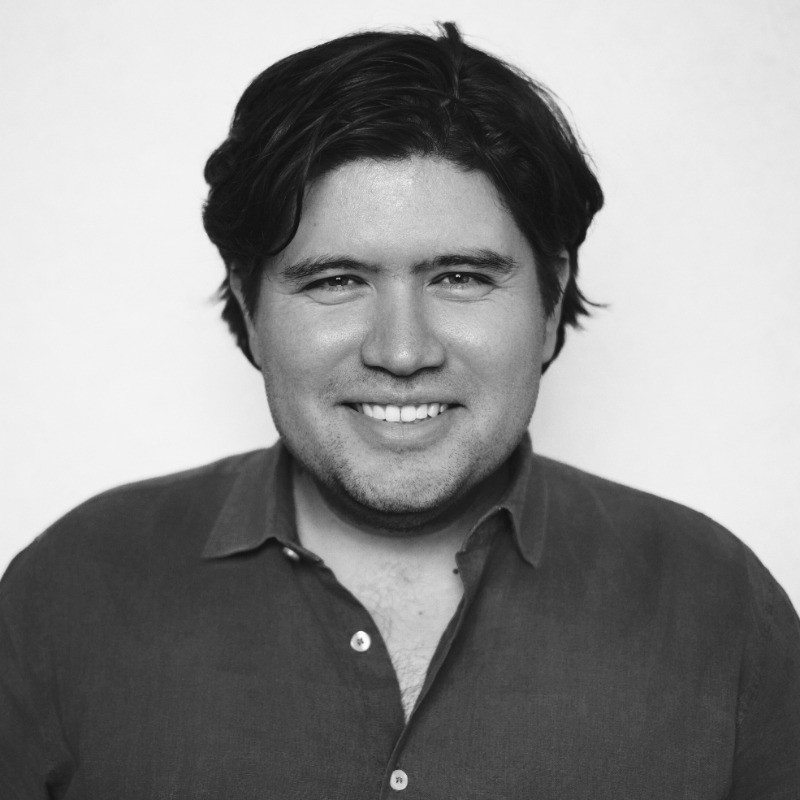
A container ship sits stalled in the Suez. A drought lowers the Panama Canal. A port goes on strike, a hurricane reroutes a fleet, a tariff threat lands at midnight. For most companies these are headlines. For Diego Solorzano, they are the product spec.
Solorzano is the co-founder and co-CEO of Desteia, a startup co-headquartered in New York City and Mexico City that does something deceptively unglamorous: it reads the inbox. Logistics, it turns out, still runs on the least structured data in the modern economy - emails, WhatsApp messages, PDFs, screenshots of screenshots. Desteia uses artificial intelligence to pull meaning out of that mess, then stitches the pieces together with graph theory, the math of networks, where every warehouse is a node and every route an edge.
The result is a dashboard that lets an operator watch goods move across ocean, ground, and air - and, more importantly, see the delay before it becomes a disaster. The company's stated ambition is to be "every global supply chain operation's most reliable source of truth and trusted command center." That is a big sentence. The interesting part is how small and specific the starting point is.
"Supply chain managers need oversight of the chain from one end to the other to anticipate delays and disruptions before they happen - and before they have a negative impact."Diego Solorzano, co-CEO, Desteia
The border as a first principle
Desteia did not chase the whole planet at once. It planted its flag on the U.S.-Mexico trade corridor, where more than $850 billion in goods cross every year and where the paperwork, the customs systems, and the cross-border handoffs are famously brittle. Solorzano - a Mexican founder building in both countries - treats that corridor not as a niche but as the hardest, most valuable knot to untie first.
It is working. Elektra, one of the largest retailers in Latin America, reached full shipment visibility on Desteia without a single integration and without the manual email-chasing that eats operators' days. No IT project. No six-month rollout. Just the software reading what was already there.
From Auba to Desteia
The company was not always called Desteia. It launched as Auba and rebranded as it scaled - a quiet reminder that early-stage building is as much about renaming and reframing as it is about code. What stayed constant was the thesis: the bottleneck in global trade is not trucks or ships. It is information that never gets untangled.
Solorzano runs the company as one of two CEOs, sharing the seat with Francoise Lavertu, a former Tesla executive, while Stanford classmate Austin Poore serves as CTO. A co-CEO structure is a bet on partnership over ego - unusual, and telling.