●Breaking: Sandy Health closes $1.5M pre-seed●MIT aerospace engineer takes on healthcare's back office●Forecast accuracy 73% → 98% in six months●Days in A/R: 18.4●Backed by physicians, not just VCs●Rockets to revenue cycle●Breaking: Sandy Health closes $1.5M pre-seed●MIT aerospace engineer takes on healthcare's back office●Forecast accuracy 73% → 98% in six months●Days in A/R: 18.4●Backed by physicians, not just VCs●Rockets to revenue cycle
Founder Profile
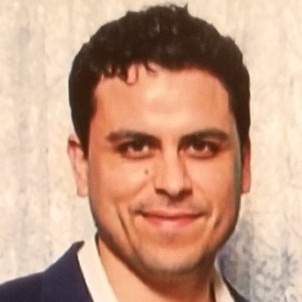
Diego Saavedra-Kloss
Founder & CEO, Sandy Health · San Francisco
He trained to send things into orbit. Instead he is grounding the part of medicine nobody films: the paperwork.
An engineer who decided the hardest problem in healthcare was the invoice
Most healthcare startups chase the diagnosis. Diego Saavedra-Kloss went after the bill.
Sandy Health, the company he founded and runs in San Francisco, calls itself a financial intelligence platform for healthcare providers. Strip the jargon and it is a simple, unglamorous promise: tell a clinic what it will actually get paid before the patient walks in, track what lands after, and squeeze the difference until it disappears.
That is a strange thing for an aerospace engineer to spend his thirties on. Diego earned a Bachelor of Science in Aerospace Engineering from MIT, the kind of degree that usually points toward propulsion labs and satellite constellations. He pointed it instead at eligibility checks, prior authorizations, and the slow grind of revenue cycle management - the machinery that decides whether a doctor's work turns into a doctor's paycheck.
The pitch is not that doctors are doing medicine wrong. It is that the system around them is paralyzed by paperwork. Forms. Faxes. Follow-up calls. A workforce of capable people spending their afternoons re-keying numbers between systems that refuse to talk to each other. Diego's contention is blunt: healthcare's biggest bottleneck is operational, not clinical, and software built like real infrastructure can fix it.
In November 2025, investors agreed enough to write checks. Sandy Health closed a $1.5M pre-seed round. The notable detail was not the size but the room: physicians, healthcare operators, and entrepreneurs from primary care, emergency medicine, anesthesia, home health, and dentistry. People who have lived inside the billing nightmare put money on someone promising to end it.
"Healthcare doesn't need another workaround; it needs a platform that helps everything work together."
- Diego Saavedra-Kloss
By the Numbers
The math Sandy is selling
Sandy Health frames its product as a measurable promise. These are the figures the company puts forward for what its platform delivers over a provider's first six months.
73→98%
Forecast accuracy, month 1 to month 6
18.4
Days in accounts receivable
97.4%
Coding accuracy
99.1%
Documentation completeness
Figures as presented by Sandy Health. Independent verification not available.
The Road Here
Privacy infrastructure, radiology AI, then his own thing
Before he was a founder, Diego was the person you call when the plumbing breaks. At LeapYear Technologies he led the infrastructure team, working on systems that let companies analyze sensitive data without exposing it - the kind of privacy-preserving machinery that is invisible when it works and catastrophic when it doesn't.
From there he moved to Rad AI as an engineering manager. Rad AI builds artificial intelligence for radiology, automating the language and reporting that wraps around medical imaging. It was his first long look inside healthcare's software stack, and the lessons were less about algorithms than about everything surrounding them: the handoffs, the documentation, the friction between clever models and a system that wasn't built to absorb them.
Two patterns followed him out the door. First, that the hardest engineering in healthcare is rarely the model - it is the connective tissue, the workflows, the getting-paid. Second, that AI is most useful not when it replaces the people doing the work but when it deletes the work they never should have been doing. Both ideas are stamped all over Sandy Health.
There is also a lighter thread. His public GitHub profile, under the handle diego-leapyear, carries a one-word bio - "Meow" - and an avatar of a tiny kitten balanced on someone's fingertips. It is a small wink from an otherwise infrastructure-serious engineer, the kind of detail that suggests the person behind the revenue dashboards does not take himself entirely seriously.
Timeline
MIT
BS, Aerospace Engineering
2019 – 2022
Infrastructure Team Lead, LeapYear Technologies - privacy-preserving data systems
2022
Engineering Manager, Rad AI - radiology artificial intelligence
2025
Founds Sandy Health, becomes CEO
Nov 2025
Closes $1.5M pre-seed; Dr. Janelle Sunwoo of Leaf Medical joins as Founding Advisor
Under the Hood
One platform, seven jobs nobody wants to do
Sandy stitches the scattered chores of getting paid into a single system. Here is what lives inside.
Financial Clearance
Benefits verified and expected reimbursement calculated before the visit, based on real payer contracts.
AI Scribe
Structured notes captured during the visit to support accurate coding and cleaner claims.
Variance Tracking
Real-time monitoring of expected reimbursement against what actually lands.
Eligibility Verification
Automated, real-time checks that catch coverage gaps before they become denials.
Prior Auth Automation
Authorizations tracked from requirement all the way to approval.
Revenue Intelligence
Scheduling, eligibility, auth, and documentation unified into one financial dashboard with rolling 90-day forecasts.
Prior AuthorizationVerification of BenefitsRevenue CycleAI ScribeSchedulingIntakeMedical AI
The Thesis
Build for the people who deliver care, not against them
The fear with AI in medicine is replacement - that the software is coming for the jobs. Diego's framing inverts it. The work Sandy automates is the work people already hate: the re-keying, the phone trees, the chasing of authorizations. Take that away, he argues, and you do not shrink the care team. You free it.
It is a quietly radical position in a noisy market. Plenty of companies promise to disrupt healthcare. Sandy promises something smaller and harder: to make the existing system legible. To turn revenue - usually a fog of denials, adjustments, and surprises - into a number you can forecast and trust. Payer-grade intelligence, handed to the providers who normally fly blind on whether they will be paid.
"By freeing care teams to focus on people instead of administrative work, we can make healthcare more connected."- Diego Saavedra-Kloss
Whether the metrics hold at scale is the open question every young company faces. But the wager is clear, and it is the kind of wager only an infrastructure engineer would make: the breakthrough in healthcare might not be a smarter diagnosis. It might be a system where everyone finally gets paid on time.
 Diego Saavedra-Kloss