FILE NO. 088 / PROFILE
Destiny
Steven Kenneth Bonnell II argues for a living. Twelve hours at a stretch, sometimes more, in a chair in Miami, talking down a Marxist before lunch and a monarchist before bed.
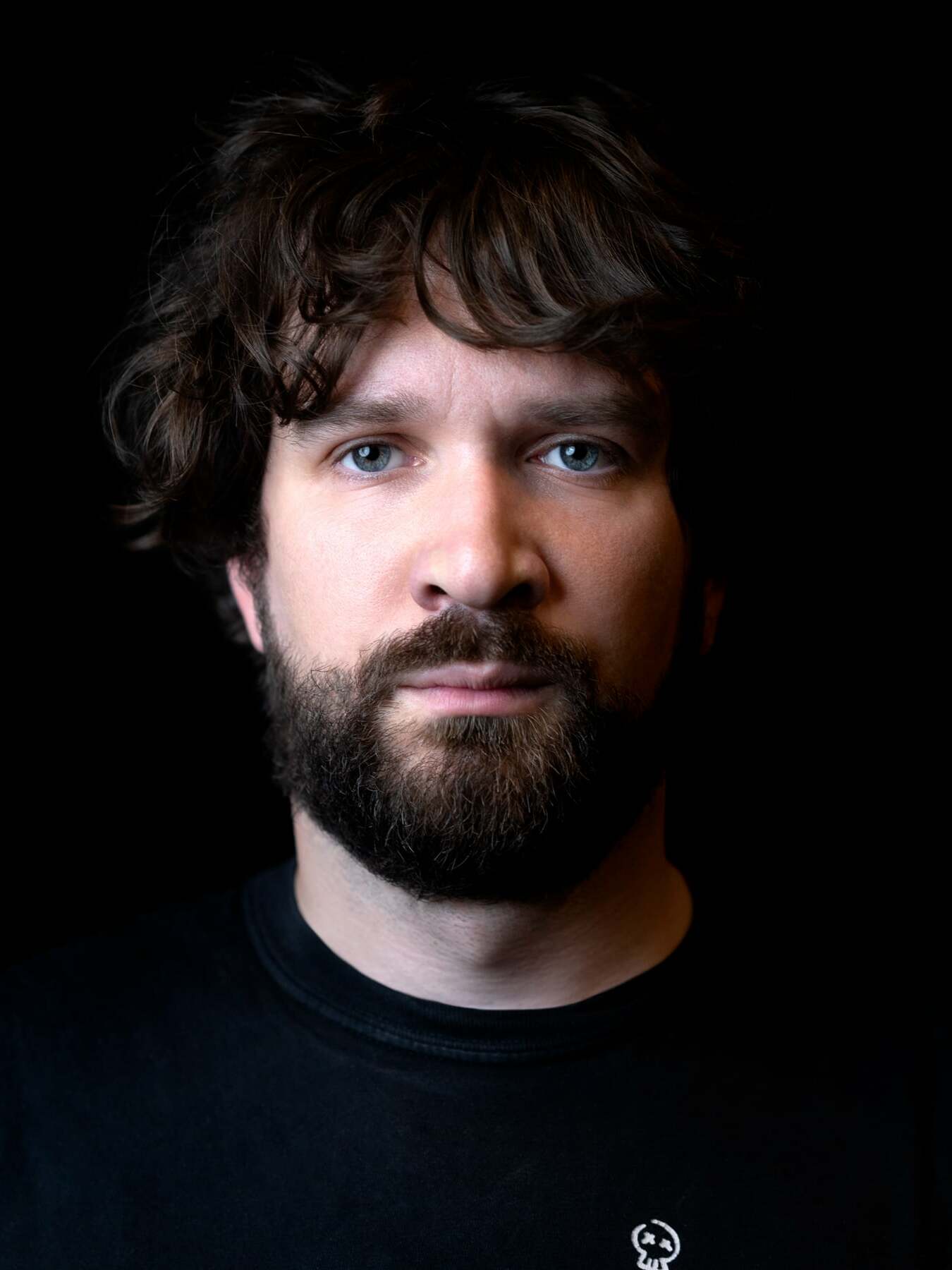
Steven Kenneth Bonnell II argues for a living. Twelve hours at a stretch, sometimes more, in a chair in Miami, talking down a Marxist before lunch and a monarchist before bed.
Destiny is what happens when a former StarCraft pro decides the most interesting boss fight on earth is a four-hour argument about Medicare.
On a Tuesday in 2026 you can open Destiny's stream and find him in a small room in Miami, headset on, talking to a tiled grid of strangers about the precise mechanics of Medicaid eligibility, a clip of Dinesh D'Souza, a tweet from someone none of you have heard of, and whether the labor theory of value survives a careful reading of the second chapter of Capital. He is alone in the room. There are tens of thousands of people watching.
This is the work. He has been doing it, in one form or another, since before YouTube videos paid the rent. He was one of the first people on Earth to live-stream video games full-time, which sounds quaint now and was preposterous then. A Jesuit-educated kid from Omaha, in a basement, playing StarCraft II for eight hours a day, telling the chat what he thought about the Bush administration in between matches. Somewhere along the way the matches stopped and the talking didn't.
By 2016, the games were furniture. The debates were the show. Destiny had figured out a thing that the rest of cable news was still figuring out: if you point a camera at a smart person with strong opinions and a sparring partner, and you do not cut away for ten hours, a small but loyal share of the internet will sit there with you the entire time. The chat will fight. Clips will fly. Nothing will be resolved. They will come back tomorrow.
His Twitter bio reads, with the deadpan of a man who has rehearsed it: "The 'do your own research' guy who actually does his own research." His Instagram bio is less subtle: "I am the political commentator that your favorite political commentator has nightmares about." Both, in different ways, are correct.
The void, it turns out, listens. The New York Times once credited him with deradicalizing people away from the alt-right. He says he has received hundreds of unsolicited emails from former members of that scene crediting his debates with their political turn. He has also said, repeatedly, that he is not trying to persuade his opponents. He is trying to persuade the audience watching them lose.
It is a counter-intuitive theory of media. Most people who go on television are trying to win the room. Destiny treats his opponent the way a chess streamer treats the opening: as a puzzle the audience is meant to solve along with him. The opponent is the board. The viewer is the student. The argument is the lesson plan, rolled out live, with no editor.
He grew up in a conservative Catholic household in Omaha, Nebraska, the kind of background that produces either fervent priests or fervent debaters. His mother ran a home daycare that collapsed when he was a pre-teen. The house was foreclosed. He moved in with his grandmother and stayed there until he turned eighteen. He attended Creighton Preparatory School, a private Jesuit boys' school in Omaha, and then enrolled at the University of Nebraska Omaha to study music, working as a restaurant manager at a casino on the side. He did not finish the degree.
He had, by then, found the thing he was actually going to do. He was good at StarCraft II. He was very, very good at talking about StarCraft II while playing it. He was, more importantly, willing to do it for twelve hours a day. Streaming as a job did not exist yet. He invented his version of it.
In 2018 he left Nebraska for the Los Angeles area, then decamped in late 2021 for Miami, which is where you find him now. He runs his own site, destiny.gg, with a chat infamous for being meaner than the host - a deliberate aesthetic choice, like a comedy club with a two-drink minimum and a heckler quota. Twitch suspended him for thirty days in 2018. In 2020 his Twitch partnership ended. He kept streaming. The audience, used to following him, followed.
Destiny does not really do issues. He does positions. In any given week he will defend liberal-democratic policy against socialists, capitalism against Marxists, secular humanism against traditionalists, and pluralism against ethno-nationalists. He has debated JonTron on immigration. He has debated Lauren Southern. He debated Marxian economist Richard D. Wolff in 2021 and argued for capitalism. In December 2025 he sat across from Dinesh D'Souza in Washington, D.C. He was hosted at Yale that same month by Yale Effective Altruism for a debate on Medicare, Medicaid, and political violence in the United States.
In 2025 he joined the Unfuck America Tour, a campus event series organized as a progressive answer to Turning Point USA. The name is on-brand. So is the format: long, unscripted, occasionally chaotic, mostly online by the time the lights come down.
It is easy, given the volume, to mistake Destiny for a contrarian. He is not. He has a settled politics - broadly liberal, broadly capitalist, broadly democratic - and a settled method, which is that everything is fair game and nothing is sacred and the only sin is the unargued claim. He is fond of the kind of internet leftist who agrees with him on outcomes but disagrees on tactics; he is fonder still of the right-wing debater who shows up prepared. The unprepared, on any side, do not survive the first hour.
The aspiration, as best as you can read it from a thousand streams: to move the political center of the internet leftward without sanding off any edges. To keep the camera on. To make the conversation longer, weirder, more granular, more unrelenting than the people on the other side of it can sustain. There is a stamina theory of public discourse, and Destiny is one of its most committed practitioners.
He is bisexual, has been openly so for years, and his second marriage - to Swedish streamer Melina Goransson, in December 2021 - was an open one. They separated in December 2023. He is, on stream, candid to the point of inconvenience about all of it. He thinks the alternative is worse.
The community at destiny.gg is its own thing. It is loud. It is rude. It rewards specificity and punishes vagueness. If you wander in and say something half-baked, twenty thousand strangers will tell you, in detail, why. This is the design. Destiny treats his chat like a research assistant with attention deficit and excellent memory. They fact-check him in real time. They fact-check his guests in real time. They fact-check each other.
Streaming has been called a parasocial medium, and it is. Destiny's version of parasocial is the kind you get from sitting next to someone in a library for ten years. You do not necessarily like them. You know exactly how they think.
And so, in 2026, here he is. Still in the chair. Still arguing. Across the screen this week: another debater, another clip, another claim that will be picked apart for the next four hours by a man who has been picking claims apart, professionally, since before most of his audience could vote.
Approximate as of 2026. Stream counts change while you read this.
A debate that started on Twitter and ended somewhere very different. One of the first big tests of the format. The clips are still in circulation.
A Marxian economist with a long career and a young streamer with a longer attention span. They argued, at length, about value.
December 13, 2025. Washington. A debate the streaming era and the cable-news era could both pretend to host. Destiny showed up. So did Dinesh.