Dallas, Texas
A travel advisor learns a surprising amount about a person from a hotel room. Some clients study the view. Some inspect the sheets. Some want a lobby with a pulse; others would gladly cross a border to avoid one. Deb Lewis pays attention to such distinctions because, in her working philosophy, taste is evidence. It tells her how someone wants to move through the world.
Lewis is a Dallas-based travel advisor and the founder of 5C Travel Society. Her public description of the work borrows the language of design: journeys should be curated, intentional and composed around the individual. She has an eye for the codes of fashion, the kind that make a place feel considered before anybody has explained why. Yet her advice is at its most convincing when glamour gives way to weather, distance and the stubborn reality of getting from the airport to the mountain.
This tension is the interesting part. Lewis likes a handsome room. She also wants to know whether a family will spend half its holiday driving to it. She can admire a remote lodge and still recommend that a client stay closer to the lift. She treats beauty as a beginning, then asks it to survive contact with actual life.
The room must fit the traveler
Lewis says that “travel, like style, should reflect individuality.” It is a neat sentence, but it carries an operational burden. Personal style is easy to praise and rather harder to book. One traveler’s atmospheric hideaway is another traveler’s logistical ambush. A marble lobby may delight the parent who loves ceremony and exhaust the teenager who wants to reach the pool without crossing a scene.
So her version of luxury begins with fit. On her Fora profile, Lewis emphasizes city travel, boutique properties and upscale stays. She names Dallas, Bozeman and Louisville among the places clients can ask her about. That is an unusual triangle, less a list of trophies than a clue to her method. Cities have tempo. Boutique hotels have personality. Mountain destinations have consequences when the forecast turns.
Style and hospitality
Family and memory
Winter in practice
Her client reviews show the same instinct in miniature. One traveler needed a room in Texas at the last minute. Another arrived in an unfamiliar city for a convention and wanted something near the venue without surrendering the pleasure of a good hotel. A third had struggled to find availability during a busy Las Vegas period. Lewis’s contribution in each case was not a grand theory of travel. It was a useful answer, delivered when options felt narrow.
This is where the stylist’s metaphor earns its keep. A good stylist does not merely select beautiful things. The clothes must belong to a body, an occasion and a life. Lewis applies a similar edit to travel. The ideal recommendation is not the property that wins the abstract argument. It is the one the client will be relieved to enter.
Montana, remembered at human scale
Lewis lived in Bozeman for more than two decades and raised her sons skiing the mountains nearby. That single fact gives her Big Sky winter guide its authority. She knows the landscape through repetition: family days, changing conditions, the habits that make cold weather enjoyable and the decisions that turn it into a quarrel.
“Big Sky always feels like home to me,” she writes. Home is a different credential from arrival. It notices when a place changes and when a new development respects the character around it. It also remembers that mountain life includes wet gloves, nervous drivers and the particular silence that falls when teenagers finally look away from their phones.
Her guide moves easily between appetite and caution. There are fireside cocktails, Italian alpine cooking and a high-altitude restaurant reached by ski or snowcat. There are also insulated boots, visibility concerns, wildlife crossings and a firm preference for lodging near planned activities. Lewis is wary of standalone winter rentals when access and service are uncertain. Privacy loses some of its romance when the road becomes the main event.
Her activity list is broad enough to reveal another habit: she plans for different nervous systems. Snowmobiling offers speed. Snowshoeing slows the landscape down. Cross-country skiing provides movement without the pitch of a downhill run. Winter fly fishing turns a river into a meditation. A sleigh ride asks almost nothing except warm clothing and attention. The point is not to collect them all. It is to choose the one that makes this group feel more like itself.
That is particularly important for multigenerational travel, where the phrase “something for everyone” can become an excuse for exhausting everyone. Lewis’s recommendations leave room for different abilities and appetites. A resort can serve as a shared base while the bold ski, the curious wander and the sensible locate the fire.
The invisible architecture of ease
The luxury travel business sells visible pleasures: the suite, the spa, the view through a wall of glass. Advisors spend much of their time on invisible architecture. They compare rates, track preferences, consider transfers, manage timing and make sure the promised perk has not wandered off between confirmation and check-in. The finished trip should feel lighter than the work behind it.
Lewis joined Fora as an advisor in 2024 and earned its Certified Travel Advisor credential that October. Her current profile places her at Pro tier. She operates her own identity through 5C Travel Society while using the larger agency’s booking relationships and advisor infrastructure. It is a contemporary arrangement: independent taste supported by a platform.
Technology matters in this model, especially when the inventory is global and a client expects answers quickly. But the final act remains editorial. A tool can return twenty plausible hotels. Lewis still has to decide which three deserve a person’s finite attention. The value is partly in the options removed.
An editorial illustration, not measured data: the visible perk comes after the trip has been made to fit.
Her taste also has a social dimension. Lewis describes travel as a way to engage with place rather than merely decorate a calendar. Her Big Sky material praises developments that live with Montana’s ruggedness instead of attempting to erase it. Even the polished properties are framed by terrain, season and the people traveling together.
A founder’s particular form of confidence
Founding a travel practice is a curious entrepreneurial act because the product is never entirely yours. Airlines set schedules. Hotels control rooms. Weather retains veto power. A client brings expectations that may not become clear until the first dinner reservation. The founder’s craft lies in coordinating all of this without pretending to control it.
Lewis’s public voice suggests confidence without rigidity. She values intention, but her strongest advice is adaptable. Stay near the mountain whenever possible. Use a transfer if winter driving will add strain. Pack seriously enough to enjoy being outside. Pick activities according to the people who are actually going. None of this is theatrical. All of it can rescue a day.
The fashion influence gives 5C Travel Society its visual grammar, but hospitality supplies the verbs. Welcome, notice, anticipate, adjust. Lewis has spent her career around those ideas. In travel, they become a form of translation between what clients say they want and what will make them happy once they arrive.
Her story also explains why local knowledge remains valuable in an age of infinite reviews. Crowds can describe a hotel. They cannot interview a family. Ratings can average thousands of experiences, which is useful until the only experience that matters is yours. Lewis works at that smaller scale, one preference and one potential complication at a time.
The souvenir is a sense of fit
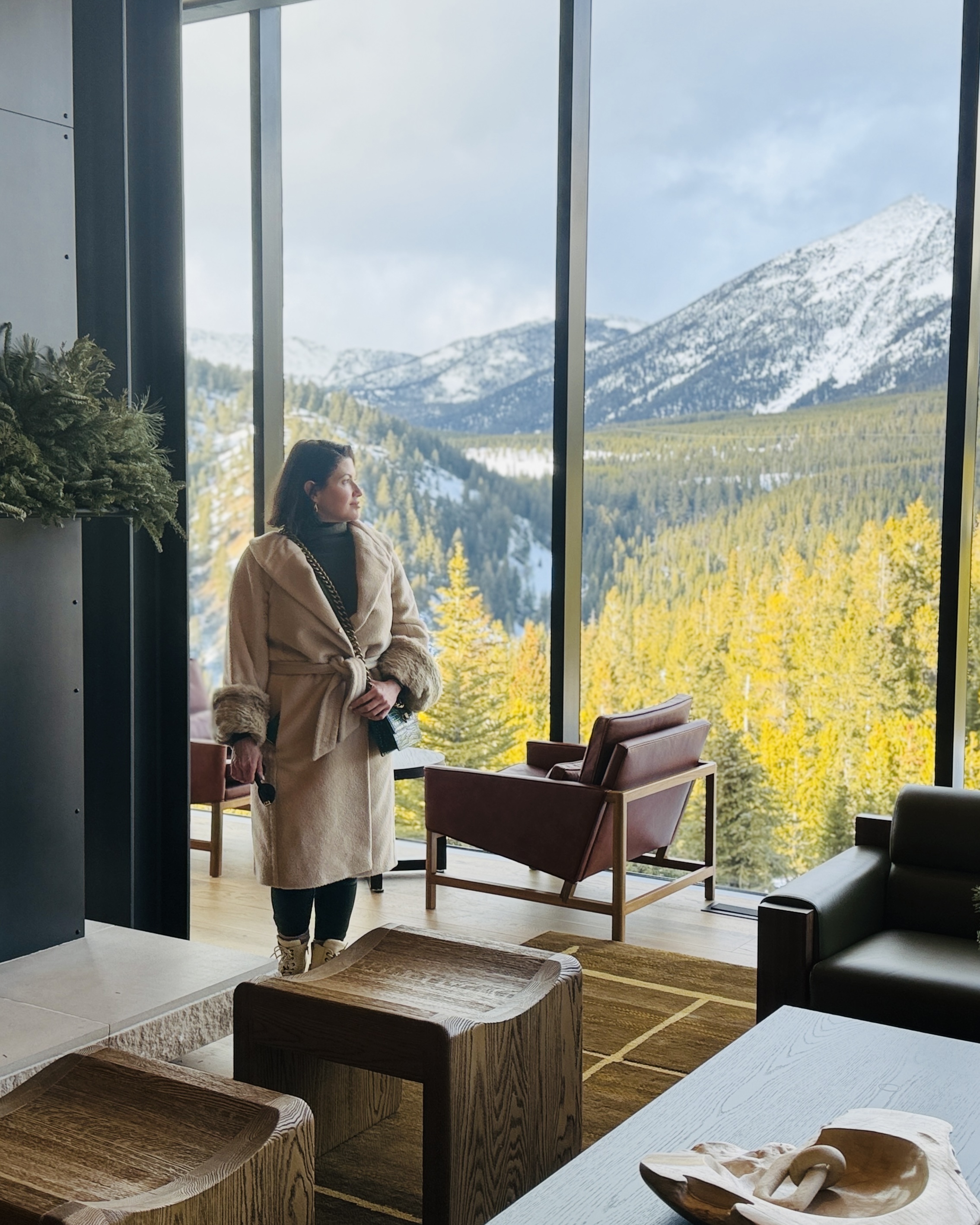
There is a photograph in Lewis’s Big Sky material of her standing indoors before a mountain view so expansive that the furniture seems to have been arranged in deference to it. The image neatly captures her professional territory. The room is elegant. The landscape refuses to be an accessory. Lewis stands between them, dressed for both.
That balance may be the 5C approach in its most legible form. A trip should possess style without becoming stagecraft. It should offer comfort without insulating the traveler from place. It should be memorable for what happened, not for how many preventable problems had to be solved along the way.
Dallas is home now, and Lewis’s work reaches outward from there. Yet Montana remains the useful north on her compass, a reminder that expertise grows through seasons rather than search results. She knows what the mountain looks like from a beautiful room. More importantly, she knows what it asks of the people who step outside.