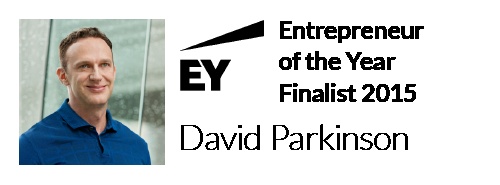
The person buying the pitch has a different view of public relations from the person delivering it. The buyer remembers who arrived at the first meeting, who answered the next email, and whether the promised strategy survived contact with Monday morning. David Parkinson brought that memory with him when he became an agency founder. His business began with the practical knowledge of someone who had occupied the other chair.
In 2010, Parkinson and Jacob Moon co-founded Method Communications in Salt Lake City. They had worked together on communications for the Sorenson family and its businesses. Parkinson had been the vice president of communications; Moon had come from journalism. Their former employer gave them its blessing and became their first client. There are more theatrical ways to start a company. Few come with such a useful first reference.
The arrangement gave Method a beginning rooted in an existing relationship. It also put two different kinds of judgment in the same business: the executive’s concern with what a company needed to accomplish and the journalist’s instinct for what another person might actually want to read. That pairing still explains more about Parkinson than a long list of services would.
A complaint becomes a company
Parkinson’s founding complaints were concrete. Senior people would help win an account and then disappear. Writing could be weak. Communications programs could wander away from the business objectives they were meant to serve. These were the irritations of a working client, and he carried them into Method’s design.
An agency pitch is a peculiar form of courtship. Everyone is attentive, the presentation has excellent posture, and the future looks unusually tidy. The relationship becomes more revealing after the slides are closed. Parkinson wanted senior involvement to continue into the work, with programs built around the client’s actual business. The promise required consistency after the excitement of winning had passed.
Moon’s appointment as general manager of the Salt Lake City office in 2018 made that partnership more explicit. His remit included business and employee development as well as key accounts, reporting to Parkinson. Growth was becoming a question of responsibilities: who develops the people, who knows the accounts, who keeps the original bargain recognizable as more clients arrive?
Between Utah and the Bay Area
Method’s early story unfolded among Utah technology companies rather than beginning with a Silicon Valley address. By the time it was named North American Technology Agency of the Year in 2016, it had operations in Salt Lake City, San Francisco and Los Angeles. Its client portfolio included Instructure and Pluralsight, alongside companies such as Credit Karma and Robinhood.
The work could be strikingly different from one account to the next. For Vivint Smart Home, Method helped put the company’s CEO on the television program Undercover Boss. For Domo, it developed customer stories and contributed articles while the company kept details of its technology quiet. Both examples involved deciding what an audience could usefully learn before deciding where to put it.
Parkinson also relocated to San Francisco during that early expansion. The geography complicates any easy tale about a Utah founder refusing the coast. He was building between markets. Salt Lake City supplied relationships and a base; San Francisco brought proximity to another concentration of technology businesses. A map could expand without requiring the origin story to be erased.
The next address was a partnership
In December 2018, Chime acquired Method. The transaction connected it more closely with the London technology agency Harvard and a broader international network. At the time, Method’s revenue was reported at $12 million. Qualtrics, Vivint Smart Home and Pluralsight were among its clients. Method and Harvard already shared work for Workplace by Facebook and SecureAuth.
The two agencies retained their own brands and leadership. That detail matters to the story: international ambition was being pursued through people who already had teams and relationships in their markets. The purchase provided a framework for working together, rather than asking one Salt Lake City company to invent every overseas capability itself.
In May 2019, Parkinson joined Harvard CEO Louie St. Claire for a podcast about the acquisition and a global technology offering. The discussion’s stated agenda included the difficulties that can follow tech PR acquisitions. It was a sensible subject for the new partners. Signing a transaction and making collaboration useful are separate jobs, with very different stationery.
Salt Lake City
International partners
Parkinson named chairman
A bigger map, with local voices
The partnership acquired a name in June 2023: Outleap. Method, Harvard and Sling & Stone launched the collective within VCCP Business, bringing together North American, EMEA and Asia Pacific expertise. Parkinson was named chairman at launch; Rachel Friend and Vuki Vujasinovic were named co-CEOs. The agencies continued under their individual names.
This was a formal arrangement built on earlier work. The agencies had already collaborated on more than a dozen clients, including Meta, Bloomberg, HubSpot and Tata Communications. Parkinson said international partners had helped win the Meta and Bloomberg business. His account made collaboration sound less like a corporate diagram and more like an answer to a client asking who could do the work elsewhere.
In his launch essay, he described the need for a global strategy that could be executed with local nuance. That is an appealingly difficult phrase. A company wants to remain recognizable across borders; an audience wants to be addressed as though someone knows where it lives. The collective’s founding arrangement tried to hold both requirements together. Its roughly 300 professionals and nine offices were launch figures for the combined agencies, not Method’s headcount.
The sentence still has to work
As the organization grew, Parkinson continued to treat writing as a business capability. Method’s content operation drew on former journalists, including former New York Times technology and business editor Tim Race. Its roster also included people with experience in opinion editing, features and technology reporting. Parkinson saw this editorial experience as a way to improve the material available to clients.
The approach allowed a narrative to travel into several forms: a company’s own publishing, a speech, a panel contribution or a pitch to a reporter. A worthwhile idea could have more than one destination. It also had to survive the scrutiny of people accustomed to deciding what deserved space in a publication.
Method’s research supplied another ingredient. Its 2023 Watch Your Language study surveyed more than 2,000 Americans about empathy and relationships with brands. Forty-seven percent wanted more human-centered stories in news and brand communications. Parkinson’s comment emphasized emotional connection with customers. The study gave the agency a measured way to discuss a subject that often dissolves into adjectives.
For a founder who had objected to weak writing, this is a revealing progression. The answer became an organization with editors, researchers and several ways to distribute a story. A communications business can own plenty of channels and still lose the reader in its first sentence. Editorial judgment remains inconveniently resistant to delegation by slogan.
“Writing.”
David Parkinson, asked which PR skill is underrated, 2019
People have to want to stay
Parkinson’s emphasis on relationships extends to the people doing the work. In 2020, Method announced its inclusion in PRNEWS’s Agency Elite Top 100 and Top 50 Places to Work lists. He described the company as grounded in values and relationships, with the aim of working closely enough with clients to feel like part of their internal teams.
A later sponsored workplace podcast offered a colleague’s view of the culture. Moon described Parkinson’s openness as setting the tone from the top. The episode discussed mentoring and Method Anywhere, a program that allowed individualized working arrangements. These details are more useful than a generalized promise that an employer cares: they describe practices an employee could actually experience.
There is a less ceremonial detail in Parkinson’s public biography. He is a father of twins. When discussing how he breaks a creative rut in 2019, he said time with them had become his alternative to earlier bike rides or trips to the gym. The children were babies then. Even the CEO’s method for finding a fresh thought had acquired new participants.
An evening beyond the account list
Parkinson’s civic involvement supplies another setting for those relationships. Ballet West’s fall 2022 magazine recorded his re-election to its board that June. It also noted his earlier Utah Business recognition, including its 2008 40 Under 40 list and 2015 CEO of the Year award. These are distinct markers in a career that had already moved from in-house communications to agency leadership.
In 2025, he was among the co-chairs of Ballet West’s Spring Soirée. The event raised more than $450,000 for the academy, supporting scholarships and financial aid. Guests dined on the Capitol Theatre stage while company and academy dancers performed nearby. The audience had been moved into the performers’ usual territory, a pleasing reversal for anyone accustomed to deciding who gets the spotlight.
The event offers a concrete example of his work outside technology communications. Its purpose was access to training for young dancers. No elaborate analogy between ballet and business is needed. Sometimes a founder helps organize an evening because an institution in his city needs support, and the evening produces a result worth recording.

The original bargain, under new pressure
Method’s later growth has added capabilities as well as clients. Its 2025 agency assessment recorded 10 percent revenue growth in 2024, with marketing representing 30 percent of total revenue. The agency also secured Salesforce business as 2025 began. Those are dated measures of the company Parkinson leads, rather than estimates of his personal wealth.
During 2025, Method announced new groups for social and influencer work and for answer engine optimization and integrated content. In November, it hired Ibby Hussain to lead its financial services and fintech practice. The expansion brought specialist experience to changing client needs, from how people discover information through AI to how complex financial businesses explain themselves.
Parkinson’s recent public account of Method’s progress still puts relationships at the center. He has also argued for parent companies that invest in people rather than repeatedly restructuring for short-term returns. The tools and organization have changed considerably since 2010. His stated concern remains familiar: the people whose work earns trust need an environment that lets them keep doing it.
That is the continuing test of an agency founded by a former client. There will always be another pitch, another platform, another market to enter. Afterward, someone has to return the call, understand the business and write the sentence. Parkinson built Method around those obligations. Its next chapter will be lived in the follow-through.
Marketing’s share of Method revenue in 2024.
A company measure, reported in its 2025 agency assessment.
Keep reading, or listen in
- Method Communications ↗
- David Parkinson on LinkedIn ↗
- 2019 Innovator interview ↗
- The acquisition conversation · podcast ↗
- Outleap launch essay ↗
- Outleap showreel · Vimeo ↗
- Ballet West’s Spring Soirée ↗
- Method’s 2025 agency assessment ↗
- Recent reflections on agency leadership ↗
- Method on Instagram ↗
- Method on X ↗
- Method on Facebook ↗