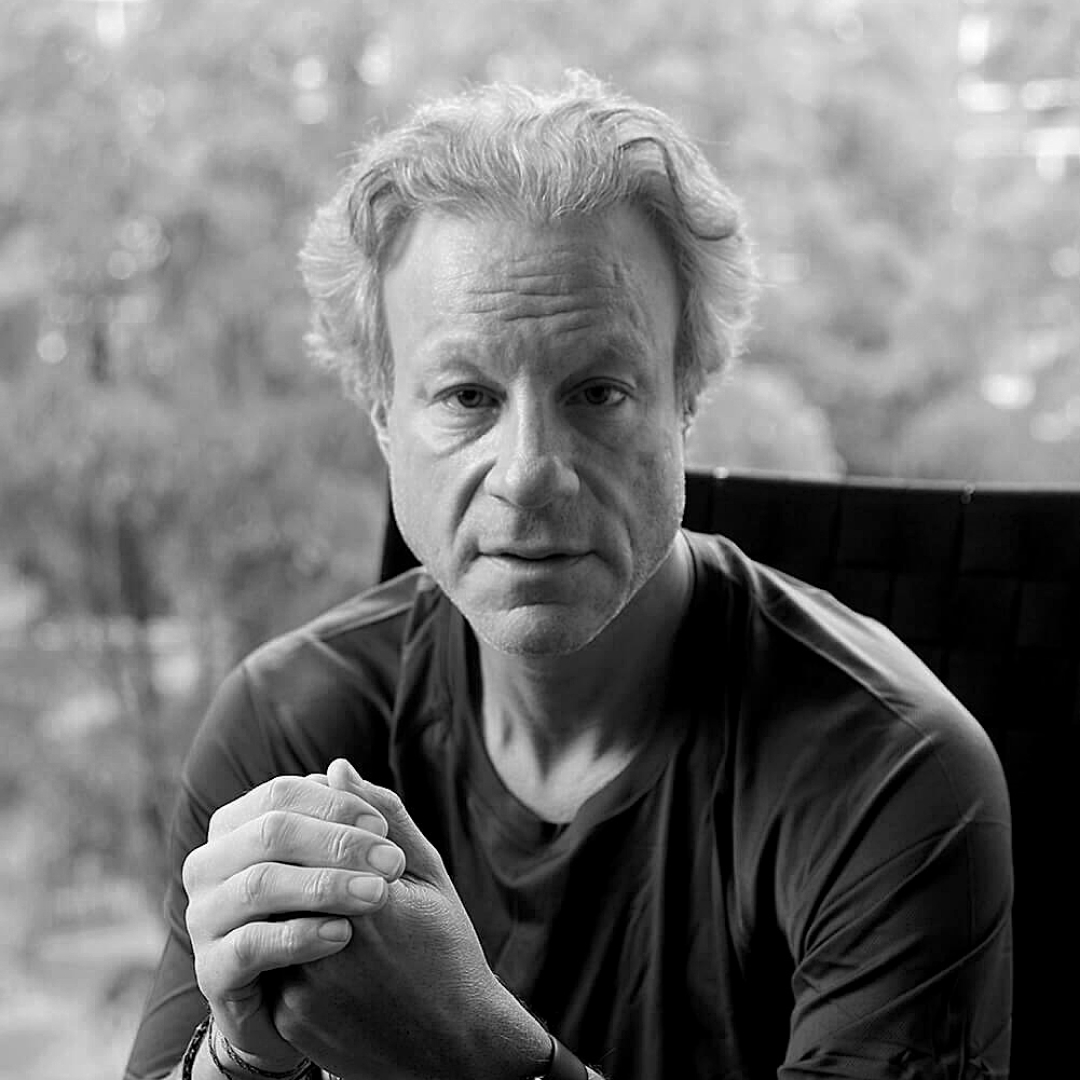
On September 10, 2001, David Fialkow and his childhood friend Joel Cutler signed the papers to launch General Catalyst. The next morning, the world changed. What happened over the following two decades changed it further - but in ways Fialkow engineered, not survived.
Today General Catalyst manages $40+ billion and has backed some of the most consequential companies of the internet age: Airbnb before it was a verb, Stripe before fintech was a word, Snap, Canva, HubSpot, Warby Parker, Anduril, Mistral. But what makes Fialkow genuinely unusual in the landscape of venture capital is not the returns. It's what he does in between board meetings.
He makes documentaries. Not as a hobby. His films have won two Academy Awards. He helped expose Russia's state-sponsored doping program - and helped the whistleblower safely escape the country afterward. He produced The Vow, the HBO series that helped put NXIVM's Keith Raniere behind bars for 99 years. He produced Navalny, which won the Oscar in 2023 and documented the poisoning and imprisonment of Russia's most prominent opposition leader.
There is no template for this career. There is only Fialkow.
General Catalyst was founded September 10, 2001 - one day before 9/11. The $70M first fund was raised mostly from Fialkow, Cutler, and their friends. Today the firm manages over 570x that amount.
His instincts were shaped by a decidedly un-VC upbringing. He grew up in Newton, Massachusetts, went to Colgate (racquetball, fine arts, sociology), then Boston College Law School. To pay for it, he drove Thomas H. Lee - the buyout legend - around Martha's Vineyard. He washed UPS trucks. He bartended at Cityside on Beacon Street. He sold Fuller Brush products door to door. These are not origin story embellishments; they are the exact texture of someone who learned what hustle looks like before he learned what carried interest means.
"Values create value."- David Fialkow
Building a Firm That Outlasts the Market Cycle
Fialkow does not fit the archetype. The archetypal VC is young, coastal (but the other coast), and had a technical co-founder or a Stanford CS degree somewhere in the origin story. Fialkow came up through law and entrepreneurship: before General Catalyst, he built five companies and sold every one of them.
The first was the Last-Minute Travel Company, which he co-founded with Cutler from a law school apartment in Allston. They sold discounted vacation packages out of Filene's Basement. It eventually became National Leisure Group and sold for roughly $20 million in 1995. Then came Alliance Development Group (sold to MyPoints.com), Retail Growth ATM Systems (sold to PNC Bank), and Starboard Cruise Services, which he built into a major duty-free retail operator on cruise ships before LVMH acquired it in 2000.
By the time Fialkow and Cutler launched General Catalyst, they were not venture tourists. They were operators who had built and sold businesses in travel, retail, banking, and logistics. That background shaped how the firm invests: less obsessed with the theoretical exit, more interested in the underlying business mechanics.
Fialkow's critique of Boston's tech culture cuts deep because he helped build what's there. "I'm not proud of what's happened over the last 20 years," he told Boston Globe in 2024. "It's been kind of an evisceration of our tech community... On the East Coast, we do not embrace a culture of entrepreneurship, also a culture that has successes and failures." He's trying to fix this through The Engine at MIT, where he chairs the Investment Advisory Committee.
General Catalyst's portfolio reads like a map of the last decade's defining companies. Airbnb before anyone took it seriously. Stripe when payments were boring. Snap when the camera was the thesis, not the network. Canva before SaaS met design tools. HubSpot, Warby Parker, Anduril, Mistral. The firm's playbook is long-term conviction, concentrated bets, and a willingness to build companies from scratch rather than just writing checks.
Two Oscars and a Cult Leader in Prison
When people ask how a venture capitalist ends up producing Academy Award-winning documentaries, Fialkow's answer is essentially: the same way he invests. Back great talent. Allow a change of direction in the middle of the creative process. Trust the story over the structure.
His wife Nina - who produced This Old House and The Victory Garden for PBS before pivoting to documentary work - has been his creative partner since the late 1980s. Together they have produced more than 20 films, all of them carrying the same editorial commitment: subjects who tell truth to power, stories that carry accountability rather than celebration.
Icarus started as a low-stakes cycling experiment. Director Bryan Fogel set out to document whether recreational doping in amateur cycling was detectable. He found a willing scientific partner in Grigory Rodchenkov, the head of Russia's anti-doping laboratory, and what began as a bicycle movie turned into the largest doping scandal in Olympic history. Fialkow's role was to recognize the magnitude of what was happening, protect the film, protect the director, and eventually help Rodchenkov safely exit Russia. Netflix acquired it at Sundance for $5 million. It won the Oscar in 2018.
Bryan Fogel on Fialkow: "David never once backed down or cowered, but was there helping me and pushing me forward every step of the way." That is what a producing credit from Fialkow means.
"If you can tell a story that people didn't know - with veracity and truth - I want you to leave the theater and go: that sucks, what can I do about it?"- David Fialkow on why he makes documentaries
From Law School Apartment to $40 Billion
The Record
Ironman Triathlons, Whistleblowers, and a Beach Wedding in Aquinnah
The Fialkow biography does not flatten into a clean elevator pitch. He married Nina - his documentary producing partner and former WGBH executive - on a beach in Aquinnah on Martha's Vineyard in 1989. The Vineyard has been a fixed point in his life for over 40 years. He describes it without irony as "the largest group of cool, eclectic and socially conscious people that you could ever put in one place." Every August he opens his home to Camp Jabberwocky, a summer camp for people with disabilities.
He is a serious endurance athlete: cycling, running, skiing, rowing. He completed the Hawaiian Ironman Triathlon - on his own birthday, October 18 - with under 100 days of training, raising money for Crohn's disease research at Boston Children's Hospital (in honor of General Catalyst co-founder Joel Cutler, who has the disease). He once ran a marathon to raise $52,000 for Natan Sharansky's escape from the Soviet Union. He has been cycling the Pan-Mass Challenge - a 100-mile-plus ride for Dana-Farber Cancer Institute - for years.
He completed a full Ironman triathlon on his 60th birthday with fewer than 100 days of training. Then flew home to close deals. The man does not have a low setting.
After Icarus premiered at Sundance and it became clear that director Bryan Fogel had inadvertently documented the most significant doping fraud in Olympic history, Fialkow's role expanded far beyond producer. He helped Grigory Rodchenkov - Russia's former chief anti-doping scientist, who became the film's central whistleblower - safely leave Russia before the documentary's full impact became known. That is not a line in most VC bios.
His philanthropy is characteristically eclectic: the Pan-Mass Challenge, Boston Children's Hospital, Harvard Medical School, Martha's Vineyard Hospital, the Steppingstone Foundation, the Boys and Girls Club of Boston, Beth Israel Deaconess Hospital, MVYouth. He gives at the level of someone who takes seriously the idea that capital carries responsibility.
What He Believes
"The greatest feeling for me is other people's success."
On what drives him"Social change is easy to talk about. Risking money on it, not so much."
On impact investing"Getting mentored, being creative, backing great talent and allowing a change of direction in the middle of the creative process produces the best outcomes."
On investing and filmmaking"There will always be a market for companies that have high strategic value and scarcity of assets. But you just don't know how long they'll take to build."
On long-term investing"I'm not proud of what's happened over the last 20 years. It's been kind of an evisceration of our tech community... On the East Coast, we do not embrace a culture of entrepreneurship, also a culture that has successes and failures."
On Boston's tech ecosystem, 2024"What makes the Vineyard great is the people. It's the largest group of cool, eclectic and socially conscious people that you could ever put in one place."
On Martha's VineyardThe Fialkow File
- Founded General Catalyst on September 10, 2001 - the day before 9/11. The firm kept going.
- The only venture capitalist known to hold two Academy Award-winning documentary credits.
- Completed the Hawaiian Ironman triathlon with under 100 days of training - on his own birthday, October 18.
- His first business was run from a law school apartment in Allston. He was selling last-minute travel deals out of Filene's Basement.
- Worked as a bartender, Fuller Brush salesman, and UPS truck washer before any of the exits or Oscars.
- Helped a Russian whistleblower escape his country after their documentary Icarus exposed state-sponsored Olympic doping.
- Ran a marathon to raise $52,000 for Natan Sharansky - the Soviet dissident and Israeli politician.
- Has been a seasonal resident of Martha's Vineyard for over 40 years. Every August he opens his home for Camp Jabberwocky.
- His wife Nina formerly produced This Old House and The Victory Garden for PBS's WGBH. They married on a beach in 1989.
- General Catalyst's first $70M fund was raised mostly from the founders and their personal network. It now manages over 570x that amount.
Where It Started
"David is somebody who empowers people to do their best work and fights for you. You don't get that every day."- Bryan Fogel, Director of Icarus (Academy Award winner)