In September 2020, David Corcoran went looking for the questions that did not make it onto a video call. The Censys CEO drove to meet employees east of the Mississippi, visiting close to 40 people. They talked on front porches, in parks, at outdoor coffee shops and in beer gardens. A company built around seeing the internet had a leader willing to put some miles into seeing the people.
There is something pleasingly ordinary about the choice. A porch is an unlikely executive conference room. It has no mute button, no meeting host and usually a better chance of an interruption worth having. Corcoran believed people had things they could not, or would not, ask over Zoom. The trip gave those conversations another setting.
It also makes a useful place to begin his story. Censys put him at the commercial end of a research effort to make internet infrastructure visible. His own career has kept bringing him to a related problem: how to get something useful out of one environment and into another. Code into a business. Research into a service. Experience into advice. A conversation off the screen.
The business card was code
Before the Censys titles came the smart cards. In the late 1990s, Corcoran developed an open-source software stack for using cryptographic smart cards in embedded environments. That work led to consulting opportunities with Apple and the US government. The sequence is worth pausing over. The software existed before the business proposition did. People could encounter the work, use it and find a reason to call its maker.
PCSC Lite carries a particularly durable trace of this chapter. Its documentation credits Corcoran and Ludovic Rousseau as authors. The software provides an interface for communicating with smart cards and readers, with support documented across systems including Linux, Mac OS X and several Unix variants. This is the sort of infrastructure whose successful day consists of somebody else getting on with their work.
It is an unglamorous form of usefulness, which gives it a certain charm. A reader, a card and an application have to communicate. The person using them should not need to become an expert in all three. Software earns its place by making that arrangement possible. Years before Censys, Corcoran was already working in the space between a security capability and its practical use.
He studied computer science at Purdue. A campus web-development job belongs to his early career account, alongside later work connected to Schlumberger, Apple and the Department of Homeland Security. The path crosses organizations with very different jobs to do. It offers a reminder that a technical skill can travel further than the industry label attached to its first application.
Two founders, more than one beginning
In 2006, Corcoran and Brian Kelly co-founded TrustBearer Labs in Fort Wayne. They ran the software security company until its sale to VeriSign in 2010. Their partnership continued intermittently, including the formation of Third Rail Group, an Ann Arbor software consultancy, in 2016. By the time they encountered the researchers behind Censys, they had already built and sold a company together.
Corcoran also developed an investment and advisory career. He became a principal at Digital Cowboy / Big Throttle Ventures in 2013 and mentored with Techstars in 2016 and 2017. He was a founding investor and board member of Pear Deck, the education platform acquired by GoGuardian in 2020. Security was an important thread, but it did not keep every subsequent project inside the same fence.
The range matters because commercialization asks for several kinds of judgment. Somebody has to understand what the technology does. Somebody has to work out why a customer will care. Somebody has to help the company survive long enough for those two understandings to meet. A founder who has occupied several seats can recognize that each comes with its own awkward questions.
A research project gets a working life
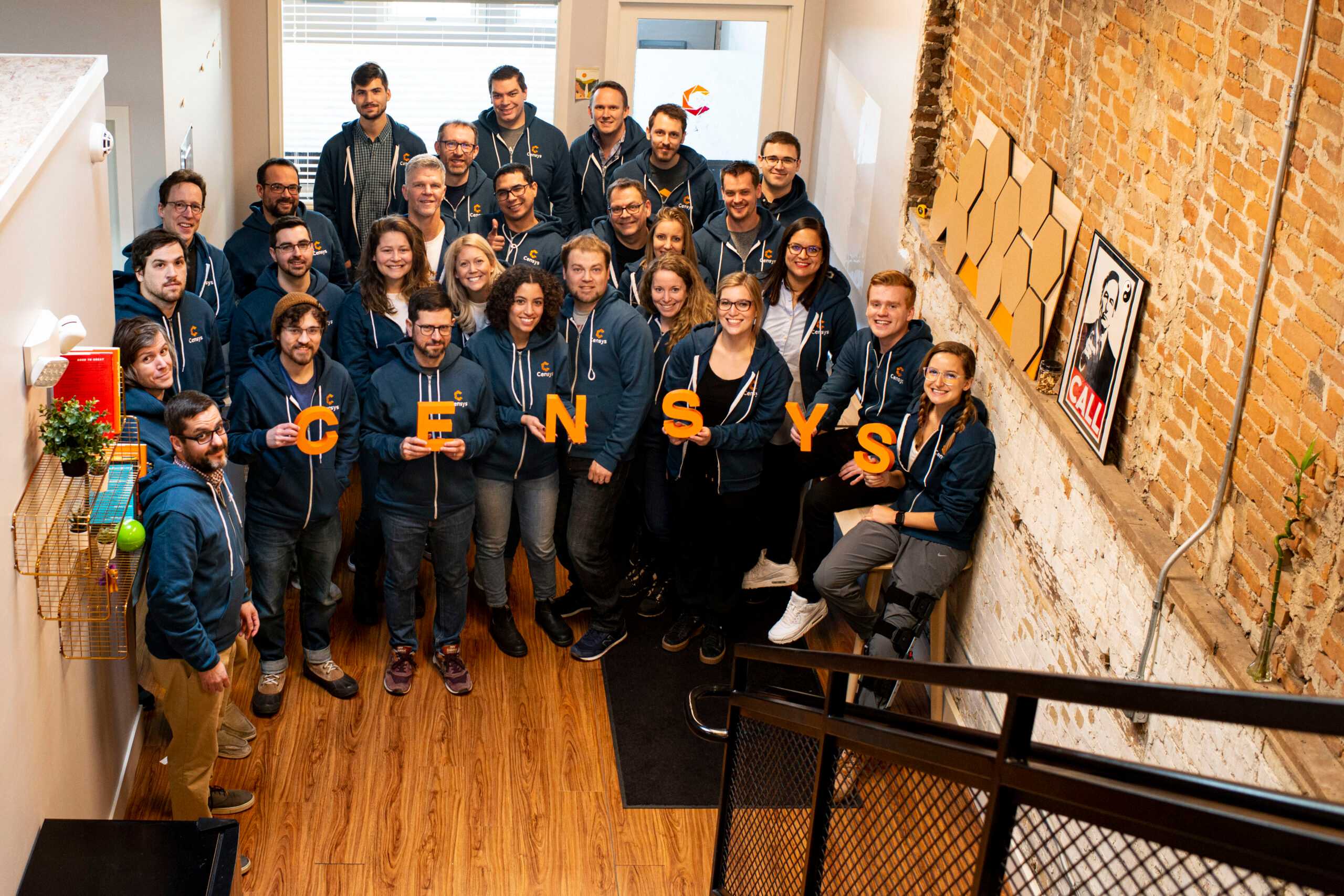
Censys became a commercial company in 2017, growing out of University of Michigan research. Dug Song introduced Kelly and Corcoran to the academic team. The founders included Zakir Durumeric, David Adrian and J. Alex Halderman. Contemporary coverage in 2018 identified Kelly as CEO and Corcoran as COO. The researchers brought the science; the experienced operators helped give it a company around it.
That division of work deserves attention. A research tool can reveal something important and still require a great deal of work before an enterprise can rely on it. There are customers to understand, contracts to deliver and a service to maintain. Commercialization makes the discovery available under a different set of promises. Somebody now expects it to work again tomorrow.
The University of Michigan’s 2018 impact report described Censys as a commercial version of the researchers’ internet security data service. The purpose was visibility for defenders: helping security teams understand the infrastructure connected to the internet and find gaps in it. Corcoran’s contribution belongs to this transition from a research capability to an organization serving customers.
The trouble with the last five percent
By 2020, Corcoran was Censys’s CEO. He described the difficulty of discovering the internet’s less obvious corners in plain language: “Finding the dark shadows of the internet is really hard.” The easy assets were only part of the job. His explanation focused on the last five percent, the awkward remainder that could escape a company’s understanding of what it had exposed online.
For a customer, the problem begins before deciding which vulnerability deserves attention. What systems are there? Which ones can somebody outside the company reach? A security team can be diligent about the infrastructure it knows and still have an incomplete picture. Discovery gives the rest of its work somewhere firmer to stand.
Censys announced a $15.5 million Series A in 2020, co-led by GV and Decibel, with Greylock participating. Alongside the funding came a new scan engine developed over two years. The company said its architecture could find newly online vulnerable services more quickly, building on lessons from the ZMap scanning project. Corcoran’s stated use for the capital included security talent and global infrastructure.
He also articulated the ambition in terms of time: getting closer to instantaneous knowledge. That is a demanding goal for something as changeable as internet infrastructure. The interesting part is the direction of travel. A static inventory becomes less useful as its subject moves. A service devoted to visibility has to keep looking.
Corcoran brought that question home, too. In April 2020, he challenged Censys employees to use the company’s data and search application to examine their own home attack surfaces. It was a practical exercise in turning the tool inward. Before explaining visibility to another organization, take a look at what your own environment reveals.
“The moral of the story is ‘know what you don’t know’.”
David Corcoran, discussing first-time founders in 2022
The recruiting pitch gets an honest edit
Corcoran’s later reflections on leadership contain considerably less glamour than a founder portrait usually promises. In a 2022 conversation, he described the hardships of being a CEO and the need to make difficult decisions even when people will dislike them. He advised first-time founders to recognize gaps in their knowledge and bring in people who can fill those gaps.
The advice has a useful tension. A leader needs the judgment to decide and enough humility to ask for help. Neither task abolishes the other. A room full of expertise still needs a decision; a person empowered to decide still needs the room. Corcoran’s account leaves space for both, which is more useful than pretending certainty comes with the title.
His argument about hiring is similarly practical. In 2021, he urged startups to set honest expectations with candidates, including the difficult parts of joining a young company. Perks and camaraderie can help attract a team. Candidates also need enough information to decide whether the work fits them. The recruitment pitch should survive contact with the first week on the job.
He made room for other kinds of sharing at Censys. Virtual workshops included his own sessions on blacksmithing and food preservation. It is a pleasantly concrete detail in a career full of invisible systems. Even a software company can have a colleague who knows what to do with a hammer. In 2022, Michigan Founders Fund recognized Corcoran with its Top Mentor award.
From exposed servers to the dinner table
The later chapter takes him toward food. Purdue DIAL Ventures lists Dave Corcoran as a resident entrepreneur. The venture studio brings together industry partners, entrepreneurs and researchers to build companies around agrifood problems. It works on validating opportunities before building businesses, keeping the people who live with the problem involved in the process.
In a June 2026 public post, Corcoran explained why this subject appealed after years in cybersecurity. He wanted to work on something people could relate to directly: food, and the farmers and supply chains that make it possible. The ambition is understandable without a diagram. Everyone at the table has some stake in whether the system behind dinner works.
His security experience remains relevant. He was listed as a facilitator for a July 2025 discussion about cybersecurity in agrifood systems. His teaching supplies another connection. At Trine University, he advised a 2023 senior capstone team building an Asset Security Scanner that used the Censys API, a MySQL database and Grafana dashboards to organize information about exposed assets.
A 2026 event biography places him on a small farm in Northeast Indiana and identifies his senior capstone teaching at Trine. The classroom, the farm and the venture studio give this chapter its own geography. They also bring the work back to things someone can use, maintain or improve. The builder has acquired several places to build.
That makes the porch visits feel less like a detour. Across Corcoran’s career, useful knowledge keeps needing a route to another person: a software interface, a commercial service, a candid job conversation, a student project. Sometimes that route is digital. Sometimes a founder gets in the car. A company may measure the internet at speed; understanding the people around it can still take an afternoon.