Breaking
Distinguished Senior Fellow, American Enterprise Institute Co-host of "What the Hell Is Going On?" Ten years on the Senate Foreign Relations Committee Teaches US Middle East policy at Georgetown Born in Melbourne. Sharpened in Jerusalem. Quoted in Washington. NBC News political analyst
Foreign & Defense Policy

Danielle Pletka

She titled the podcast with the question everyone mutters at the news. Twenty years deep in foreign policy, it is still the honest one.

AEI Senior Fellow Middle East / Iran Author & Analyst Georgetown
Danielle Pletka

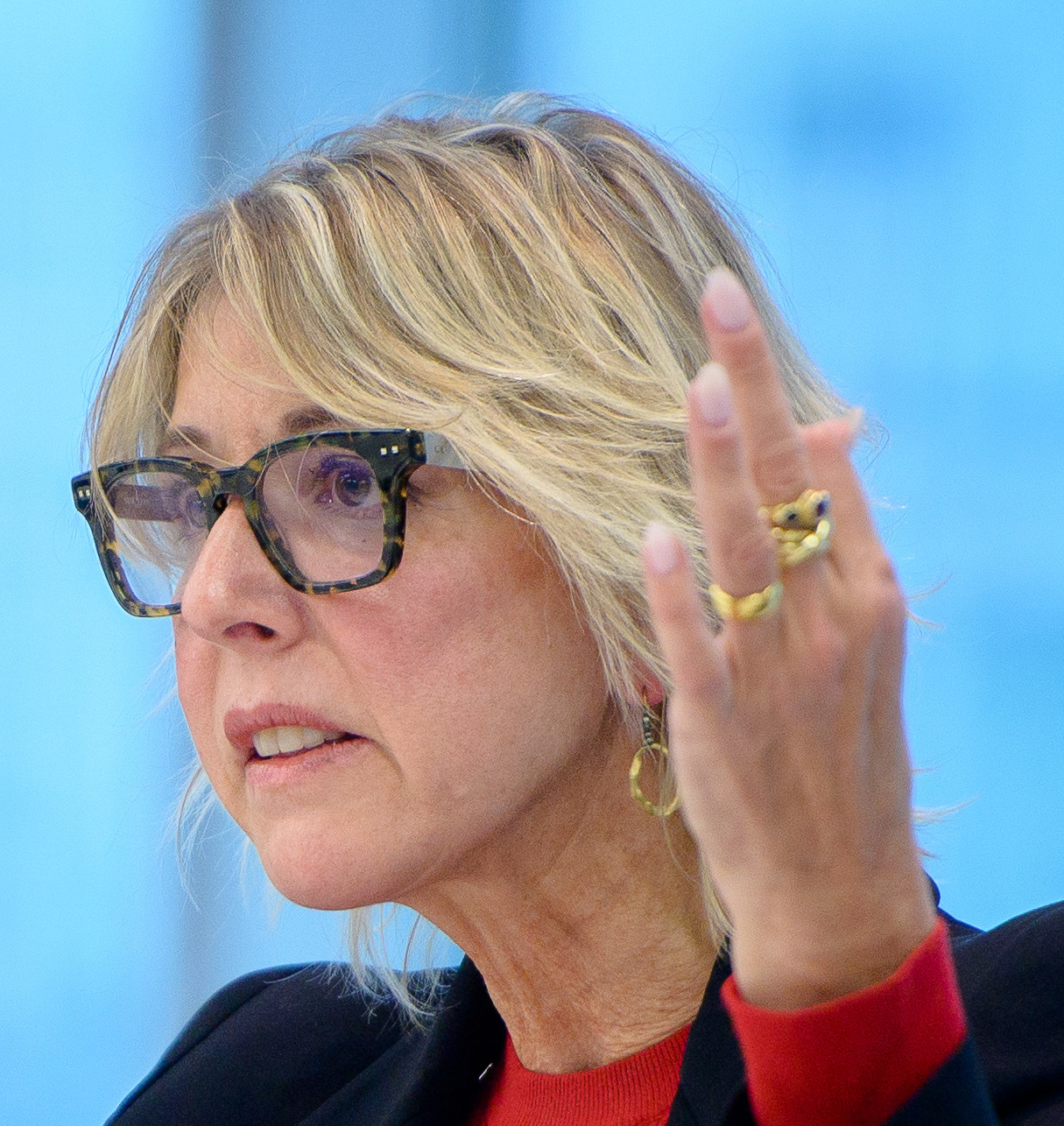
Pletka, 2020 - Star of David at the collar, a reporter's stare held over from the Jerusalem days.

The Dossier

What the hell is going on - and who you ask

The microphone goes live and the question is right there in the title: what the hell is going on? Every Friday Danielle Pletka and Marc Thiessen sit down to answer it - one of them tracking the politics, the other tracking the world - and the appeal is the refusal to pretend the map is simpler than it is.

Pletka is a distinguished senior fellow in Foreign and Defense Policy Studies at the American Enterprise Institute, the perch she has held since 2020 after nearly two decades running the shop as vice president. Her beat is the unstable arc of it: the Middle East, Iran, terrorism, the places where the headlines say "crisis" and producers reach for the phone.

She does not do diplomatic. The Washington Post once filed her under "a staunch conservative with a caustic manner," which she has worn less like an insult than a job description. The directness is the product, the reason NBC News keeps her on retainer and the networks keep dialing.

It is easy to mistake the longevity for settledness, as if the work were finished. It is not. The map she covers keeps rearranging itself - Tehran, the Gulf, the long shadow of October 7 - and the audience for someone who can read it without flinching only grows. She is still filing, still teaching, still pressing record on Friday mornings, which is the part the resume undersells: the appetite has not dimmed.

The throughline runs back further than the think tank. Before Washington knew her name, she was twenty-one and filing copy from the Reuters bureau in Jerusalem, a history major from Smith College who had wandered into the most contested square mile on earth and decided to stay close to the story.

From Jerusalem the path bent toward the Beltway by way of a master's degree at the Paul H. Nitze School of Advanced International Studies, the Johns Hopkins program that has fed Washington's foreign policy apparatus for generations. SAIS gave the reporter's instinct a framework. The Senate gave it teeth.
1992
Joined Senate FRC
10
Years for Jesse Helms
2002
Arrived at AEI
1994
Became US citizen

The short version of a long career: she has spent more than thirty years explaining the unexplainable to people who get to make decisions about it.

What the hell is going on? - the question that became a podcast, and the one she has been answering since 1992
The Long Game

From a Jerusalem newsroom to the Senate's hard chair

The decade that built the reputation was spent in a place few people volunteer for: the senior staff of Senator Jesse Helms, one of the most formidable and feared foreign policy figures the chamber has produced. Ten years on Near East and South Asia, writing the questions a senator put to the people who ran the world. The instinct for the uncomfortable question never left.

The job description for that decade sounds dry until you sit with it. The Senate Foreign Relations Committee is where treaties live or die, where ambassadors are confirmed or stalled, where the United States decides in public what it will tolerate abroad. To staff its Near East and South Asia portfolio under a chairman as unyielding as Helms was to hold a pen over some of the most consequential arguments of the post-Cold-War decade. The work was not abstract. It was the briefing memo, the hearing question, the line of policy that a senator would read into the record and a region would feel.

When she crossed the river to the American Enterprise Institute in 2002, she was not arriving as a credentialed academic but as a practitioner - someone who had watched the machinery from the inside and could explain why it jammed. AEI is one of Washington's oldest and most influential think tanks, a clearinghouse for the ideas that shape Republican foreign policy, and for eighteen years she ran its foreign and defense shop. That is a long time to be responsible for an institution's view of the world.

1984-85
Editorial assistant at the Los Angeles Times and the Reuters Jerusalem bureau - the first taste of the beat that would define her.
Mid-80s
Staff writer for Insight on the News.
1992-2002
Senior professional staff member for Near East and South Asia, Senate Foreign Relations Committee, under Senator Jesse Helms.
2002-2020
Vice President for Foreign and Defense Policy Studies, American Enterprise Institute.
2019
Launches "What the Hell Is Going On?" with Marc Thiessen.
2020-now
Distinguished Senior Fellow at AEI; adjunct instructor at Georgetown's Center for Jewish Civilization and the Walsh School of Foreign Service.
Three Rooms, One Question

Where you find her

The Studio

"What the Hell Is Going On?" runs on conversation that is informative and unapologetically irreverent. She and Thiessen drag sitting policymakers and experts through the tough, probing questions most interviewers skip.

The Classroom

At Georgetown she teaches US Middle East policy to the next batch of diplomats and analysts - the same hard questions, just aimed at people who will one day be asked them on the record.

The Page & the Screen

Bylines in the Washington Post, Wall Street Journal, New York Times, Foreign Policy, National Review and Politico. A standing chair as an NBC News political analyst.

The Beat Map

Where her attention goes

A rough read on the territory she has staked out over three decades of analysis and commentary.

The Middle East95%
Iran & nonproliferation88%
Terrorism & national security82%
US foreign policy & politics78%
On the Record

Where she has planted the flag

A career in foreign policy is a paper trail, and hers is unusually legible. She backed the 2003 invasion of Iraq and the 2007 troop surge, and she criticized the 2011 withdrawal - a sequence of positions she has defended rather than disowned. On Iran she has pushed for regime change by non-military means and opposed the 2015 nuclear agreement, yet when the Trump administration walked away from that same deal in 2017, she argued against the exit. The instinct is not reflexive partisanship; it is a particular theory of how American power should be used, applied case by case.

That consistency is the thing colleagues and critics both reckon with. You can map her arguments across two decades and find a coherent worldview underneath the individual fights - one that treats engagement abroad as a duty rather than an indulgence, and treats clarity as more useful than comfort.

Iraq

Supported the 2003 invasion and the 2007 surge; criticized the 2011 withdrawal. No retreat from the record.

Iran

Advocates non-military regime change. Opposed the 2015 nuclear deal - and opposed the 2017 withdrawal from it.

Engagement

A consistent case for muscular American involvement in the Middle East, across administrations of both parties.

The Margins

Things that do not fit the bio

Call her

"Dany." The full Danielle is for bylines and witness lists.

Origin

Born in Melbourne, Australia. Raised in Boston. Naturalized American in 1994.

The household

Married to Stephen Rademaker, a former Assistant Secretary of State for nonproliferation - dinner conversation runs heavy on arms control.

Started as

A history major at Smith College before international affairs got its hooks in.

The title

"What the Hell Is Going On?" is exactly the question listeners ask every news cycle. That is the point.

On camera

September 2024, PBS NewsHour: Star of David necklace, yellow ribbon pin for the October 7 hostages.

The Voice

Caustic is a compliment

There is a particular sound to a Pletka argument. It does not hedge toward the center to seem reasonable. It does not bury the conclusion under qualifiers. It states the position, dares you to disagree, and moves on - which is exactly why editors at the Washington Post, the Wall Street Journal, the New York Times, Foreign Policy, National Review and Politico keep her on the contributor list, and why a producer chasing a hard segment knows she will not soften it for the camera.

The conservatism is real and it is consistent. She has argued for muscular American engagement in the Middle East across administrations of both parties, pressed hard on Iran, and treated terrorism as a problem to be confronted rather than managed. People disagree with her - vigorously, in print - and that is the ecosystem she has chosen to live in. The currency of the think tank world is the argument that survives contact with a smart opponent, and she has spent twenty years trading in it.

What keeps the work from going stale is the format change. The op-ed is a monologue; the podcast is a cross-examination. "What the Hell Is Going On?" puts her back in the reporter's chair she left in Jerusalem, except now the subjects are the people who run the policy. The title is not a marketing flourish. It is the question a citizen actually asks when the news breaks and nobody on the screen will give a straight answer.

The pairing with Thiessen works because it is not an echo chamber - one tracks the domestic politics, the other the world beyond the water's edge, and the friction between those two readings is the show. Listeners get the argument as it actually happens between two people who know the material, not the sanded-down version built for a sound bite. That, more than any single position she has held, is the through-line of the whole career: a refusal to let the explanation get easier than the thing it is explaining.

The byline list

Washington Post · Wall Street Journal · New York Times · Foreign Policy · National Review · Commentary · The Dispatch · The Hill · Politico.

The standing gig

Political analyst for NBC News - the chair they hand to the person who will not retreat into mush when the question gets sharp.

The Rolodex

Where to find her

Pass It Along

Share this profile