Person / Author / National Security
Tom Nichols
He named the death of expertise before the rest of us noticed the body was cold.
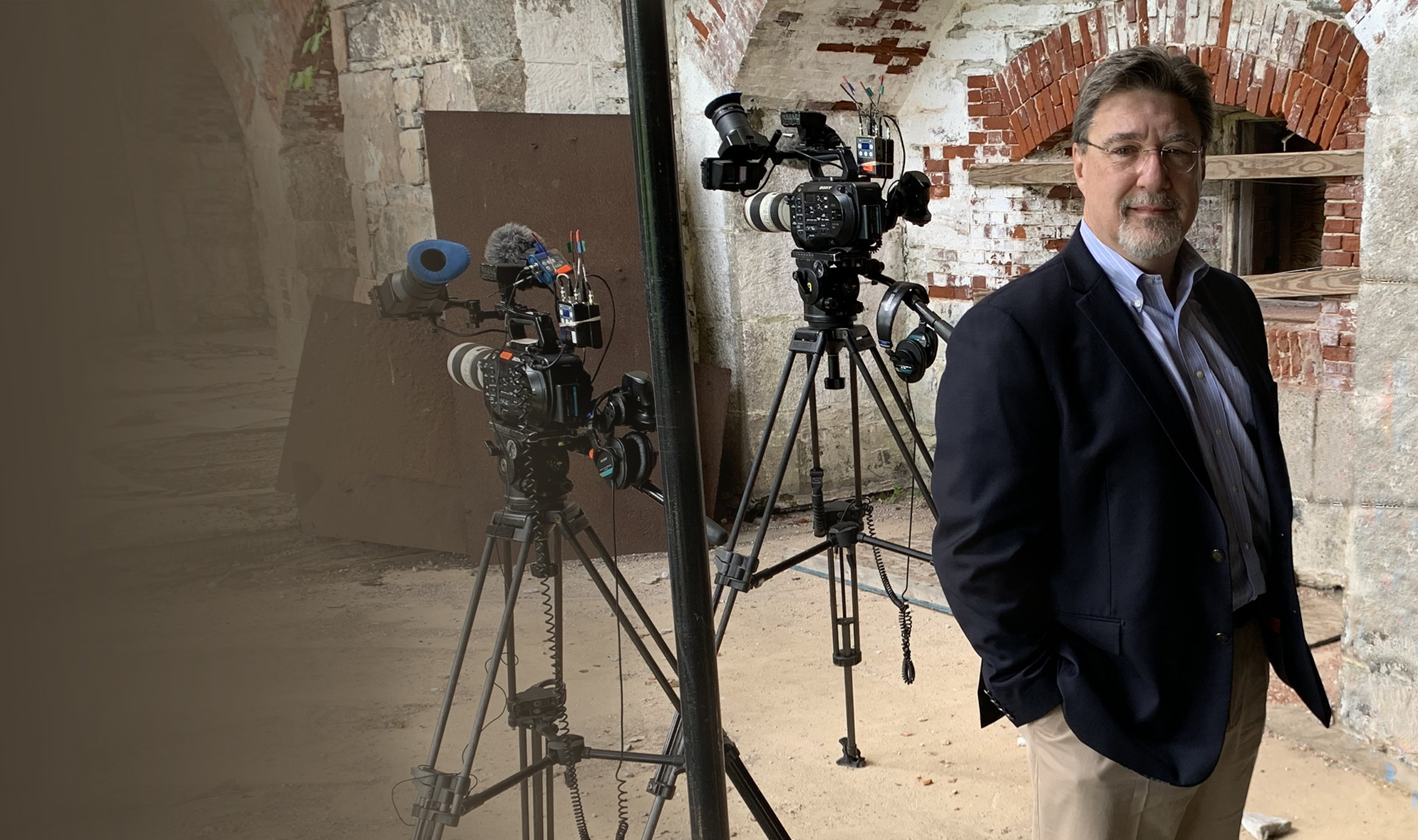
Tom Nichols. The glasses are not a costume. The skepticism is genuine.
He named the death of expertise before the rest of us noticed the body was cold.
Most mornings, hundreds of thousands of people open an email signed by a man who used to teach nuclear targeting to military officers. The Atlantic Daily lands in inboxes with Tom Nichols's name on it, and the byline carries a quarter-century of classroom hours spent on Soviet doctrine, escalation ladders, and the precise vocabulary of catastrophe. He left the lecture hall in 2022. He reaches far more people now than he ever did in any seminar.
Nichols is a staff writer at The Atlantic and Professor Emeritus of National Security Affairs at the U.S. Naval War College. That is the resume. The reason you know the name is a book he wrote almost by accident. In 2014 he sat down, irritated, and banged out an essay called "The Death of Expertise" for The Federalist. It struck a nerve that was already raw. Three years later Oxford University Press turned it into a book, and the phrase escaped into the language. People now use it who have never read a page of it, which is, when you think about it, exactly his point.
His argument is uncomfortable because it refuses the easy villains. The problem isn't only cynical politicians or a broken media diet, though he has plenty to say about both. It's a culture that has decided ignorance is a kind of freedom and that having read a few headlines is the same as knowing something. He blames grade inflation, the bottomless internet, and a vanity that mistakes a Google search for a medical degree.
We have come to a point where ignorance, especially of anything related to public policy, is an actual virtue.
He followed it in 2021 with "Our Own Worst Enemy: The Assault From Within on Modern Democracy," a title that tells you where he points the finger. The fashionable explanations of the day blamed globalization, or shadowy elites, or economic anxiety. Nichols handed the indictment back to the voters. Democracy, in his telling, is not being stolen from a virtuous public. It is being neglected by a comfortable one.
His subject for decades was Russia, and it shows. The handle he writes under, RadioFreeTom, nods to Radio Free Europe, the Cold War broadcaster that beamed information past the Iron Curtain. When Putin invaded Ukraine in 2022, the scholar who had spent his life on Russian strategy was not surprised, only grim. "If Putin's goal was to cement his grip on power by making Russia hated for decades to come," he wrote, "well, congratulations, I guess."
Nichols registered Republican in 1979 and stayed one for almost forty years. In 2016 he became a "Never Trump" conservative, an awkward thing to be, and urged his fellow conservatives to vote for Hillary Clinton. On October 7, 2018, after the Brett Kavanaugh confirmation, he changed his registration to independent and stopped pretending. He has been a registered nobody's man ever since, which suits a writer whose whole brand is refusing to take the comfortable line.
What makes him readable is that the rigor never curdles into self-importance. He is funny, blunt, and openly a curmudgeon about it. He will tell you the food was better, the standards were higher, and the discourse was smarter, then catch himself doing the old-man bit and lean into it anyway.
If Putin's goal was to make Russia hated for decades to come, well, congratulations, I guess.
Here is the detail nobody expects. The man warning America about the death of expertise is, himself, a five-time undefeated Jeopardy! champion. He ran the table in 1994, came back for the Tournament of Champions, and was invited again in 2005 for the Ultimate Tournament of Champions, the all-time bracket. It is the rare credential that no university can confer and no internet argument can take away. A scholar earns a PhD by writing a thesis on Khrushchev. He earns a different kind of authority by ringing in faster than two strangers under studio lights.
And then there is the cameo. In 2022 he turned up on HBO's "Succession," playing a fictional political commentator named Ben Stove in the election-night episode. A real pundit playing a fake one on a show about the corrosion of media power. The casting was almost too neat.
He was born in Holyoke, Massachusetts, on December 7, 1960, the grandson of Greek immigrants on his father's side, raised Greek Orthodox. He stacked the degrees: Boston University, then Columbia, then a certificate from the Harriman Institute, then a PhD in government from Georgetown in 1988, with a thesis on Soviet military doctrine under Khrushchev and Gorbachev. He taught at Dartmouth, worked as a legislative aide to Senator John Heinz, and in 1997 joined the Naval War College, where he stayed until retirement.
Off the page he is, by his own description, a cat guy and a New Englander who would rather be home. He is also a serious video gamer, the kind who logs real hours in Baldur's Gate 3 and the Fallout wasteland. A man who spends his days thinking about civilizational collapse and his evenings role-playing through it. There is a joke in there, and he knows it.
Self-described cat guy, New Englander, and democracy defender who will tell you the discourse used to be smarter.
Spends his days on civilizational collapse, his evenings role-playing through it in Baldur's Gate 3 and Fallout.
Ran the Jeopardy! table five times in 1994 and got the call back for the all-time tournament.