Breaking
FENNEL retail investors get the shareholder vote back $8.5M raised - backed by the founder of Acorns B CORP certified investing app NO PFOF - your trades aren't for sale here EX-PHYSICIST swaps dark matter for capital markets FAST COMPANY most innovative in personal finance
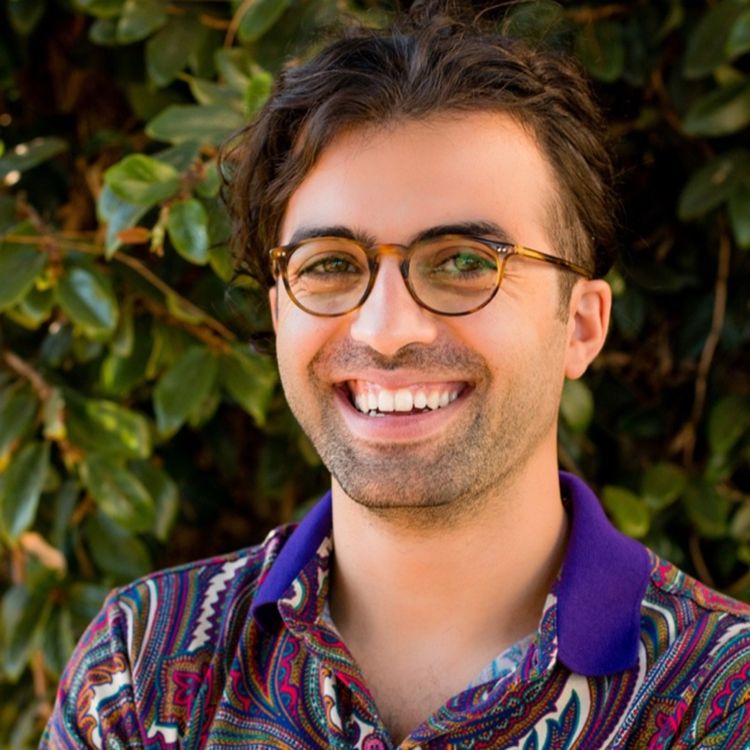
Daniel Naim, founder and CEO of Fennel
Daniel Naim. He used to measure the invisible. Now he measures what companies would rather you not see.
Founder · Fennel

Daniel Naim

A dark-matter physicist walked out of the lab, looked at the stock market, and decided the most pressing mystery was who gets a vote.

In September 2020, Daniel Naim was in a Bay Area lab with, by his count, 200 of the smartest people he knew, all hunting for dark matter. Outside, California was on fire. He asked himself an awkward question - and then he quit.

$8.5M
Raised
B Corp
Certified
0%
Payment for order flow
1 vote
Per share, kept by you
What he's building

An app that treats a share like a seat at the table

Fennel is a mobile investing app, and on the surface it looks like the others - buy a stock, watch a chart, build a portfolio. The difference is what it refuses to do. It won't sell your trade orders to a high-frequency firm. It won't quietly lend your shares out the back door. And it does both of those things on purpose, because the moment a brokerage lends your shares, you lose the right to vote them. Naim built Fennel so that the vote stays with the person whose name is on the account.

On top of trading, Fennel hands users something institutional desks pay a fortune for: digestible ESG data on the companies they own, plus a feed of past and upcoming shareholder votes. The pitch is blunt. You own a slice of the company. Ownership is supposed to come with a say. Most apps have spent a decade making you forget that.

The work earned Fennel a spot on Fast Company's list of the most innovative companies in personal finance and, in 2023, a B Corp certification - the legal stamp for businesses that weigh people and planet alongside profit.

The thesis, in one line

"Investing is about ownership."

And ownership, Naim argues, is a privilege with a responsibility attached: the right to push the companies you own toward climate, human rights, and social equity - by voting, not just by buying.

Why "Fennel"

An herb, not an acronym

The name is plant-forward on purpose. Fresh, green, a little unexpected - the opposite of the grey-suit brokerage aesthetic it's trying to replace.

Our mission is to give everyone a voice in the companies they invest in, not just the top 1% with formidable seats at the table.
- Daniel Naim, founder & CEO, Fennel
The pivot

From the invisible universe to the visible one

For most of his twenties, Naim chased dark matter - the unseen stuff that makes up the bulk of the universe and refuses to show up in any detector. He earned a B.S. in Physics and Astrophysics at UC Berkeley, then a PhD in Physics at UC Davis, working on dark-matter detection with cryogenic systems and time series analysis, with ties to Lawrence Livermore and Berkeley Lab.

Then came the question. Standing in that lab in September 2020, watching the wildfires and reading the news, he wondered whether finding dark matter was really the most important problem he could be working on. Two things tipped him. Tesla's valuation had shown that markets could suddenly start pricing in the health of the planet. And Engine No. 1, a tiny activist fund, had just won three Exxon Mobil board seats with a sliver of shares - proof that shareholder pressure was a real lever, not a fantasy.

His conclusion was almost a physicist's: the system already had the mechanism. "Retail investors had to band together and use the system in order to change it." The hard part wasn't inventing power. It was distributing it.

The roots

Beirut taught the first lesson

Naim grew up in Beirut, Lebanon, where he says he watched socioeconomic inequities "fester right under individuals' noses." The instinct to look at a lopsided system and ask who's missing from the table didn't start with the stock market. It started a long way from it.

01

No PFOF

Fennel doesn't sell your order flow. Your trades aren't the product.

02

No share lending

Your shares stay yours - so your votes stay yours.

03

Full ESG data

The impact numbers, made readable, on every company you own.

The path

How a physicist became a founder

2011-2016
Undergrad at UC Riverside, then UC Berkeley - B.S. degrees in Physics and Astrophysics.
2017-2021
PhD in Physics at UC Davis. Dark-matter detection, cryogenic systems, time series analysis.
Sept 2020
The lab, the wildfires, the question. Engine No. 1's Exxon win lights the fuse.
June 2021
Founds Fennel and becomes CEO.
2022
Fennel launches its ESG-data-driven investing platform to the public.
2023
$3.5M seed extension, ~$8.5M total. B Corp certification. Fast Company recognition.
The capital

$8.5M, and a notable backer

Fennel's cap table includes the founder of Acorns, alongside Capital Factory and Temerity Capital Partners. Funding has stacked up to roughly $8.5 million.

Seed
$5.0M
2023
+$3.5M
Total
$8.5M

Figures from public funding disclosures; seed split shown for illustration.

In his words

The founder, unfiltered

"Wouldn't it be great to live in a world where every company's mission was aligned with the values of their investors?"- On the world Fennel is chasing
"Retail investors had to band together and use the system in order to change it."- On why he built a voting bloc, not a megaphone
Fine print worth reading

Things that don't fit on a pitch deck

The 1% has a seat at the table. Naim built Fennel so the other 99% get a chair, a ballot, and the data to use it.
- The Fennel premise
Go deeper

Follow the thread