Daniel Alberson's career makes a tidy circle around a stubborn pile of documents. He began in accounting, left to build products that felt like the future, and returned when artificial intelligence finally looked capable of fixing the work that had bothered him at the start. Punchcard, the company he leads from Provo, Utah, lives at the intersection: an auditor's intolerance for unsupported answers and a product manager's intolerance for needless friction.
The circle contains a few unlikely landmarks. There is an EY audit room, where a young associate learned how much of an auditor's first year could vanish into tests of details. There is a water park in Orlando, where a wristband could wait in line while its owner floated elsewhere. There are augmented-reality glasses at Facebook. There is a graduate-school essay about products that act on a person's behalf. And there is a Y Combinator application assembled with 13 days left on the clock.
Alberson's bet is that these episodes belong together. Software can take the repetitive route through the evidence. A person must still decide where the route ends.
The first ledger
Accounting did not arrive in Alberson's life as a dreary fallback. He has recalled growing up around mentors who made the profession look useful and stable: a scout leader who was a senior manager at PwC, and a bishop who was the managing partner at Grant Thornton. He loved technology too and built websites for fun, but he wanted to become an accountant. At Brigham Young University, he studied accounting. In 2014, he went into audit at Ernst & Young.
The education became practical immediately. Much of a new auditor's time, he found, went to substantive testing: opening support, matching figures, checking whether transactions agreed with invoices or contracts, and recording what had been found. The more strategic work existed, but it waited behind years of mechanical preparation. Alberson kept asking whether the process could improve. The prevailing instruction was simpler: complete it quickly, keep the quality high, and earn the judgment-heavy assignments later.
I could not live with that. I wanted to fix the work.Daniel Alberson
He did not build an audit company then. He moved within EY into digital transformation strategy, closer to engineers and designers. The detour gave him a different vocabulary for the same instinct. A workflow did not have to be endured merely because it was familiar. It could be redesigned around the person stuck inside it.
While you float
One of the products he helped build was Universal Orlando's Virtual Line experience at Volcano Bay. The premise is almost indecently pleasant: tap a wearable to reserve a place for a water slide, then go float in the lazy river. The system holds the place and taps the guest when the ride is ready. Step off and the photograph is already waiting in the app. The queue still exists, but the person no longer has to stand in it.
In 2020, Alberson used that experience in an application essay for Northwestern University's Master of Product Design and Development Management program. The prompt asked for a trend that would shape product development over five years. He wrote about "agentive design," the idea that a product should do work for its user without demanding constant inputs. His other example was the Roomba: set the schedule, let it map the room, and intervene only when the machine needs help.
A career that loops back to its first problem
The essay helped him enter Northwestern. He left the program before completing it to join Facebook as a product manager on augmented-reality glasses, the sort of job that can make an old audit binder feel very far away. Alberson later called it a dream job. Still, by early 2023 he was listing business problems that new language models might solve, and the binder crept back into view.
Thirteen days, eight minutes
Alberson left Meta to pursue entrepreneurship. While searching for an idea, he revisited the repetitive tests he remembered from EY. Large language models could reason across documents with different layouts and language. The old automation problem had been that every client's evidence looked different; the new possibility was software that could follow natural-language instructions across those differences.
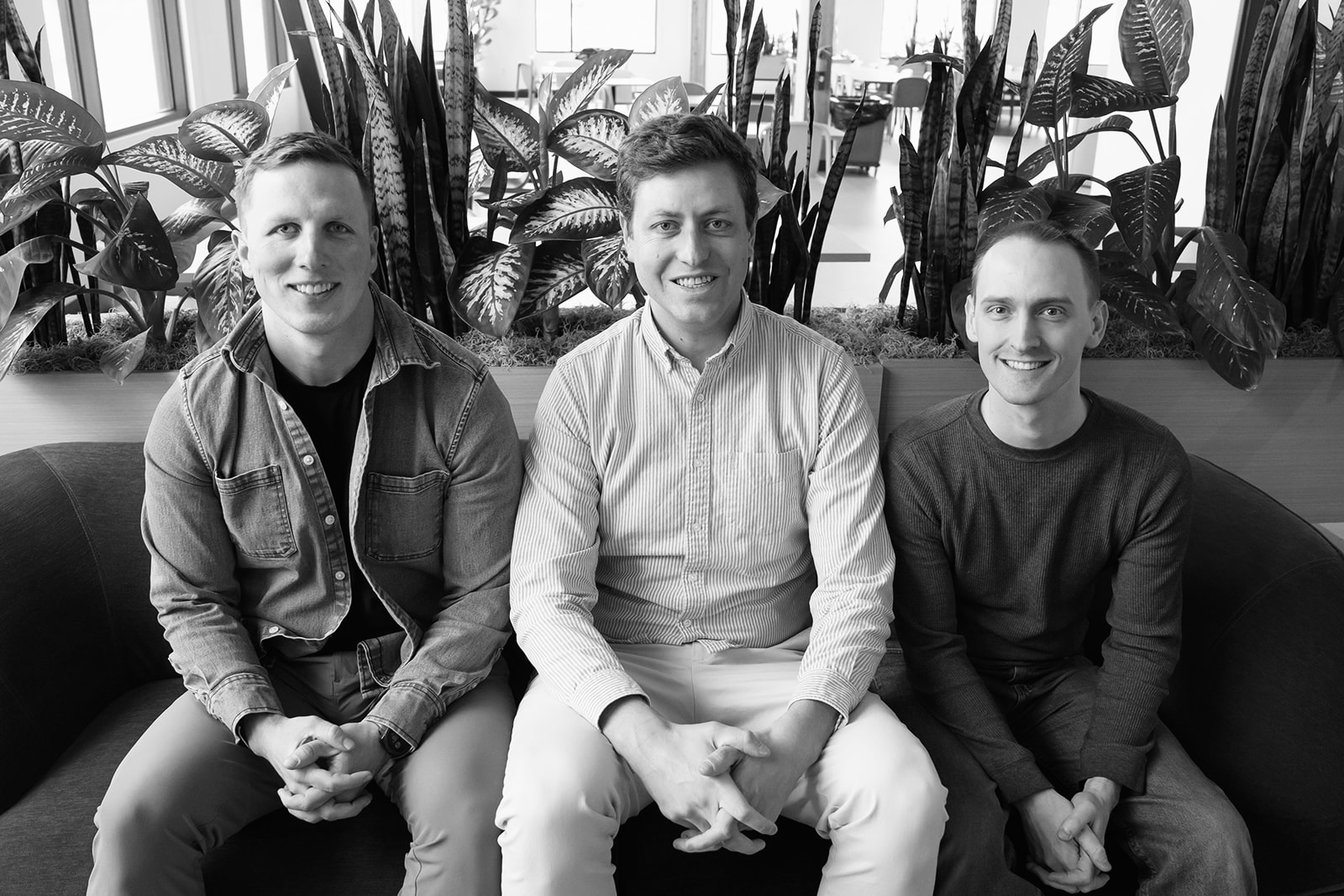
He conceived the idea 13 days before Y Combinator's deadline. He called Kyle Saunders, an ex-Deloitte CPA turned software engineer, and Vidyasagar Ranganaboina, who had worked in AI and machine learning at Google. Over the next two weeks they built a prototype that reconciled two sets of unstructured data. They submitted, spent four more weeks interviewing auditors, and decided they would continue whether YC accepted them or not.
The last number had comic menace. YC interviews were allotted ten minutes; the partners stopped theirs after eight. That night, an email arrived asking for another call. The next day brought the news: Y Combinator wanted the company in its Summer 2023 batch. A deadline sprint had become a funded startup.
The first name was Agentive, taken from the essay. The company would act on behalf of auditors as soon as a client uploaded documents. It would connect support to sample selections, run testing steps, and produce draft work with citations. The system could prepare. The auditor would review.
Receipts, please
Alberson is unusually emphatic about the border. Planning and methodology belong to people. So do risk levels, professional skepticism, client relationships, final conclusions, and the audit opinion. Even as software approaches full-population testing, he argues that auditors should inspect source evidence and manually review a statistically significant sample. Accountability cannot be delegated to a green checkmark.
What software may do is the work wrapped around judgment: request evidence, match an upload to the right selection, read documents, trace a value from one record to another, identify what is missing, draft procedure language, and summarize exceptions. Each output must link back to the document, page, table, or field that produced it. Alberson's best phrase for the requirement is also his neatest product brief.
The best audit AI brings its own receipts.Daniel Alberson
One punchcard, from request to conclusion
The automation prepares a reviewable trail. The opinion remains a human responsibility.
This division changes what a junior career might feel like. Alberson expects younger auditors to manage agents earlier, spend less time copying values from PDFs, and reach risk, revenue, exceptions, walkthroughs, and client conversations sooner. They still need to know how the work is done. They simply should not have to prove their worth by repeating the least instructive parts forever.
An old card for a new machine
By 2026, Agentive had a naming problem born of success. "Agent" and "agentic" had spread across the software industry. A word that once explained the company's premise now made it sound like everyone else. Alberson and his co-founders, Nathan Turnbow and Jason Draper, went looking for a noun they could define.
They found one in accounting's own attic. Punch cards were physical instructions that machines could process at scale. The new Punchcard uses the term for a structured unit of audit work holding the request, evidence, procedure, agent reasoning, citations, and review in one place. Agentive described the behavior. Punchcard names the object.
There is wit in choosing an antique interface for an AI company, but the name also carries a warning. Automation without structure is merely speed with poor filing. In audit, where every number may need to survive a skeptical reviewer, the trail matters as much as the answer.
The human line
Alberson has said the company has had an opportunity to sell and declined because the mission was unfinished. He speaks about family members entering audit, friends who are audit clients, and a desire to make both sides enjoy the experience more. "Right now, I am not planning an exit," he said in a long-form interview. "I am planning on solving customer problems." His compact summary was warmer: "We are heart-first, not exit-plan-first."
That heart has a practical streak. He dislikes three-year software contracts offered before customers can properly try a product. He wants models to recognize when their knowledge may be stale. He cares about software quality down to the citation and the workflow. In a profession built on evidence, charm only travels so far without a footnote.
The intensity occasionally arrives in domestic scale. After spending six hours on a Saturday automating 401(k) audit procedures, Alberson wrote that a breakthrough sent him dancing with his four-year-old daughter. He added that Punchcard had no policy requiring weekend work; people sometimes returned because they enjoyed building with customers and could see the difference. Founders are famously unreliable witnesses to the romance of Saturdays, but the image is useful: a technical milestone, a family dance, then back to the ledger. His enthusiasm for the problem appears stubbornly genuine.
The childhood web builder, the auditor, the theme-park product thinker, and the Meta product manager have not disappeared into the CEO title. Punchcard uses each of them. Its premise is simple enough to fit on an old piece of card stock: let the machine move the repetitive work; make the human answer for the conclusion.
Alberson left audit because he wanted to reach the interesting work sooner. He returned to make that route shorter for everyone behind him.