At some hour when sensible businesses have turned off the lights, a traveler named Mark called CTA Travel. His flight was delayed. The connection through London was slipping away. He expected a recording and a reply many hours later. Instead, someone answered. By the time he and Elaine missed the connection, the agency had already moved them to another flight for the next day.
This small episode is CTA Travel's entire business case compressed into one phone call. The internet made a reservation easy. It did not make disruption pleasant, nor did it volunteer to care which anniversary, meeting or family reunion had just begun to unravel. CTA sells the missing layer: a person who knows the itinerary and remains accountable after the card has been charged.
The company opened in Cerritos, California, in September 1975 as Cerritos Travel Agency. As its customers spread beyond the city, the name contracted to CTA Travel. The storefront remains in Cerritos, but its reach is national and its canvas is broad: custom vacations, ocean and river cruises, luxury trips, honeymoons, destination weddings, meetings, incentives, hosted groups and corporate travel.
The product is judgment
Travel agencies once controlled access. Today, access is everywhere. CTA's answer is to sell selection and coordination instead. Its advisors say they have collectively visited more than 165 countries and list firsthand experience across 19 cruise brands, from Carnival and Disney to Silversea, Seabourn and Uniworld. President Cathie Lentz Fryer says she has sailed on more than 30 river cruises. Director of Sales Justin Dolan reports visiting more than 100 countries.
Those facts matter only when they sharpen a recommendation. A useful advisor does not merely know that two ships sail the Rhine. The advisor knows which atmosphere suits the couple who hates formality, which cabin trade-off is tolerable, and whether an excursion schedule leaves enough time for the one museum they actually care about. The product is not the brochure. It is the reduction of expensive uncertainty.
“My business is built around long-term client relationships, rather than single trips.”Justin Dolan, Director of Sales
That relationship accumulates data of the human sort. Does a client love the fun of choosing hotels but hate logistics? Will a red-eye ruin the first two days? Is a grand resort a delight or an ordeal? Over repeated trips, the advisor learns the traveler as well as the destination. Personalization stops being a checkbox and becomes memory.
Complexity makes the case
Consider the itinerary one customer described: eight flights, six cities, six countries, five guided tours, four hotels, four hotel pickups, three airport pickups and two boat tours. A trip like that is a machine with many moving parts. Every additional handoff creates another place for ambiguity to breed. Who has the arrival time? Does the driver know the terminal? What happens to the tour if the inbound flight moves?
The trip that refuses to fit in one confirmation email
8 flights · 6 countries · 5 tours · 4 hotels · 5 pickups · 2 boat tours
CTA's advisors assemble those pieces, work with destination specialists and suppliers, deliver documents through a mobile itinerary tool, and stay involved until the traveler comes home. For corporate customers, the same logic is applied to policy and budget: find cost-effective arrangements without giving up convenience or service. For groups, the task may swell from an intimate ten people to 1,000, a range Fryer says she has coordinated.
The agency also hosts departures. Its public calendar has included advisor-led journeys through Iberia, Portugal and Spain, Alaska, Antarctica, Japan, the Rhine, New Zealand and Egypt. A hosted group replaces some independent choice with a known organizer and a ready-made social unit. For travelers who enjoy companionship but dislike managing a dozen reservations, that exchange can be attractive.
What the fee buys
CTA states plainly that it charges a non-refundable management fee when confirming reservations. It does not publish one universal amount. That makes comparison less tidy than the fee-free appearance of a booking site, though travel agencies also work inside the supplier-commission economy. Public trip prices offer a clearer glimpse of the underlying inventory: one Paris and Normandy river-cruise flyer advertised cruise fares from $4,580 per person, plus a pre-cruise Paris package from $980, while a 2027 Japan sailing promoted an additional $500-per-suite booking saving. Those prices can change and are not the agency's management fee.
A non-refundable management fee for confirmed reservations. The amount is not publicly standardized. The practical purchase is research, orchestration and support - not merely a ticket.
For a simple flight where schedule and price are the only variables, this model may add little. A confident traveler who wants total control and enjoys the research may reasonably book direct. The equation changes with complexity, money at risk, unfamiliar destinations, group dynamics or a low tolerance for disruption. CTA's sweet spot begins where a cheap error becomes an expensive memory.
The first thing to fail was certainty
In early 2020, the agency could see the old product collapsing in real time. Fryer pulled reports on every client due to travel between March and December. CTA contacted travelers headed to Europe and began answering the question that replaced nearly every other one: can I cancel, and will I get my money back?
The company had reportedly handled $14 million to $15 million in annual travel sales before the pandemic. During the downturn, its employee count fell from nine to four, alongside a network of independent contractors. A business built on movement suddenly had no movement to sell. Waiting for normality would have meant disappearing from clients' minds at the precise moment those clients needed interpretation.
So CTA changed the thing it could control: contact. Its “Stay Connected - Stay Inspired” program rebuilt client outreach around monthly messages, travel-memory albums and virtual gatherings with suppliers. The tone was deliberately split between acknowledging the crisis and keeping future travel imaginable. In 2021, the program earned Fryer a TravelAge West award for client engagement.
The useful pivot was not from travel to something unrelated. It was from booking trips to protecting the relationship that would book the next one.
The part worth copying
A crisis checklist hiding inside a travel story
- Pull the full list of customers exposed to the disruption.
- Contact them before anxiety turns into an inbound queue.
- Separate urgent operational help from longer-term inspiration.
- Give each advisor a repeatable reason to stay personally in touch.
- Keep the relationship useful even when the core transaction pauses.
This play works when trust compounds and the customer expects to buy again. It is weaker for anonymous, one-time, price-only transactions. It also depends on real expertise and enough staff capacity to make personal contact more than a marketing phrase. A phone answered at midnight is persuasive precisely because it is difficult to fake at scale.
Local enough to be accountable
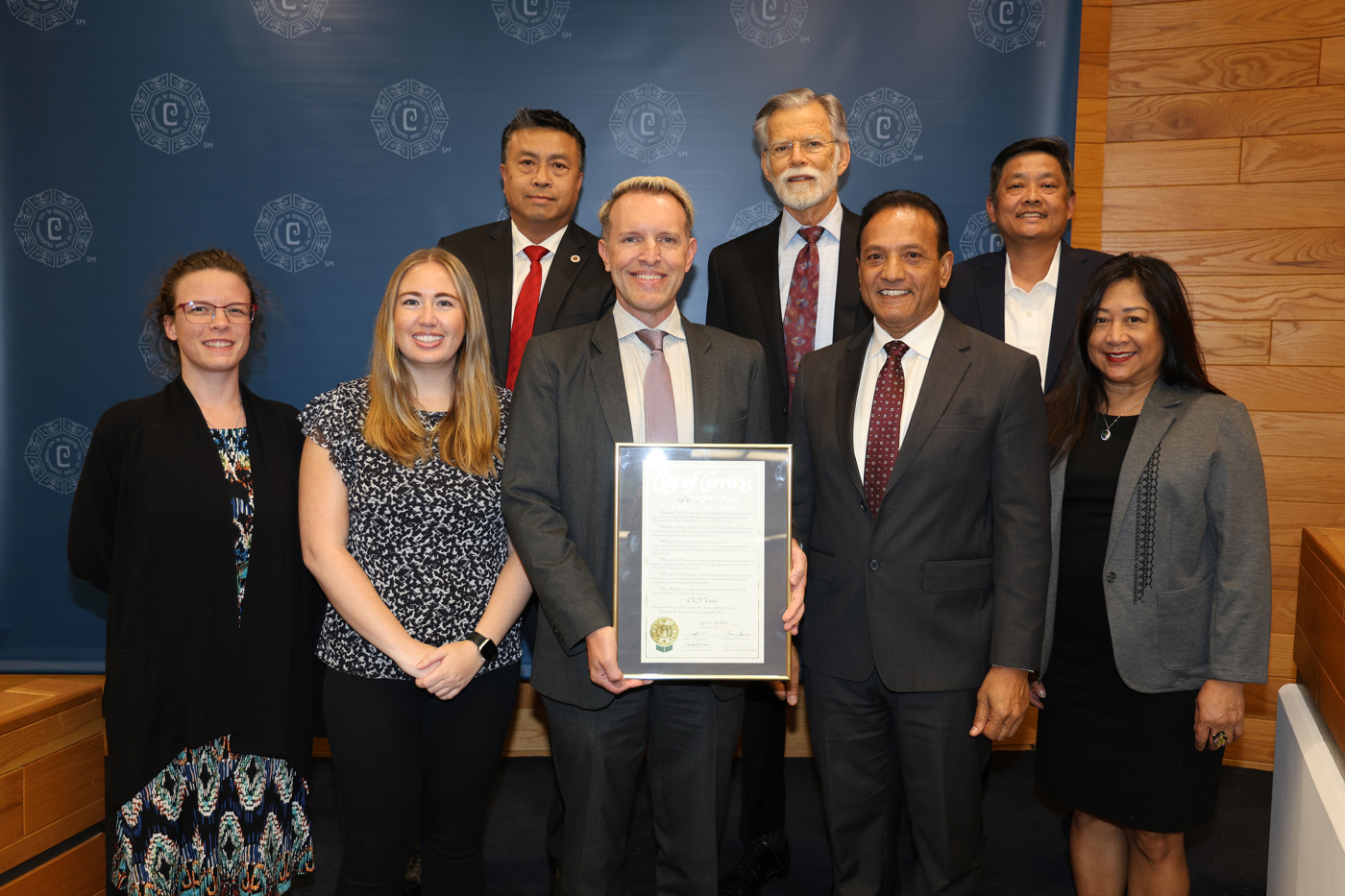
CTA's national reach has not erased its local texture. The City of Cerritos selected the agency for its Business Spotlight program in 2024. The company and Fryer have supported schools, community organizations and local initiatives, including travel prizes used for fundraising. The agency is still a place with weekday office hours, Saturday appointments and people whose biographies sit on the website.
That may sound quaint until one notices how modern the underlying proposition has become. As booking turns into a commodity, accountability becomes the scarce good. CTA does not need to beat every search engine at finding a fare. It needs to be better at understanding why the traveler is going, connecting the pieces, and remaining present when the neat plan meets the untidy world.
Half a century after Cerritos Travel Agency opened its doors, the reservation is no longer the impressive part. The impressive part is everything around it: memory, judgment, coordination, supplier leverage and the calm voice on the other end of a late-night call.