A credit card is an excellent way to buy software. It is a less impressive way to remember why you bought it. Cristina Vila Vives discovered the distinction while working at dopay, a fintech company with offices in several countries. Subscriptions were spread across three credit cards. Payments failed. Teams needed tools, and the company needed to understand what it was paying for. The tools were supposed to make work easier. Keeping track of them had become another job.
Vila went looking for something that could help. She asked other founders how they handled their software subscriptions and found a familiar collection of spreadsheets and Google Docs, each requiring someone to keep it up to date. Nobody seemed particularly pleased with the arrangement. She had encountered a problem at work, checked whether other people shared it, and discovered an opening for a business. In 2018, she founded Cledara.
The beginning was an everyday irritation. A company had bought useful things and gradually lost sight of them. Vila wanted to restore that sight without taking away the freedom to buy. It is a small distinction with considerable consequences for the people who have to reconcile the bill.
The factory before the fintech
Long before the subscriptions, there was her father’s business. Growing up in Spain, Vila enjoyed hearing him talk about running it over dinner. She also accompanied him to his office and the factory floor. The attraction was the whole arrangement: production lines, connected processes, people making things together. Business was something she could watch happening.
Her childhood ambition was to become a hairdresser. Later, she looked back at that wish and recognised the ingredients that had appealed to her: interaction with people, making them happy, and having something of her own. The eventual business would deal in software rather than scissors, but the desire for ownership had survived the change of profession.
She spent more than a decade in financial services before Cledara. At the European Bank for Reconstruction and Development, her work included internal change management. Moving processes and technology forward gave her experience of the less photogenic part of organisational life: getting a business to work differently when people already have a way of doing things.
Her next move took her into a startup building financial services for people without access to conventional banking. At dopay she became head of operations. A business expanding across locations offered a different education from an established bank. There was more movement, more to coordinate, and plenty of software to help everyone move. That last convenience would supply her next idea.
By the time she started Cledara, Vila had worked on both sides of the problem she wanted to solve. She knew why organisations needed processes. She also knew why a fast-moving team might resist a process that stood between it and a tool it needed today. Her ambition was to accommodate both needs in the same product.
Permission to buy, a reason to remember
The change in software purchasing was hiding in plain sight. Cloud applications let an employee sign up for a service in seconds. Work that once involved a central purchasing decision could begin with a team choosing a tool for itself. In her December 2020 funding note, Vila described every person in a company becoming their own procurement department.
That freedom had obvious attractions. A small business could reach software that previously belonged to a much larger organisation. Teams could try things quickly. But the purchase was only the beginning of the relationship. Someone still had to understand the renewal, the invoice, the budget, the user, and the eventual cancellation. A subscription is unusually good at continuing after the enthusiasm that created it has departed.
A conceptual view of the software lifecycle Cledara addresses.
Cledara brought payments and subscription management together. Virtual cards could be assigned to software purchases, with visibility over spending and controls around budgets. The payment itself became part of the record of the software relationship. For Vila, whose experience lay in operations and finance, this was a practical place to intervene.
The company’s purpose also required restraint. People asked for physical cards, mobile applications, and a way to manage family subscriptions. In a 2021 conversation with Factorial founder Bernat Farrero, Vila explained that a young company needed to narrow its focus. A plausible customer request could still pull the business away from the product it was trying to build.
She had left dopay on June 30, 2018. For Cledara’s early launch, she raised a small angel round, used a development agency, and entered the SaaStock startup competition in Dublin. The event gave an early company a deadline and an audience. Cledara won the competition’s Best SaaS Startup of 2018 title. An idea about administrative friction had found people willing to listen.
A useful seat in Dublin
Winning was only part of what SaaStock would do for her. In 2019, Cledara returned to hand on the award. At a pre-conference event in Zendesk’s Dublin office, the team happened to sit near Guillem Sague, a partner at Nauta Capital. A few days later, he introduced them to colleagues including Borja Breña.
It is the sort of episode that makes networking sound easier in retrospect. Take a seat; meet a future investor. The more instructive detail is that the relationship began well before the funding announcement. In December 2020, Nauta led Cledara’s $3.4 million seed round, with participation from existing investor Anthemis.
Vila explained the choice in terms of complementary experience. Anthemis brought knowledge of fintech, important for a business with payments embedded in its product. Nauta brought experience in business software. Cledara needed investors who understood the combination rather than just one half of it.
The company also took part in Techstars London’s 2019 cohort. Vila valued the contact with other founders, including their accounts of what had gone badly. Startup advice can become suspiciously polished once the outcome is known. Hearing the difficulties alongside the successes supplied a more useful picture of the work ahead.
“You already have the no, so go get the yes.”
The advice Vila received from her mother
Her mother’s advice offered a compact approach to asking. A refusal was already available if she did nothing; a request at least created the possibility of a different answer. For a founder recruiting help, seeking customers, and approaching investors, that is a practical family inheritance.
The months between March and September
In March 2022, Cledara began another fundraising process. The market was turning, and investors were slow to move. Vila later described the interruption candidly: conversations slipped into the future, and the company paused its effort. A growing business could not make the investment market cooperate simply by wanting the money.
When fundraising resumed in June, investors could compare the business they had seen in March with the one in front of them. By September, Cledara had closed a $20 million Series A led by CommerzVentures. Carbide Ventures and Massive participated, alongside existing investors Nauta Capital and Notion Capital. The capital supported expansion in the United States.
Separate funding rounds, not personal wealth or revenue.
The September announcement put Cledara at more than 800 customers. It also reported an 830% increase in the volume of software bought through the platform over the preceding 12 months. That measure concerned purchasing volume, a distinction worth keeping when the business itself combined software management with payments.
Vila’s approach to the United States had been to test demand before building a local team. By her March 2023 account, Cledara had reached about 50 American customers before placing someone on the ground there. The company opened an office in Denver after its Series A. Rather than treating an office as proof of a market, she waited for customers to provide the proof.
Denver’s appeal included the possibility of building a relatively stable team, its universities, engineers, and existing technology businesses. There was also a personal bonus: she loved skiing. A location decision can have a spreadsheet behind it and still leave room for a mountain.
Giving the next founder a start
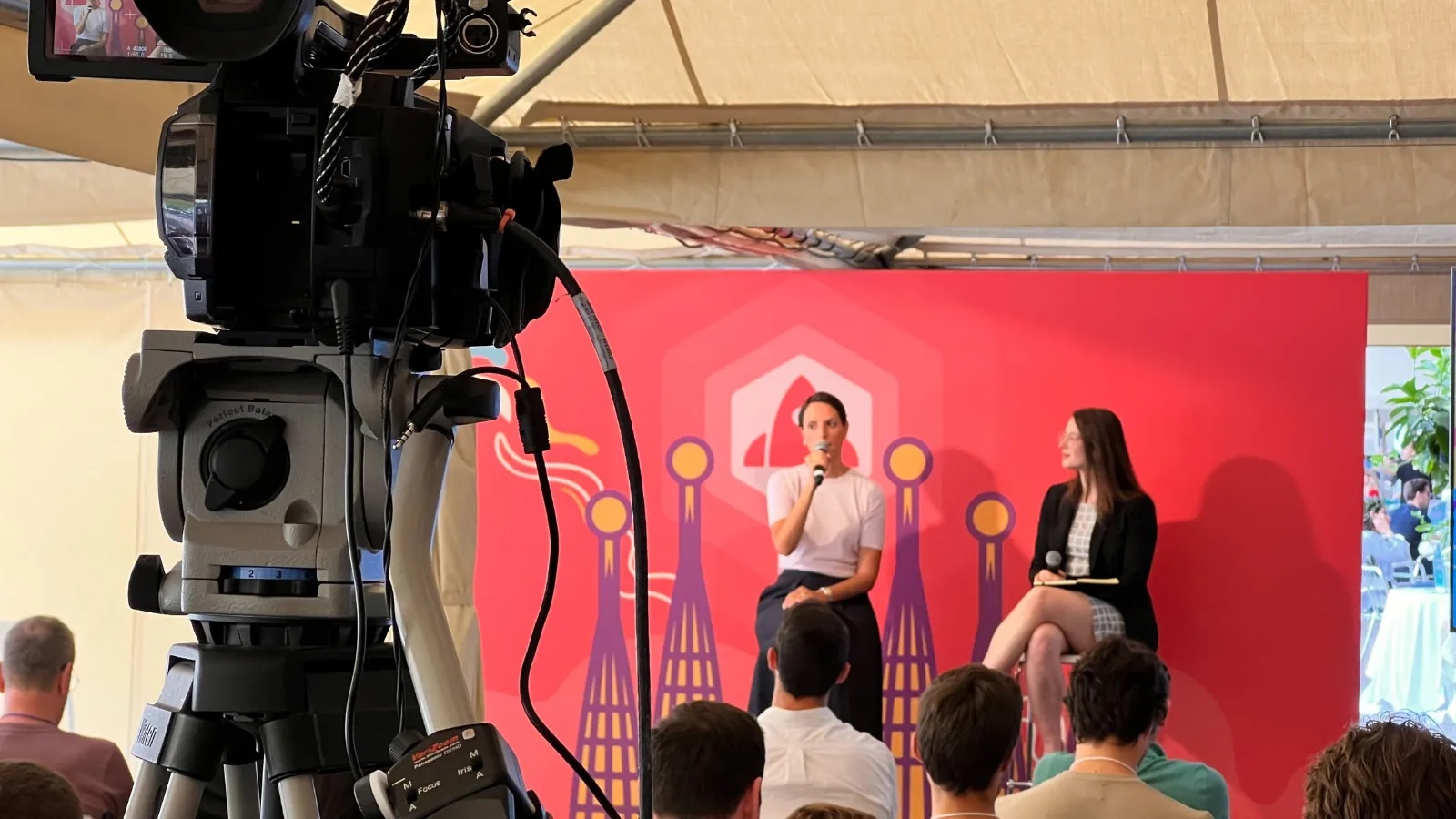
Cledara’s public milestones now extend beyond its earliest launch and funding rounds. In April 2025, Vila joined Project Europe, an initiative backing young technical founders. The programme offers an initial €200,000 investment and access to experienced entrepreneurs. Her participation places her on the other side of the conversations she once sought as a new founder.
The connection fits an intention she expressed early in Cledara’s life: to share her startup experience so that it might help other people beginning theirs. There is continuity between asking founders how they handled software, learning from peers at Techstars, and supporting a new group of entrepreneurs. Each depends on people making time for someone whose business is still taking shape.
For all the payment infrastructure and funding figures, Vila’s picture of work retains a personal scale. Asked by her university about a little-known fact, she said she loved birds. Asked what she would tell her younger self, she answered that she should dream bigger. Neither requires a management diagram.
The business does. Cledara grew from noticing that the freedom to choose software had outpaced the ability to keep track of it. Vila’s contribution was to take the everyday inconvenience seriously, then persuade other people it was worth solving. The child watching the factory floor had become the person responsible for building an organisation of her own. Her product helps other organisations remember what they bought, who needs it, and when it is time to let it go.