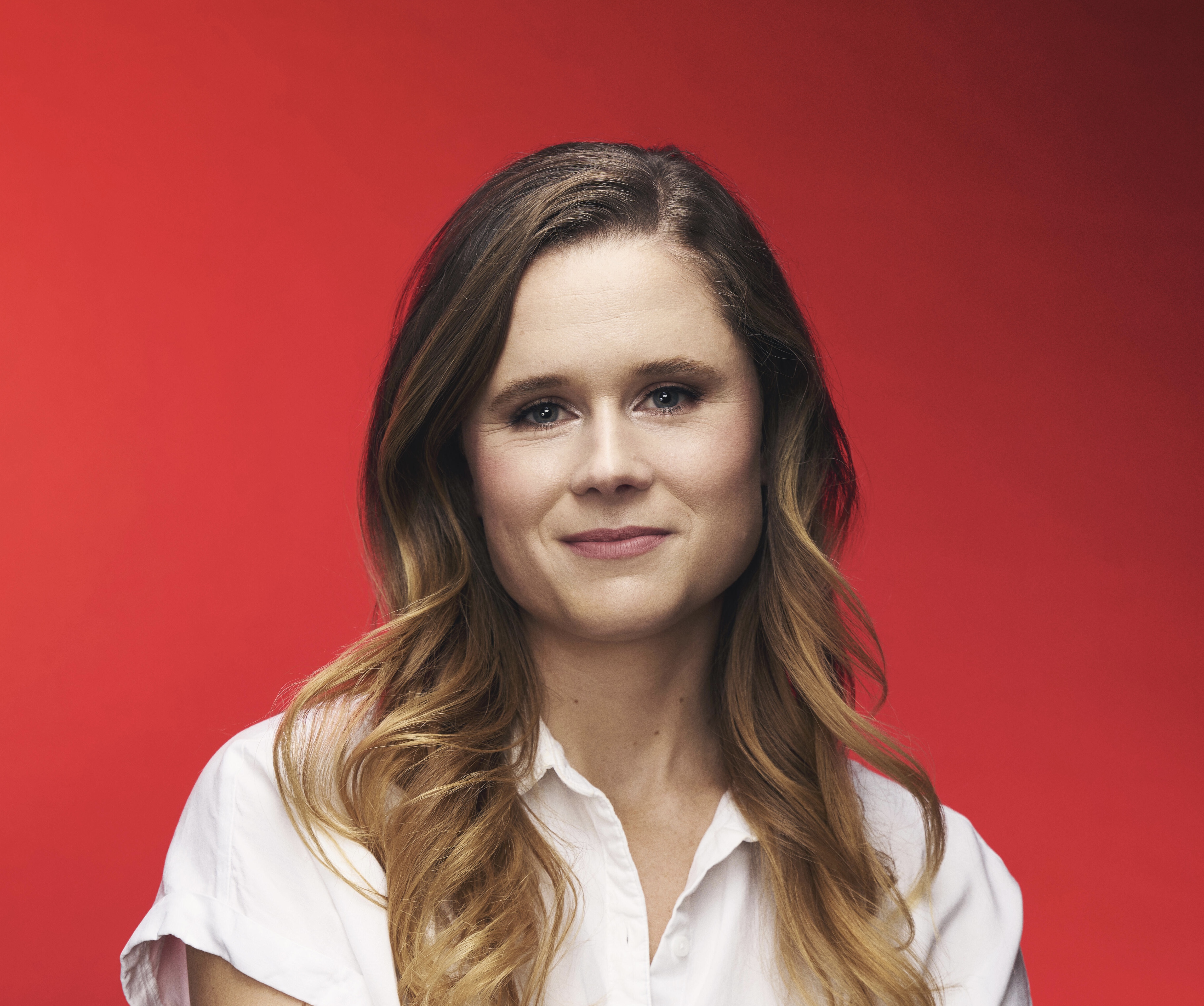
She treats mass incarceration like an engineering ticket: find the broken data, fix it, and watch thousands of people who already earned their freedom finally walk out the door.
Co-founder & CEO, RecidivizSomewhere in a state corrections office right now, a name is sitting in a database, flagged green. The person attached to that name finished every requirement for release months ago. They took the class. They served the time. They cleared the board. And nobody knows, because the computer that holds the green flag does not speak to the computer that signs the release papers. Clementine Jacoby built a company to find that name.
Recidiviz, the nonprofit she co-founded and runs, is not a protest and not a think tank. It is plumbing. The kind of unglamorous, load-bearing software that takes the fragmented, decades-old record systems of American prisons, probation, and parole and makes them finally agree with each other. When the data lines up, people who should be free turn out to be free. More than 40,000 of them in the platform's early years.
That is the work, stated plainly: she is making the numbers add up, because when the numbers don't, human beings stay locked in cells the law no longer requires them to be in. It is reform that a libertarian and a progressive can shake hands over, which is exactly why it works.
The first fact about the system that lodged in her head did not arrive in a policy briefing. It arrived when she was five years old. Her uncle, nineteen, was sentenced for a nonviolent crime in Idaho. "He was barely able to be tried as an adult," she would say later. He served roughly a decade. When he came out, the world had quietly arranged itself against him: no easy job, no simple housing, a door that kept not opening.
That is the part the statistics flatten. A sentence is supposed to end. For her uncle, in many practical ways, it didn't. A child watching that learns a particular lesson early, that the machinery of punishment keeps running long after the official clock stops. The interest never left her.
By the time she got to Stanford, the curiosity had a shape. She studied Symbolic Systems, the university's famous mash-up of computer science, philosophy, linguistics, and psychology, the same major that minted a generation of people who think in both code and consequences. And she taught dance inside a local prison, which is a strange and telling thing for an undergraduate to spend her free hours doing.
Before the data warehouses and the board meetings, there was a hoop suspended in the air and a young woman spinning inside it. Jacoby trained as an aerial-hoop acrobat and performed in circuses across Brazil and Mexico. For a while, professional circus was the actual plan.
In Brazil, she spent a year teaching acrobatics inside a gang-diversion program. And she noticed something that would not let her go: the circus, of all things, seemed to change behavior more effectively than the juvenile justice system she knew back home. A trapeze rig was outperforming a court.
You can draw a straight line from that observation to everything since. Both jobs are about catching people. Both depend on someone, somewhere, holding the right rope at the right moment. She simply traded the rig for a database.
The acrobat-to-engineer pipeline is not a crowded one. But the instincts transfer better than you'd think: precision under pressure, a tolerance for being upside down, and a deep, physical understanding that timing is everything, that a release a half-second late is the difference between a catch and a fall.
It is tempting to file the circus under "fun fact." It is closer to a thesis statement. She had seen, with her own eyes, that the cheapest interventions are often the most human ones, and that the system was bad at noticing them.
Google came next. For about four years she worked as a product manager, building on Google Maps and Android, including augmented mobile games, the kind of glossy, well-funded product work that careers are supposed to be made of. Earlier, she'd cut her teeth at OPower, the company that nudged people toward smaller energy bills using behavioral economics. A pattern was forming: use data, gently, to change what people do.
Then, in 2017, the side project started. Jacoby and co-founder Andrew Warren began poking at criminal justice data as a volunteer effort among Google employees, after hours, the way a lot of consequential things begin. The question was almost naive in its simplicity: why is this data so bad, and what would happen if it weren't?
The answer was big enough to quit a job over. In 2019, Recidiviz spun out as a standalone nonprofit, and Jacoby went all in as CEO. She left the augmented-reality games behind to go clean up spreadsheets that nobody else wanted to touch, the kind of trade that only makes sense if you've been paying attention since you were five.
Most criminal justice debates are trench warfare. Recidiviz found the rare patch of ground everyone wants: nobody, on any side, wants to pay to keep the wrong people in prison. Backers have ranged from progressive reformers to the Charles Koch Institute. The product is consensus, shipped as software.
Here is the heart of it, and it is almost insultingly mundane. America runs much of its justice system on aging databases that were never designed to talk to each other. Probation doesn't sync with parole. The release criteria live in one place; the release decision lives in another. The result is people stuck "in the system" not because anyone decided they should be, but because no one had the complete, current picture.
Recidiviz collects that scattered data, cleans it, standardizes it, and hands corrections leaders a live view of who has already met the bar for release, supervision changes, or reduced restrictions. When COVID-19 hit and prisons became tinderboxes, the tool got urgent fast. North Dakota used it to cut its prison population by roughly 25% in a single month.
She likes to frame the whole thing as a bug. Not a moral failing of the people inside, a defect in the information. Fix the data, and the system does what it already claims to want to do.
Better data lets states release the right people sooner, spend less on incarceration, and track outcomes instead of guessing. One fix, three constituencies.
Joined the TED Fellows program and took the main stage to argue that bad data, not bad people, is what keeps the prison gates closed.
Recognized on the Social Impact list for turning fragmented justice data into freedom for tens of thousands.
Named to TIME's list of rising figures shaping the future, for proving reform can be measured, not just argued.
One of the Most Creative People in Business, for treating mass incarceration as a solvable engineering problem.
Her work has been profiled across major outlets and dissected on Freakonomics Radio: can data keep people out of prison?
Recidiviz works hand-in-hand with state corrections agencies, expanding the model across the country one data system at a time.
TED, 2022 — the case for fixing the spreadsheet before fixing the speech.
Strip away the awards and the TED stage and the goal is stubbornly simple. Make the data accurate, connected, and usable, so that no one is incarcerated a day longer than the law actually demands. Fewer people inside, lower costs for taxpayers, and safer communities, all from the same unglamorous fix.
It is a quiet kind of ambition. No slogans, no villains, just the conviction that a better database is one of the most radical tools in criminal justice reform, and that someone should be holding the right rope.