The first villain in the ClearTax story was a spreadsheet. When Archit Gupta visited his parents in Delhi in 2010, his father, a chartered accountant, described the government’s online filing routine: download an Excel tool, get every entry right, generate an XML file, then upload it. If an accountant found it awkward, Gupta reasoned, a person filing once a year stood little chance of enjoying it. A company was born from an observation so ordinary it is easy to miss: the state had digitized a form without making the task feel simple.
- ClearTax launched in 2011 to make Indian income-tax filing easier for individuals.
- India’s 2017 GST rollout gave it a larger, recurring job inside businesses: invoices, reconciliation and returns.
- Today it sells consumer filing services and enterprise compliance software, including e-invoicing across multiple countries.
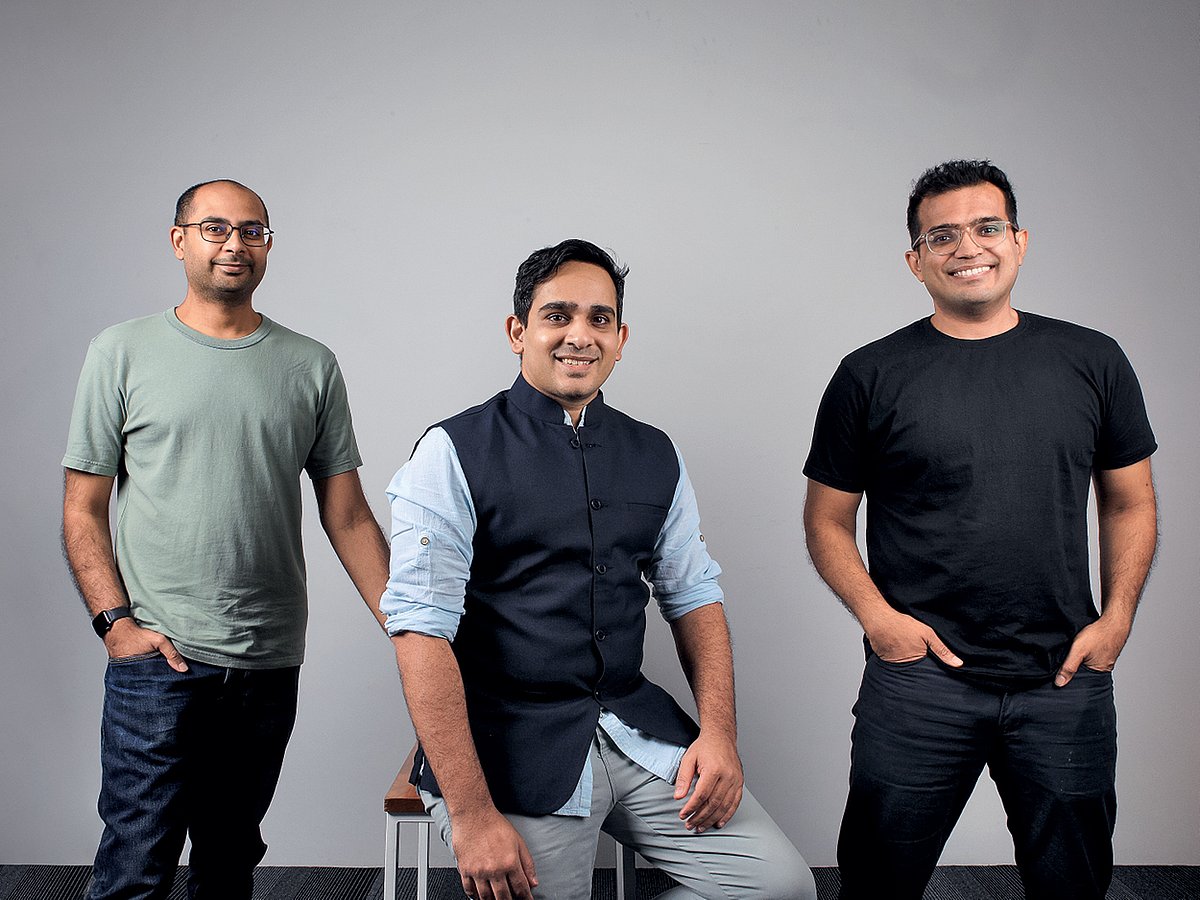
Gupta had worked as an engineer in the United States. He and his co-founders, Srivatsan Chari and Ankit Solanki, built a filing interface around what a taxpayer actually had, including the Form 16 issued by an employer. The competition was less a rival startup than the labor of translating documents into a government format. People arrived quickly. Within the first ten days of its public launch, roughly a thousand had used the site, according to a later account of the company’s beginnings.
That early product made a promise familiar to anyone who has ever looked at a tax form and wished it would simply read itself: give us the paperwork; we will help turn it into a return. It also established a habit. ClearTax kept looking for the point at which financial data became painful to move.
The law changed the customer
For several years, the annual income-tax return was the center of gravity. ClearTax enrolled individuals, tax experts and small firms, and entered Y Combinator’s Summer 2014 batch. Then India introduced the Goods and Services Tax in 2017. GST did not merely add another form. It changed how businesses recorded, matched and reported transactions, and it did so month after month. What had been a consumer chore became an operational system.
The first thing that failed was the old assumption that a better final form would be enough. A business can fill a return only after it knows whether invoices are valid, whether suppliers have reported them and whether a tax credit can be claimed. Errors can begin long before anyone opens the filing screen. ClearTax’s response was to move upstream: into GST software, e-way bills, e-invoicing and reconciliation.
“Since companies value technology and can pay”Srivatsan Chari on the decision to invest in GST products, 2023
That sentence explains both the product shift and the economics. Consumer filing can be seasonal and price sensitive. A large finance team, by comparison, has recurring deadlines, multiple systems and more to lose when a supplier invoice fails to match. ClearTax had to learn enterprise integration and tax operations, work that is less charming than a tax-filing app and considerably harder to replace once embedded.
The invoice becomes the product
Consider a purchase invoice inside an Indian company. The buyer’s books say it exists. The supplier’s GST reporting must tell a compatible story. Clear Max ITC compares those records, surfaces missing and mismatched invoices, and gives a team a way to follow up with vendors. The point is practical: a deduction that depends on someone else’s reporting can be lost in a pile of near matches. An automated suggestion is useful, but someone still has to review what it means.
Elsewhere in the product line, Clear GST handles filing and compliance workflows, while e-invoicing software connects to enterprise resource planning systems and the relevant tax authority. The company markets support for SAP, Oracle and Microsoft environments, along with APIs for businesses that need to connect their own systems. Accountants and tax professionals use its tools, too. On the consumer side, individuals can still prepare returns or pay for expert assistance. A published assisted-filing page shows a starting plan of ₹999, with higher prices for more complicated income; enterprise pricing is quoted to buyers.
Dates are historical milestones; geographic coverage is ClearTax’s own current description of its global platform.
What makes ClearTax distinct is the route it took. A tax firm might begin with advice and add software; a generic invoicing vendor might begin with document exchange. ClearTax came from the taxpayer’s final obligation and worked backward into the data that makes the obligation possible. That gave it a consumer brand, a network of tax practitioners and, later, a reason to talk to chief financial officers. The comparison has limits: buyers can still use government portals, accountants, local tax products such as Quicko, or global compliance vendors. ClearTax’s advantage depends on whether its integrations and country rules are better for the particular workflow at hand.
The bill for growing up
The second act was expensive. ClearTax announced a $50 million Series B led by Composite Capital in 2018, then raised $75 million in a 2021 Series C led by Kora Capital, with Stripe among the participants. The company said it would expand enterprise SaaS, payments, credit and international operations. Its 2022 acquisitions of supply-chain financing company Xpedize and corporate compliance provider CimplyFive took it deeper into the CFO’s office. ClearTax does not publish a precise cost for building each product or entering each country; the financing and acquisitions show the scale of the bet, not a tidy return on it.
The consumer business changed as well. Fortune India reported in 2023 that Clear had started charging for ITR filing and that the consumer side had become cash-flow positive. That is an instructive correction to the early internet instinct that every form ought to be free. Convenience has a price when the alternative costs a person time, anxiety or a professional’s fee. The company shortened its name to Clear in 2021 as it broadened beyond tax; the ClearTax name continues on its global compliance site.
The international version follows a similar logic to the GST expansion. Governments are moving invoices into structured digital systems, but each jurisdiction has its own rules, formats and deadlines. ClearTax’s Saudi product updates, for example, discuss branch-linked devices and Arabic text in reports. Its Malaysia updates describe digital signatures. In September 2025 the company announced a $50 million investment commitment in the UAE. These are small and large details of the same business: a multinational cannot treat “electronic invoice” as a single universal format.
What a dull problem teaches
There is a transferable play here, though it is less glamorous than a diagram in a pitch deck. Start with a task people already dread. Make the first version dramatically easier. Then watch where the data came from and where it must go next. ClearTax’s first product solved the filing screen. The larger company grew from the supplier invoice, the accounting system and the recurring compliance calendar behind it.
The conditions matter. This approach works best where rules create repeated, expensive work, customers trust a vendor with sensitive financial data, and software can connect to the systems already in use. It is less compelling for a one-off form, a small business with simple books, or a market where official tools make the entire process genuinely easy. None of those caveats spoils the story. They explain why a spreadsheet in Delhi led, by way of GST, to a company selling invoice infrastructure abroad. The tax return was never the whole problem. It was the visible end of it.