Clay Wilkes took his daughter to work when there was no work to visit. He had been retired for about six years. There was an empty building, an idea, and a question about what might go there. It was an unusual version of a family outing. Eventually, it became Galileo.
His wife, Marie, had supplied the provocation. All those ideas he kept having, she told him, came with an obligation to do something about them. Wilkes already knew how much a company could demand. He had worked in communications and operating systems, founded a voice technology business, and taken it public. Retirement was an option he had actually exercised.
The empty building is a useful place to begin because the rest of his career can look deceptively tidy when reduced to dollar signs. A payments company sold for $1.2 billion. A $20 million gift established a climate center. Those are outcomes. The more interesting question is what persuaded someone who could stop working to keep making things that other people would use.
A computer lab before there was a pitch
Wilkes’s attachment to technology began in Oregon, in high school and university computer labs. His early professional work included communications and operating systems at Sperry, IBM and Novell. These were jobs concerned with the machinery beneath the experience: how a computer runs, how information travels, how one system speaks to another.
He attended the University of Oregon and Brigham Young University. The career that followed put him close to a consequential change in communications. In 1994, he founded I-Link, which worked on voice over Internet Protocol, or VoIP. He authored patents in the field and, as chief executive, took the company public.
The technical interest carried forward. A phone call and a payment have different purposes, but each depends on a chain of systems that the person making it would prefer never to think about. A dropped call announces the existence of the network. A declined payment performs much the same public service, usually at a less convenient moment.
When Wilkes returned to company building in 2000, financial software presented a problem that suited his background. The systems he encountered were cumbersome and difficult to adapt. Businesses trying to offer a new financial experience had to work around technology built for an earlier one. An attractive screen could only accomplish so much if the machinery underneath resisted change.
The company underneath the app
Galileo’s answer was a payments platform that businesses could connect to through application programming interfaces, or APIs. In everyday terms, an API lets software request a defined job from another system. A company developing a financial app could use Galileo for functions it would otherwise have to assemble and maintain itself.
Opening an account, funding it, receiving a direct deposit, transferring money and authorizing a purchase are separate operations. To the customer, they should feel like one experience. Galileo supplied connections and processing capabilities behind those operations. Its business depended on helping other businesses deliver the result.
By October 2019, Accel’s investment announcement listed customers including Chime, Robinhood, TransferWise, Varo, Revolut and Monzo. These businesses had their own identities and ambitions. Galileo occupied the less visible territory underneath. A customer could recognize the app on a phone without recognizing the company helping it move money.
That position helps explain the patience the business required. Infrastructure earns its place through repeated use. Each new product must work with the connections already in place. The reward for getting it right is often that nobody notices. For an engineer, this can be satisfying. For someone seeking applause, payment processing offers rather severe working conditions.
Nineteen years before the Series A
Galileo started with Wilkes and two other people. He contributed much of the technical work himself. In his account of those early days, long hours and limited resources sit alongside an evident fondness for the experience. The company largely financed its own development for years before accepting institutional investment.
By 2019, that approach had produced a profitable business. Accel led a $77 million Series A with participation from Qualtrics co-founder Ryan Smith. At the time, Galileo was reporting $26 billion in annual processing volume and growth above 130 percent from the previous year. The phrase “Series A” was doing considerable work for a company approaching its twentieth birthday.
The people inside the company had accumulated their own history. In June 2020, Wilkes said many of Galileo’s leaders had been there for more than sixteen years. He described hiring for people who could work together and the difficulty of creating a company culture. Longevity gave that discussion some substance: these were colleagues who had stayed through much of the building.
There is a practical connection between the financing story and the engineering story. A company that lives on its own revenue must persuade customers to pay for what it makes. Galileo’s eventual investors arrived after the business had spent years answering that question. Outside capital entered a company with an operating history, established relationships and a working product.
A customer buys the machinery
On April 7, 2020, SoFi announced an agreement to acquire Galileo for $1.2 billion in cash and stock. SoFi was already using the platform. The deal made a customer the owner of infrastructure that also served other financial businesses. Galileo would continue operating independently, with Wilkes remaining chief executive at the time.
The announcement offered a sense of the traffic moving through the platform: more than $53 billion in annualized payments as of March 2020. Annualized is the useful qualifier. It describes a rate extrapolated over a year, rather than a completed year’s total. Either way, this was a considerable distance from an empty building and three people.
In June 2021, Derek White succeeded Wilkes as chief executive. Wilkes moved to vice chair. A founder’s story often acquires an artificial full stop at an acquisition, as though the purchase price settles every question. Here, the leadership handover supplies a clearer transition. The company would keep operating; its founder was beginning another chapter.
A different conversation at the football
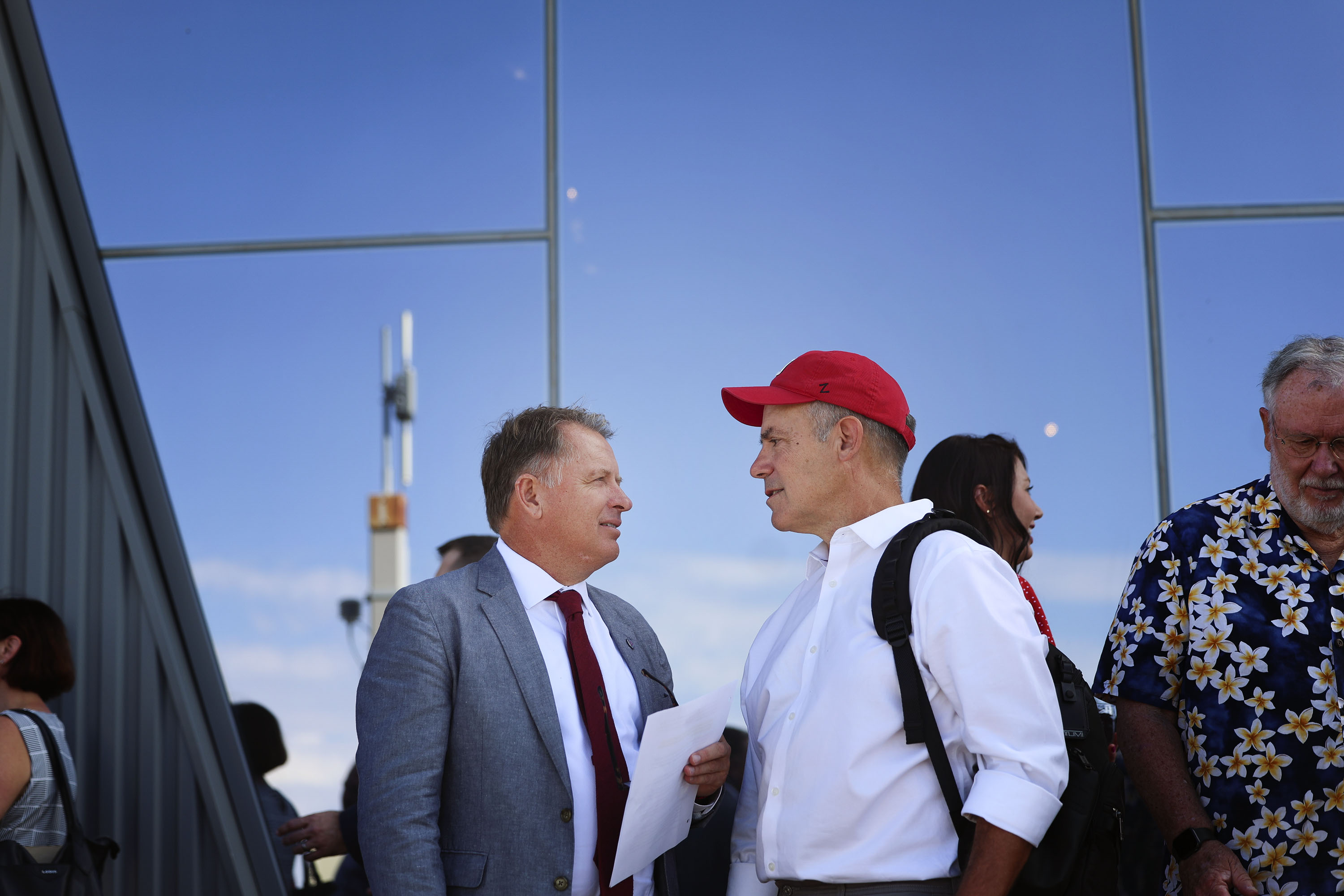
The next institution took shape through a conversation with University of Utah president Taylor Randall at a football game in 2021. By August 2022, Clay and Marie Wilkes had committed $20 million through their Red Crow Foundation to establish the Wilkes Center for Climate Science and Policy. The field had changed. The interest in putting ideas to work remained recognizable.
The foundation itself carries a family connection. Its name honors Marie’s third great-grandfather, a chief of the Blackfeet Nation. Clay and Marie founded Red Crow in 2021, following earlier philanthropic work. Their Galileo Foundation, launched in 2005, had focused on helping people build skills, businesses and economic opportunity.
Family also makes the scale of Wilkes’s concern easier to understand. He and Marie have ten children. When he spoke about the new center, he framed its purpose around grandchildren and the generations after them. The horizon had moved beyond a company’s next product cycle.
“This is the most important thing that we will ever do.”Clay Wilkes, on the Wilkes Center, 2022
Utah supplied immediate questions: water scarcity, wildfire, disappearing snowpack and the future of the Great Salt Lake. The center would bring research together with policy and entrepreneurship. Its founding director, William Anderegg, described work that included the Great Salt Lake Strike Team, connecting university researchers and state partners with decisions about the lake.
A university center is a different kind of undertaking from a payments processor. Its work has to travel through research groups, public agencies, classrooms and businesses. The proposed structure acknowledged that complexity. Students would get research experience. Faculty would receive support. People making policy would have access to evidence they could use.
What the next generation can build
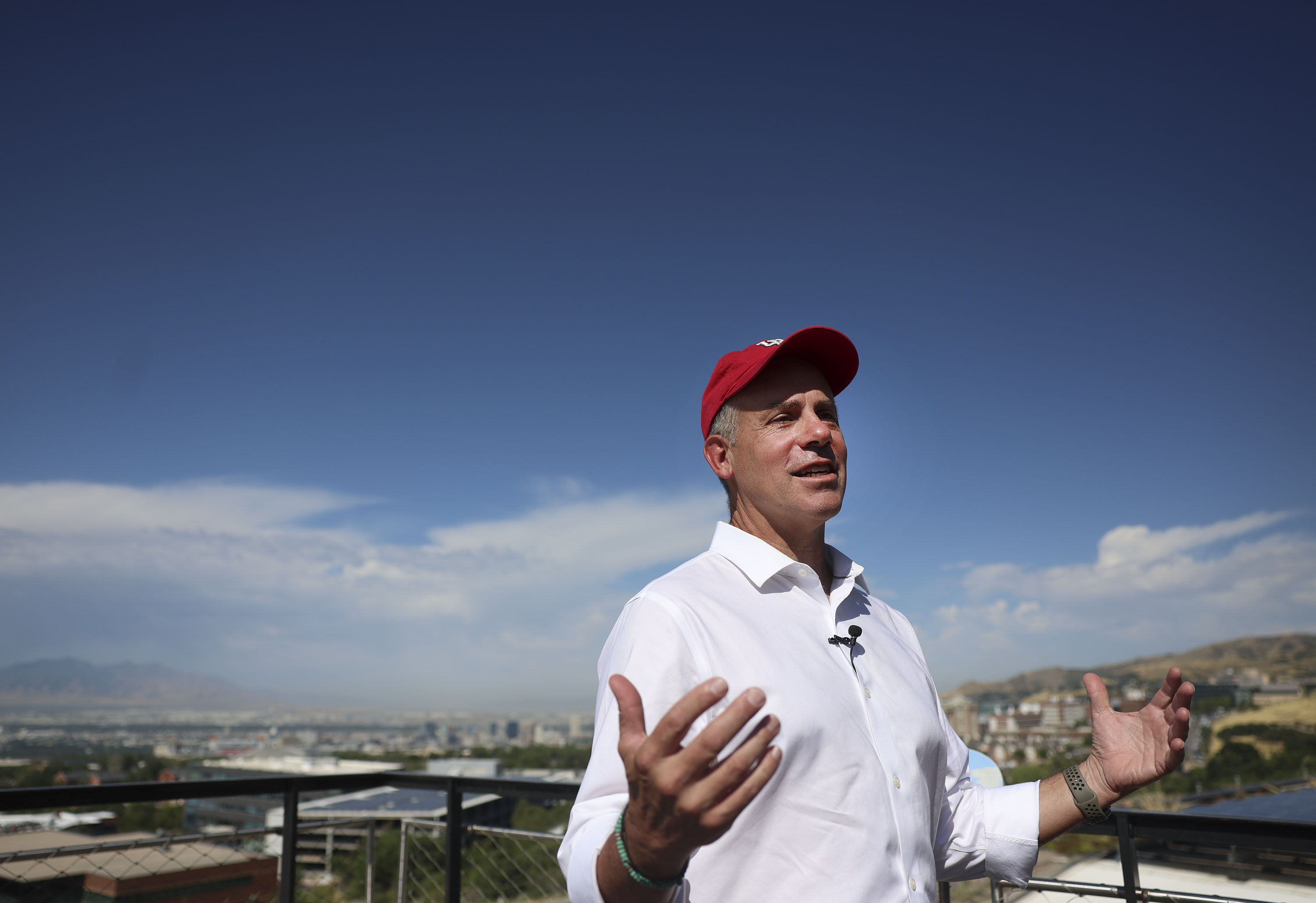
The center’s prize program added another route for ideas to leave the drawing board. Its inaugural climate prize awarded $1.5 million in 2023. Applied Carbon won the following year for work involving biochar. The program’s purpose included giving promising projects room to develop when conventional funding might find them too uncertain.
The institution has continued to evolve. In June 2025, it named Fielding Norton managing director and John Lin scientific director. At the fourth annual summit in May 2026, around 350 participants gathered, with 60 student research posters on display. The center reported that its scholars program had connected 215 undergraduates with faculty research. Those are signs of an organization acquiring a life beyond its founding announcement.
There is no need to make payments software and climate research identical to see a connection in Wilkes’s choices. Both ventures put resources behind people trying to solve difficult problems. At Galileo, that meant giving financial businesses technology they could build on. At the university, it means supporting researchers, students and entrepreneurs as their work finds an audience and an application.
Back in the empty building, Wilkes could offer his daughter only a possibility. Years later, there were customers, colleagues, investors and a buyer. Now there are students with projects to present and researchers with questions to pursue. Marie’s challenge to do something with an idea has proved capable of keeping a retired person unusually occupied.
Keep following the story
Conversations, announcements and places to explore.
Clay Wilkes on LinkedIn ↗Clay Wilkes on X ↗Galileo Financial Technologies ↗The Wilkes Center ↗Watch: the Galileo conversation with Peter Renton ↗Watch: Wilkes announces the climate center ↗Accel’s 2019 investment announcement ↗SoFi’s acquisition announcement ↗Inside the 2026 Wilkes Climate Summit ↗Listen: Wilkes on entrepreneurship and family ↗