Christopher Seiwald had an objection to the daily commute. It was simple, practical, and inconvenient for anyone hoping to lure him to a distant office park: he thought people ought to live near their work. When he started Perforce in Alameda in 1995, he chose a location along the Park Street corridor. The neighborhood came with its own amenities. One was a towing business. Silicon Valley has spent considerable effort making workplaces interesting; Seiwald could find character down the street.
Three decades later, Alameda still supplies the setting. The software company has passed to other owners. Seiwald's attention has moved among angel investing, philanthropy, a restaurant, and an effort to build a permanent performing arts center at Alameda Point. These are different undertakings, with different measures of success. They also make an unusually local answer to the question that follows a company sale: what do you do with the freedom to go anywhere?
In his case, much of the answer is nearby. He now serves as founder and board president of Radium Arts, the nonprofit behind waterfront performances and the proposed center. A developer who once made it easier for people to share files is helping make somewhere for people to share an evening.
The pleasure of a tool that behaves
Perforce began with a programmer's familiarity with the trouble other programmers faced. Seiwald, a UC Berkeley computer science graduate, had worked at the database company Ingres. Large development projects involve many people changing many files. A team needs to preserve earlier versions, coordinate new ones, and avoid turning a release into an archaeological expedition. Version control gives that process a memory.
He had already approached another everyday irritation: building software. His Jam build system appeared in a 1994 USENIX presentation while he was at Ingres. Jam offered an expressive language for describing relationships between files. It ran across UNIX platforms, VMS, and Windows NT. Its proof of concept was satisfyingly concrete: one invocation generated 1,000 deliverable files from 12,000 source files.
Starting the business was also a partnership. His wife, Trudi, took on consulting work to earn money while he wrote programs. Their family was growing along with the company.
Seiwald described the product as a hammer: quick, straightforward, comfortable in the hand. The comparison leaves little room for a grand speech. A hammer earns its keep by working when someone picks it up. Perforce's early proposition was similarly focused, coordinating changes so developers could continue developing. The project became a company without surrendering that practical starting point.
Good code leaves room for the next person
His interest in collaboration reached down to the appearance of the code itself. In 2007, he and Laura Wingerd contributed “Code in Motion” to the collection Beautiful Code. Their subject was DiffMerge, a Perforce component that had already lived inside a commercial system for more than a decade. They examined how readable code lets successive programmers work on the same product over time.
The chapter drew on Seiwald's Seven Pillars of Pretty Code. Its principles included making similar things look similar, untangling blocks, commenting them, removing clutter, and fitting the existing style. This is beauty with a maintenance budget.
He even left a suggestion on the book's cover. Fellow contributor Charles Petzold credited Seiwald with proposing a flock of geese flying in a V formation. It is an apt image for a collection about programming: individual effort, shared direction, and rather better spacing than the average meeting agenda. The authors' royalties went to Amnesty International.
By 2011, Seiwald was extending versioning into web publishing. Perforce was developing Chronicle, a content management system built with PHP, Zend, and its own version control backend. The CMS was to be open source, while the backend remained proprietary. He welcomed open source but said the company had not worked out an effective way to fund its operation entirely through that model.
The programmer hands over the keys
Seiwald was cautious about expanding a tool's remit into managing its users. In 2004, he distinguished the concrete business of managing evolving software from the less predictable business of managing people. Developers, he observed, did not all welcome instructions about how to do their jobs. A system could coordinate files without pretending that every human disagreement was a configuration problem.
Inside Perforce, that attention to people had an everyday expression. The company developed a set of thirteen working values. The last concerned enjoying the years people were spending there. Seiwald said he wanted regular working hours and employees able to return to their families, rather than enduring years of punishing schedules for a speculative payout. The company also directed a share of profits to a foundation.
By February 2016, the personal project had grown into a global business with hundreds of employees. The acquisition announcement listed more than 10,000 customers, including Electronic Arts, NVIDIA, Salesforce, Cisco, Samsung, and VMware. Those are figures from the moment of the sale, rather than a description of today's larger company. They show the distance traveled from the original Alameda operation.
Summit Partners acquired Perforce, and Janet Dryer became CEO. The transition had a plan behind it: Summit introduced Dryer, whom it had previously backed at HelpSystems, as Seiwald looked to move the business to new leadership. Leaving a company does not always require a dramatic rupture. Sometimes the founder is ready for someone else to occupy the chair.
His farewell had a programmer's sense of comedy. Reaching for Steven Seagal's Under Siege, he cast himself as the cook beneath the costume. He described being “the programmer, all dressed up.” The image punctured the executive role without diminishing the business he had built. A CEO title was something he had worn; programming remained a recognizable part of him.
An old debt, repaid across disciplines
The University of San Francisco had been part of his life long before he became a trustee in June 2021. His father, Robert, taught chemistry there. As a teenager, Christopher took computer science classes and found opportunities to use the computers, occasionally being chased out by the people responsible for them. Access had consequences. It also gave him a head start.
In September 2022, he pledged $1 million to the university's College of Arts and Sciences. The gift was intended to establish an engineering scholarship and two funds for arts innovation, supporting programs and facilities. His explanation was direct: “My success would not have happened without USF.” The gratitude went back to a place that had let him learn, even when its computers proved too tempting.
“My success would not have happened without USF.”Christopher Seiwald · 2022
Engineering and the arts share space in that gift. It supports the practical route into a technical profession alongside room for artistic work to develop. Seiwald has expressed an interest in people whose abilities cross those disciplines. His giving follows that interest into scholarships, programs, and places where students can work.
A founder walks into a steakhouse
There is another Alameda address in this story, with a rather different kind of service. Moxie Steak House opened in August 2024. Seiwald owns the restaurant; his longtime collaborator Donna Meadows is its chef. Before Moxie, the pair had run Little House Café, where Meadows worked for fifteen years.
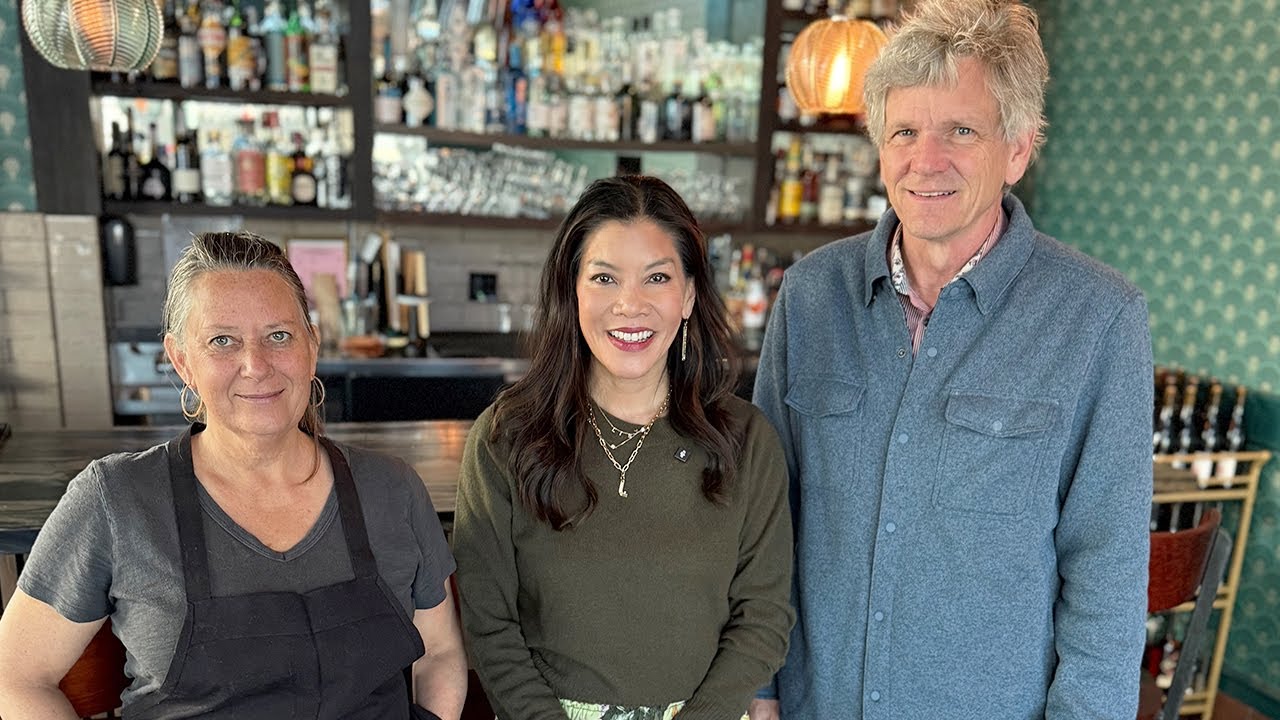
Little House had loyal customers and a role as a gathering spot, but it had not become a strong financial success. When the former Angela's restaurant location became available, the pair tried a new venture. Meadows reasoned that Alameda would appreciate steak and potatoes. It is an admirably comprehensible restaurant strategy, especially after three decades explaining software configuration management.
In a February 2025 interview, Seiwald described a place where diners could dress up for a date or come more casually. Meadows discussed California ingredients and sides that went beyond the usual steakhouse repertoire. His contribution included a cheerful invitation to taste the food and test his honesty. The programmer's approach to a claim remained available: try it and see.
The waterfront is still a work in progress
Radium's vision took root in 2017. Seiwald wanted a dedicated professional performance venue in Alameda, and the organization began the long work of developing it. Alongside that ambition came public performances: in 2022, plans included Jazz Mafia and a series of events intended to establish an arts presence at the former Naval Air Station. Opera singer Frederica von Stade was part of the effort.
The project also reached into education. A 2023 presentation to the Alameda Unified School District described potential student performances, master classes, internships, and artists working in schools. A building would have to serve more than its ticketed evenings. For Seiwald, a center could support the people learning to make the work as well as the audiences who would eventually come to see it.
In April 2026, Alameda's City Council unanimously advanced real estate agreements for the proposed center. The plan presented that month described a 53,000-square-foot venue, a one-acre public plaza, and an estimated $150 million project cost. Philanthropic contributions would finance the project. Fundraising and approvals still had to be completed before the lease structure moved to its next stage. Permission to proceed is a milestone with plenty of work attached.
Public access is part of the proposed arrangement. The lobby and balcony viewing areas are intended to be available when the facility is open, without requiring a performance ticket. That detail gives the project a life outside the show schedule. Someone could come for the view, linger, and encounter a place they might later return to for music or theater.
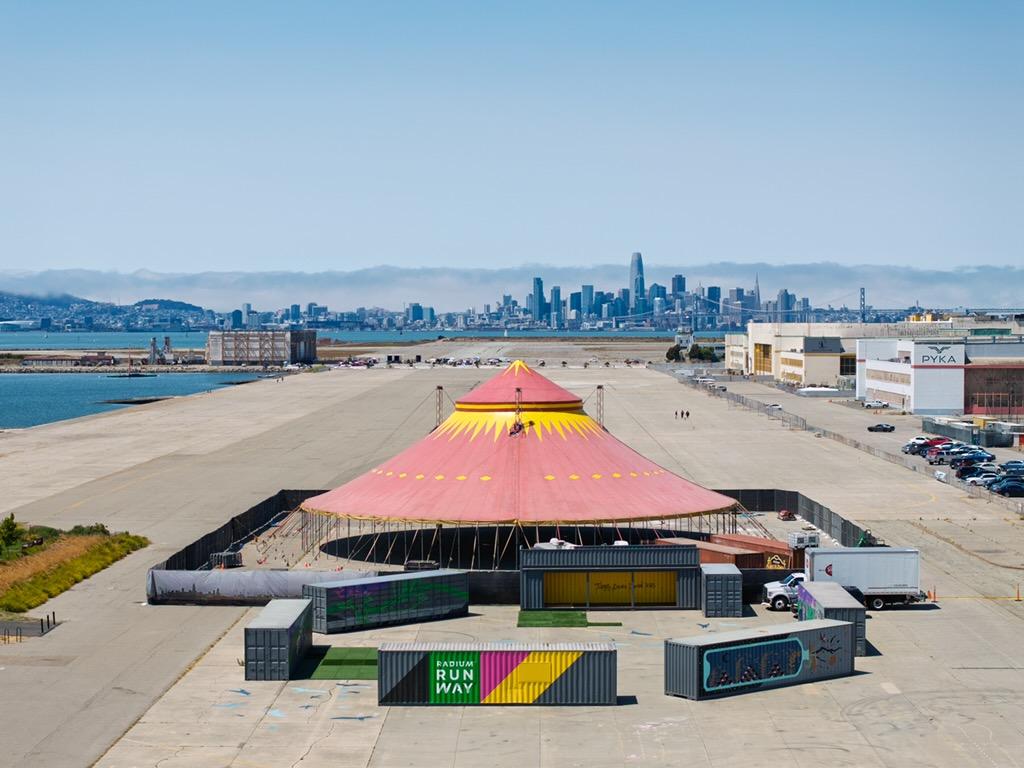
Meanwhile, Radium Runway is already hosting people at the waterfront. The 2026 calendar includes The Soiled Dove with Joan Baez, community orchestra programming, and storytelling evenings. Radium Arts now lists Jonathan Moscone as artistic director, with Seiwald continuing as board president. The current enterprise has its own collaborators and artistic judgment, just as Perforce grew beyond the person who first wrote it.
Seiwald's software still gives him occasions for amusement. In a June 2026 LinkedIn post, he showed an old Perforce server executable running on macOS Monterey and marveled that it still worked. It is a modest coda to the corporate story: years after the handover, a command produces an answer. At Alameda Point, the answer takes longer. The work continues through performances, plans, and the task of raising money for a permanent home.
His ventures ask other people to bring the essential activity: programmers bring changes, a chef brings dinner, artists bring performances, audiences bring their attention. Seiwald has repeatedly concerned himself with the arrangements that let those encounters happen. Alameda has remained the place where he can see the result. For someone who disliked commuting, he has found a considerable amount to do close to home.