A dental claim is a small piece of paperwork with a surprisingly large supporting cast. Someone must interpret it, route it, check it, and answer the telephone when somebody asks where it went. At Delta Dental of Colorado, high claims volume and a backlog brought Catalyst Solutions into that chain. The interesting part is what happened alongside the extra processing help: Catalyst began studying the work itself.
- The customer: health plans and payer organizations, from startups to established insurers.
- The job: run claims, enrollment and contact centers; repair workflows; modernize technology.
- The proposition: combine operational staff, consulting and automation around systems a client already uses.
Catalyst occupies an unglamorous but consequential corner of healthcare. It works on the machinery that makes insurance function. Its customers buy operational capacity and expertise, rather than medical treatment. The distinction matters: a better claims process reaches people through fewer administrative obstacles, even when they never encounter the supplier responsible.
01 / First, watch the work
The Delta Dental engagement began with a targeted session examining claims workflows. Catalyst also supplied processing support during peak demand. Then its Process Discovery AI Agent captured patterns in how work moved through the system, including user interactions and performance gaps. Workforce analysis added staffing heatmaps, daily reporting and assessments of skill gaps.
The resulting recommendations were pleasantly concrete: improve documentation and in-system support, automate repetitive tasks, and consider additional AI agents. In Catalyst's account, the immediate pressure was volume and backlog. The broader opportunity was to understand the routine before redesigning it.
That sequence is the useful lesson. A backlog may invite a staffing response; observing the work can reveal a different investment. The case describes an automation roadmap, rather than a quantified before-and-after productivity experiment. Its value as an example lies in the method: stabilize the queue, observe the process, then choose what to automate.
02 / The systems are already there
Catalyst's market position starts with an awkward fact about enterprise technology: an organization can want better operations while having excellent reasons to keep its existing software. Catalyst advertises experience across core platforms including Facets, QNXT, HealthRules and Tapestry. It sells consulting for assessments, modernization, implementations and recurring regulatory change.
Its CatalyZe framework extends that argument. The current offering is described as platform-agnostic process orchestration: a way to connect people, workflows and technology across an existing environment. The company's “payer-in-a-box” language refers to a BPaaS approach, or business process as a service, combining technology with operational delivery.
There is a useful purchasing distinction here. A plan can seek help running a function, seek advice about changing it, or combine systems and services. Catalyst participates in all three. Its claimed differentiator is the ability to work across platforms and tailor delivery to the plan's circumstances.
Vendor-agnostic does not mean vendor-isolated. Catalyst announced entry into the TriZetto Consulting Partner Network in June 2022, gaining access to tools for supporting products such as Facets and QNXT. That partnership sits alongside its wider platform expertise.
03 / Sixty days. Four states.
The more compressed example is P3 Health Partners, a population health management organization supporting providers caring for Medicare members. Catalyst reported a May 2025 go-live covering configuration, claims and the provider call center. The footprint included Arizona, Oregon, Nevada and California, spanning eleven active health plans and nearly 68,000 members.
P3's chief operating officer, Dr. Aric Coffman, supplied the arresting detail in Catalyst's announcement: “We challenged Catalyst to deliver a complex implementation in just 60 days”. He credited planning, experience, offshoring, AI and process improvement. Catalyst described a hybrid onshore/offshore delivery model aligned with client business hours.
Read this as evidence of execution under a deadline. The numbers establish scope and speed. A buyer would still need operational measures such as payment accuracy, turnaround times and service levels to judge the continuing performance of an equivalent engagement.
04 / What the contract is buying
Catalyst earns its place through business services: outsourced operations, consulting, BPaaS and managed AI services. Its current pitch emphasizes shared risk and financially backed service-level agreements. Delivery can be onshore, offshore or hybrid. The economic attraction is a more predictable operating commitment, supported by specialist capacity.
For a buyer, the relevant cost is the whole transition: integration, training, supervision and the service contract. A sensible comparison measures those against the cost of doing the same work internally, at equivalent quality.
A lower processing price loses its charm if errors generate another queue of calls.
Cognizant and EXL offer overlapping payer services. Catalyst's answer to that competitive market is its exclusive focus on payers and its combination of operations and technology work. Specialization is a purchasing argument; proof belongs in the agreed performance measures.
05 / A founder changes seats
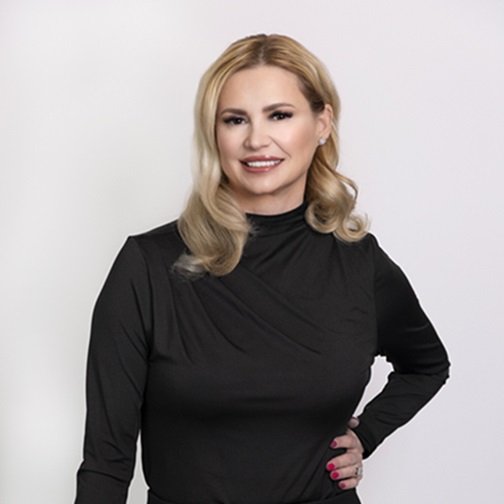
Rachel Spilo founded Catalyst in 1999. In February 2026, President Sas Mukherjee also became CEO. Spilo remained chairwoman and took full executive leadership of sister company healthplans.ai, which she founded in 2024. The announcement described a planned succession and an expansion of AI-enabled operations.
The division of responsibilities gives the AI effort an organizational home. Catalyst describes healthplans.ai as an incubated sister company powering its AI services. Those services cover discovery, agent development, deployment and ongoing management. Its AI adoption offering also addresses leadership alignment, workforce preparation and governance.
The company's stated values include accountability for outcomes, adaptability, collaboration and constructive behavior. Those are cultural intentions, best assessed in daily delivery. For AI, the practical question is whether employees understand the tool and whether somebody owns the decisions it affects.
06 / Borrow the sequence
The most portable idea here is to begin with a specific queue of work. Establish the baseline, identify repetitive steps, name the exceptions and define success before adding automation. Catalyst's examples suggest that staffing, process design and technology can be considered together.
That approach depends on access to workflows, usable data, engaged staff and clear accountability. Without those conditions, a new tool can leave the old bottleneck intact. The compelling promise in Catalyst's business is modest enough to test: make everyday administration work better, one measurable process at a time.