Casey Neistat likes a piece of machinery that announces itself. A camera with buttons. A skateboard with scars. A studio shelf whose label was made with a marker, not a menu. His films have always carried the fingerprints of their construction. Tape stays visible. The lens gets splashed. A hand-drawn arrow tells you where to look. In an internet trained to hide the seam, Neistat made the seam part of the entertainment.
That is why calling him a vlogger is accurate but incomplete. The daily vlog made him broadly famous, yet its real trick was not access to a busy life. It was the conversion of a busy life into a compact story before midnight. New York provided weather, traffic, sirens, neighbors and petty conflict. Neistat provided selection. He took the loose change of a day and arranged it until it bought ten minutes of attention.
His work moves with the impatience of somebody who believes thought becomes useful only after it meets an object. On camera, he is frequently going somewhere: down Broadway, through an airport, across a finish line, into a meeting, up a ladder. Motion is character, transition and alibi. If the shot shakes, at least it has somewhere to be.
July 2026
July 2026
made across decades
The complaint became the camera
Long before “creator” became a job category, a broken promise made a useful plot. In 2003, Casey and his brother Van released iPod's Dirty Secret. An Apple support representative could be heard explaining that the battery in an aging iPod was not replaceable. The brothers walked through New York, spray-painting a warning onto Apple's own street advertisements. Three minutes of consumer irritation escaped the machinery of television and traveled online.
The film established a pattern. Start with a specific annoyance. Make the stakes visible. Put a body in the argument. Years later, Bike Lanes used the same grammar. After receiving a ticket for riding outside a bicycle lane, Neistat demonstrated why strict obedience was absurd by remaining inside the lane and crashing into its obstacles. A construction barrier is more persuasive than a paragraph when the filmmaker hits it at speed.
These were explainers before the explainer acquired studio lighting and a thumbnail face. They worked because the proof and the joke occupied the same frame. Neistat was the host, witness and crash-test dummy. His personality came through as a practical instrument: indignant enough to begin, playful enough to keep watching, stubborn enough to finish.
“The only way to find that path is to act, is to start going.”Casey Neistat, speaking with Tim Ferriss
A brief is only the first draft
In 2012, Nike asked Neistat to make a film about what it meant to “make it count.” He and collaborator Max Joseph spent the production budget traveling around the world until the money ran out. Ten days later, they returned with a fast, joyful travelogue. The apparent rebellion had discipline underneath it: the phrase in the brief became the production rule. Spend everything. Keep moving. Make the instruction literal enough to become personal.
The result is remembered as an act of going rogue, but the more useful lesson is how closely the method served the message. Neistat did not ignore the assignment. He built a machine that could generate its meaning. Every hurried airport, every destination and every diminishing dollar added evidence. The film did not need to claim spontaneity. Its itinerary had already paid for it.
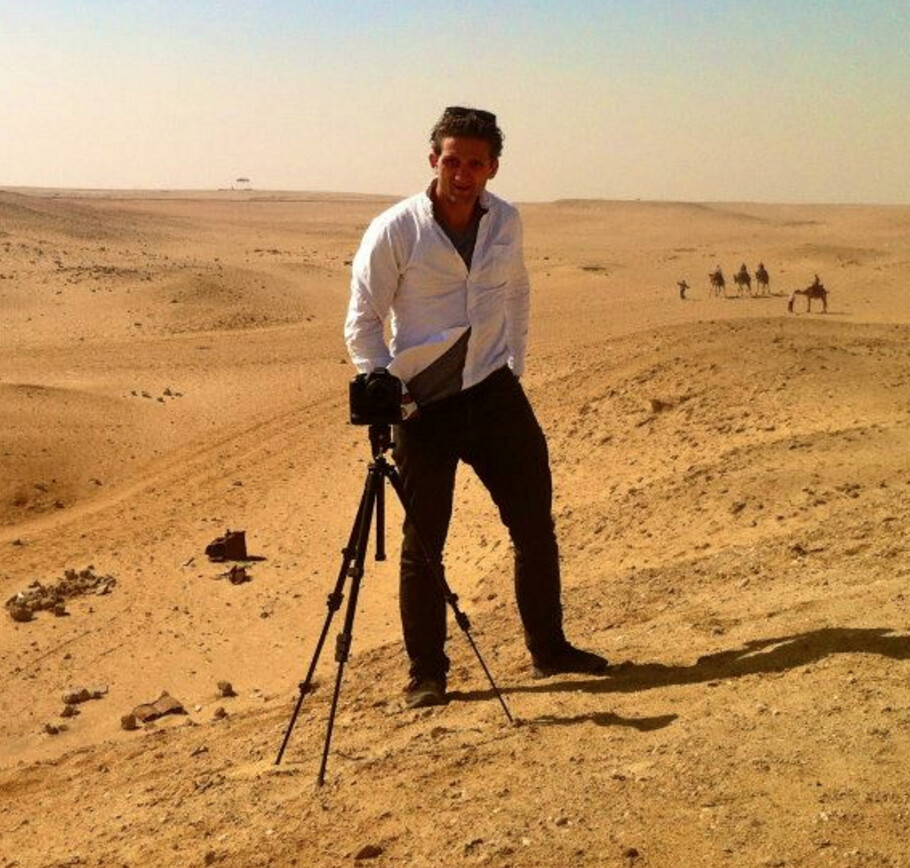
Commercial filmmaking often rewards the invisible apparatus: large crews, smooth logistics, controlled surfaces. Neistat's apparatus likes a cameo. The viewer sees the rig, the deadline and the inconvenience. This creates intimacy without pretending that a camera is not present. He once described YouTube as reciprocal rather than one-way. The visible process gives the audience something to inspect, imitate and answer.
The format changed. The direct voice stayed.
The daily show disguised as a diary
Neistat began daily vlogging in March 2015. He has explained that the project was partly connected to building reach for Beme, the video-sharing app he co-founded with Matt Hackett. The intended marketing engine became the larger cultural object. He passed one million YouTube subscribers that year. By July 2026, the channel had 12.7 million subscribers and 3.27 billion views.
The schedule forced a useful distinction. A vlog did not have to be a faithful log of a day. It could be a daily show about whatever interested him. That small shift created room for structure. An errand could supply the premise; a delayed flight, the complication; the ride home, the release. Editing converted chronology into intention.
He edited nearly everything himself. This was not merely a preference for control. He often did not know the story until the footage reached the timeline. Straight cuts, minimal color work and scarce digital effects kept the grammar quick. Quantity was not the enemy of quality in this system. Quantity was the laboratory in which taste got more repetitions.
There is an appealing roughness to that proposition. Many creative systems ask a person to perfect the plan before the audience sees anything. Neistat's asks for a published result, then another. It can be punishing, and he eventually stopped the daily schedule. But for its run, the deadline prevented taste from becoming a customs officer who never lets the work leave home.
iPod's Dirty Secret turns customer-service frustration into a public film.
The Neistat Brothers, an eight-episode autobiographical series, airs on HBO.
The daily vlog begins, and Beme launches with Matt Hackett.
CNN acquires Beme; Neistat wins major Shorty and Streamy honors.
368 opens as an experiment in shared creative space.
He returns to more regular posting while questioning what the algorithm rewards.
Building the camera, then leaving the room
Beme attempted to remove a familiar ritual from social video: looking at yourself. A user covered the phone's proximity sensor to record a four-second clip, which posted without preview. The product tried to make experience more immediate by subtracting review. Within eight days of launch, users had shared 1.1 million videos and recorded 2.4 million reactions.
CNN acquired the company in 2016. The app closed, and Neistat and Hackett left the CNN venture in 2018. The episode sits in his career as a revealing reversal. In his films, control over the final cut was intimate and complete. Inside a larger media institution, the creator's voice had to coexist with structures designed for a different scale and tempo.
He followed with 368, named for his Broadway studio address, imagining a New York space where creators could work together. The shape changed again: from individual film to social tool to physical place. Not every experiment became an enduring institution. Each one tested the same border between making something and making the conditions in which other people might make something.
“YouTube, unlike filmmaking, is not a one-way street.”Casey Neistat
When the old map stops working
In June 2026, Neistat spoke with unusual plainness about the platform that had carried his daily work. He had returned to posting more regularly, yet could no longer reliably understand why one film traveled and another stalled. Work he considered mediocre could receive millions of views. Work he considered among his best could disappear beneath the recommendation system.
For a creator associated with YouTube fluency, the admission was more useful than a victory lap. Platform knowledge expires. The feed is not an audience; it is a moving arrangement between an audience and a machine. A creator can study it without owning it. Neistat's instinct has been to emphasize the human aspect of filmmaking as synthetic media expands. His argument is not nostalgia for bad cameras. It is a wager that visible judgment, practical choices and authored imperfections will become more valuable when images become easier to manufacture.
He has also been spending substantial time with ModRetro, Palmer Luckey's handheld gaming company. Neistat has described a contentious relationship with his phone and keeps a ModRetro device with Tetris in his pocket. The symmetry is almost too tidy: a filmmaker who became fluent in the feed is drawn to a purpose-built object that refuses most of the feed's invitations.
The sunglasses, boosted board and jump cuts made an easy costume for imitators. The harder part to copy was the appetite for friction. Neistat found stories where systems failed, instructions pinched or streets became ridiculous. His best work did not float above inconvenience. It drafted inconvenience into the cast.
That remains the stealable idea. Do not wait for an extraordinary life to provide material. Give an ordinary day a rule. Turn the constraint into a scene. Let the audience see enough of the machinery to trust the result. Then cut before the explanation grows a beard.
The algorithm may be inscrutable. The first move is not. A camera waits on a shelf. A city refuses to behave. Somewhere, a perfectly good obstacle is blocking the lane.