The unexpected thing about CareYaya is where it looks for help. A family needs someone to sit with an aging parent, prepare lunch or make an afternoon less lonely. Nearby, a student is preparing for a healthcare career and looking for experience. Usually, these people inhabit separate worlds. CareYaya gives them a reason to knock on the same door.
- Families book students for non-medical help at home.
- The platform is free; caregivers receive the hourly payment.
- Career experience gives students another reason to show up.
The help was already nearby
Neal Shah came to this problem through his wife’s illness. While she underwent cancer treatment, the financier became a family caregiver. Finding dependable help became part of the work of caring. The problem was painfully ordinary: a household needed more time and attention than one person could supply, even when that person was determined to supply everything.
Shah eventually connected with Gavry Eshet, a UNC computer science graduate. Their early pilot began at UNC-Chapel Hill before spreading to NC State and Duke. CareYaya dates its launch to 2022. The insight was geographical as much as technological. Research Triangle families lived close to universities full of people who wanted to enter healthcare. The potential workforce was already in the neighborhood.

Consider what a student gets from this arrangement. There is pay, certainly. There is also practice being present with someone whose needs cannot be reduced to an exam question. CareYaya recruits across pre-medical, nursing and other health interests. Its application page advertises flexible work and patient-care experience. Whether particular hours satisfy a graduate program’s requirements remains a question for that program.
Follow the twenty dollars
CareYaya describes typical care prices of $18 to $22 an hour on its agency comparison page. Families pay the student directly. The registry charges no platform fee and takes no share of that hourly payment. The arithmetic is easy to understand; the financing underneath it deserves equal attention.
Hourly care is paid. Platform access is free. This is a planning example, not a quote.
In a published interview, Shah described initially bootstrapping the platform and later attracting social-impact funders. The American Heart Association announced support in February 2025 through its Social Impact Funds. A Grubhub Community Fund grant helped finance that wider initiative. The $2 million attached to the announcement belonged to the broader program, rather than a CareYaya funding round.
That distinction explains the business more accurately than calling the care “free.” Families buy a person’s time. Outside backing helps sustain the infrastructure that introduces them. A lower bill can follow from that arrangement, but someone still pays for coordination, software and development. Another founder copying the fee policy would also need a way to finance those functions.
The family buys time.
The student gains experience.
A college calendar has its uses
The practical offering is deliberately domestic: meal preparation, light housekeeping, dressing help, games, pet care and assistance with technology. CareYaya serves older adults and families of medically vulnerable children needing appropriate non-medical support. It occupies the space between doing everything yourself and paying for a more extensive care service. General caregiver directories and traditional agencies are the obvious alternatives.
There are boundaries. Students can remind someone about medication; they cannot administer it. Bathing, wound care, injections and lift devices are outside the service. Families whose needs cross those lines require appropriately qualified help. A student pursuing medicine is still a student. That distinction should determine the booking before enthusiasm or price does.
The scheduling logic is equally specific. CareYaya recommends requesting help at least seven days ahead. Afternoons, evenings, weekends and overnights can fit around classes. Coverage clusters around participating universities, and a national presence does not make every address serviceable. A marketplace can organize availability; it cannot summon someone whose timetable or travel distance makes a visit impractical.
Families begin by describing the help they need and completing onboarding. Students undergo interviews and background checks before joining the registry. The platform then coordinates requests and matches, with families able to favor caregivers they already know. Familiarity matters here: a returning visitor has less to learn about a household’s rhythms, preferences and small sources of anxiety.
The homework comes next
Connecting people creates a second problem: preparation. In an interview, Shah described initially offering students self-directed Alzheimer’s and dementia videos associated with UCLA Public Health. CareYaya then pursued more personalized education. YayaGuide, developed through Johns Hopkins’ technology collaboratory, uses short lessons and conversational AI to make training easier to fit around caregiving.
A National Institute on Aging Phase I SBIR project began in September 2025. Its stated task was to refine the training prototype and evaluate it with people who had limited caregiving experience. North Carolina’s fiscal 2026 report separately records a $75,000 YayaGuide grant commitment, with $56,250 paid that year. These are concrete research investments, rather than proof that an app has solved dementia care.
The portfolio has widened. The American Heart Association’s 2025 report describes Yaya Bear, a conversational companion, and Counterforce Health, which assists with insurance-denial appeals. It also reports a student network exceeding 50,000. That measures the network’s size; it does not tell us how many students worked last Tuesday or how many families received a particular outcome.
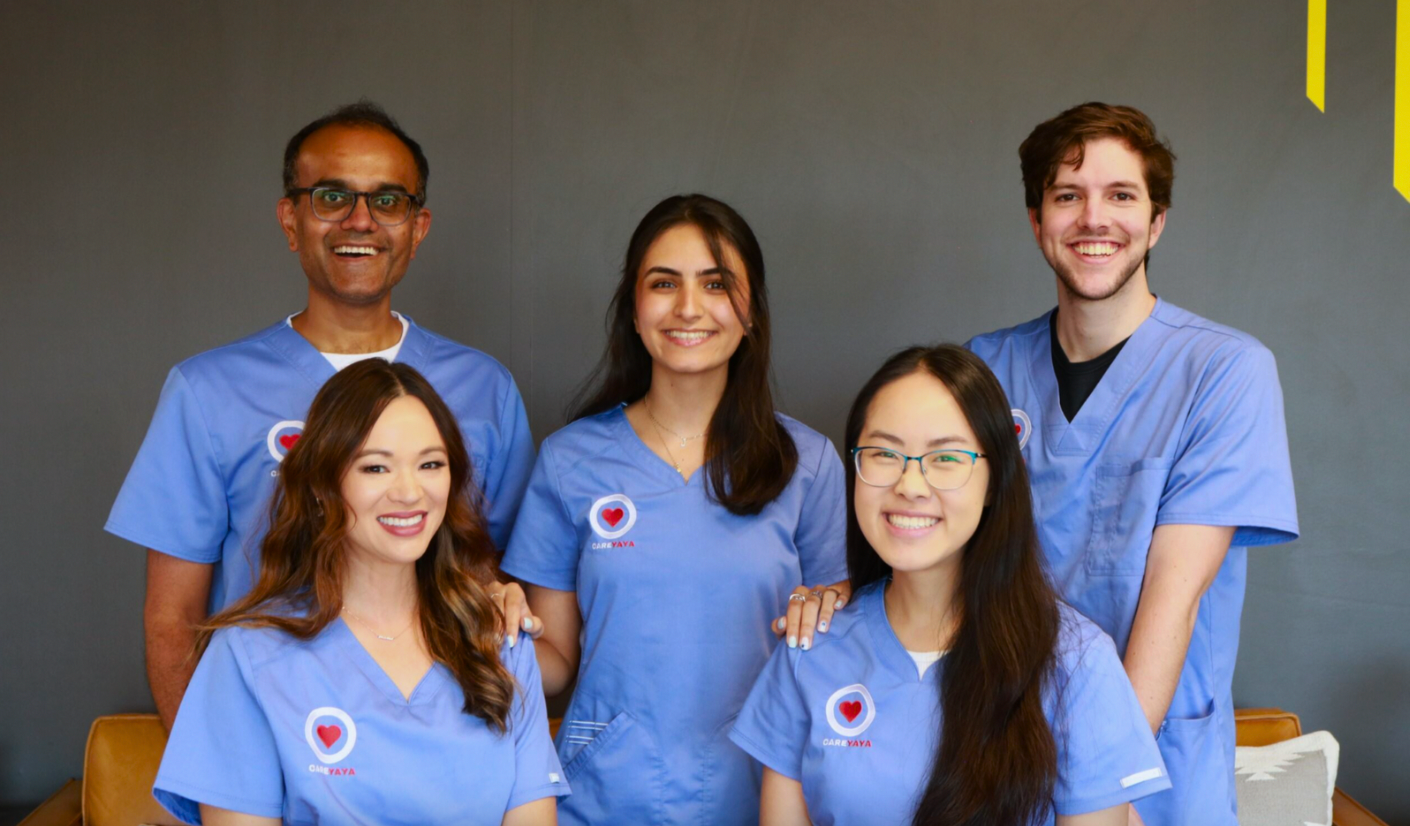
The training work also changes the question a care platform must answer. Finding a willing person is only the beginning. Can that person understand the situation, learn an appropriate response and recognize a task that exceeds their role? Short lessons are a plausible answer to limited time. Research has to establish how much they improve knowledge and everyday practice.
Build around the second reason
A smaller detail helps explain the organization. Duke intern Celine Wang described an environment receptive to ideas outside her original video-production role. “I really value the creative freedom I’ve had in working at CareYaya!” she said. It is one person’s account, but it fits a business drawing useful work from people still discovering their professional direction.
For a family trying the service, the useful starting point is a list of actual tasks. Company during lunch, help with a tablet and a quiet evening at home suggest one kind of booking. A clinical procedure suggests another provider. Describing that difference plainly helps make an introduction useful before anyone arrives at the door.
The transferable idea is to look for a second motivation. A student wants wages and a future in healthcare. A family wants practical help and someone interested in the person receiving it. Those interests can reinforce each other when geography, schedules and care needs align. The software makes the introduction possible. The reason to return lives in the relationship.