The Beat
The man works the inside of the trade.
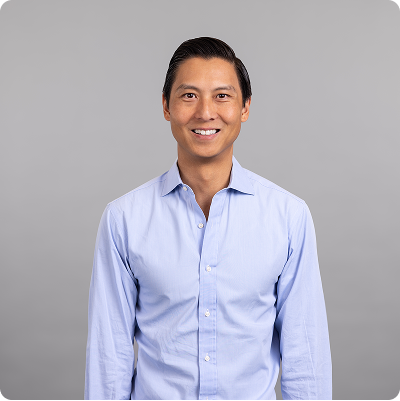
Most venture investors are in the business of conviction at the start. Brian Yee is in the business of conviction near the middle - the part of a private company's life where the IPO is "soon" for the fifth year running, the cap table is heavy with founders and angels who took 2015 paper, and the next round won't quite get everyone home. That is where Saints Capital lives, and Yee is one of its General Partners.
Saints was founded in 2000 and built one of the first direct secondary funds in venture. For 25 years the firm has run a single thesis with discipline: private companies stay private longer than anyone planned, and somebody - employees, angels, fund LPs, even GPs themselves - eventually needs a way out. Saints is that way out. Yee is one of the people who decides which way out is worth underwriting.
The numbers attached to his name read modestly on purpose. Sweet spot of $1.5M. A working range between $100,000 and $5,000,000. Sectors that draw few headlines: SMB software, marketplaces, e-commerce, digital health. A current fund size that wouldn't fit on a billboard. The point is not to play big. The point is to play in spots where price is set by exit, not by hype.
"Private companies stay private longer than anyone planned. Somebody eventually needs a way out."— The Saints Capital thesis, on the firm's site
The path here is fast to describe and slow to live. Georgetown University, 2002 to 2006. Then investment banking at Goldman Sachs, covering technology, media, and telecommunications - the kind of seat that teaches you to read a deal at three a.m. and price it by six. Growth equity at General Atlantic. Partner work at ACME Capital, the San Francisco venture firm. And now Saints, where the meetings are quieter and the documents are thicker.
Investments tagged to his record include Forma.ai's Series B in May 2022, SoLo Funds' Series A in February 2021, NexGenT's Series A in November 2018, and quip's Series A in November 2018. Each fits a pattern: businesses where the unit economics matter more than the narrative arc, where the buyer of the secondary stake is paying for a known cash-flow story, not for a slide about disruption.
Why secondaries, why now
Public listings have thinned. IPO windows open and close like a stuck garage door. Meanwhile, venture funds are still on ten-year clocks, and ten years is what it now takes a serious company to leave the private market under its own power. That mismatch is the entire reason Saints exists, and the entire reason Brian Yee's calendar is full.
When a venture fund hits year nine with a portfolio of unicorns that refuse to list, somebody calls. When an early employee at a private company wants to buy a house and discovers her wealth is paper, somebody calls. When an LP needs out of a fund interest for portfolio-construction reasons, somebody calls. Yee answers some of those calls. Then he and his colleagues structure something - a direct purchase of stock, a tender, a GP-led fund restructuring, a continuation vehicle, a recapitalization, a piece of a fund interest. The deal has a hundred shapes. The job is to know which shape fits.
"Liquidity is a feature, not a bug."— A working principle in the secondaries trade
A sector list that resists the cycle
Notice the sectors. SMB software. Marketplaces. E-commerce. Digital health. None of them is the conference-keynote category of any given year. None is what a junior associate writes a thesis memo about on a Sunday night. All four share a useful property: the businesses inside them throw off cash that can be measured, modeled, and priced. That is a feature for a buyer paying today for someone else's tomorrow.
It is also a quiet philosophy. The flashiest categories - frontier AI, defense tech, deep biotech - are priced by the next round, by the next narrative, by who's buying. Secondaries in those names is closer to currency speculation than to investing. The sectors Saints favors are slower. They reprice less. They reward patience, which is what a secondary buyer is selling.
The network nobody puts on a poster
Yee's professional network, per his Signal profile, reaches 55+ investors and includes names like Satya Patel of Homebrew, Aileen Lee of Cowboy Ventures, and Pete Flint of NFX. Three operators, three different sub-genres of venture, three reasons a secondary firm wants to be on speed dial: portfolio liquidity, founder-friendly cap table cleanups, marketplace-stage exits.
The relationships matter more in secondaries than they do in primaries. A primary round is announced on the company's blog. A secondary deal is negotiated under NDA, on a timeline measured in weeks, with a buyer list that fits on a Post-it. Trust is the actual product. Yee, by all observable signals, has spent twenty years building it.
Saints as a 25-year-old anomaly
Most venture firms cycle through identities. The fund-of-2010 looks nothing like the fund-of-2020. Strategies drift, partners turn over, the deck gets rewritten when a sector hits. Saints has done something close to the opposite: same city, same thesis, same patient buying of private paper, fund after fund. The firm calls itself "one of the oldest and most experienced venture secondary firms" - and the math supports it.
That continuity is the backdrop Brian Yee is operating against. He is not building a new playbook; he is running the next chapter of an old, working one. In a venture industry that prizes novelty, the choice to inherit and extend is almost a contrarian move.
What the trade actually feels like
A direct secondary purchase, simplified: someone owns shares of a private company. Someone else - Saints, in this case - agrees to buy those shares at a negotiated price. The company's board may need to bless the transfer. The price reflects illiquidity, time-to-exit, sector comps, recent primary rounds, balance-sheet health, and any number of structural quirks. Deferred payments and upside-sharing clauses are common. Loan arrangements sometimes substitute for outright purchases. Complexity is the work, not the obstacle.
A GP-led restructuring is the more elaborate version. An aging fund nearing the end of its life still holds a few prized assets. The GP wants to keep managing them. The LPs want the option to exit. So a continuation vehicle is created, anchored by a buyer like Saints, who effectively takes out the LPs who want out, and provides time for the assets to mature. Everyone gets a choice. The GP keeps the names. The LPs get optionality. The buyer gets a curated portfolio at a researched price. The structure is finance at its most plumbing - hidden, important, and built for the actors who already know where the valves are.
Quiet, by design
You will not find Brian Yee on a Twitter manifesto or a podcast tour. There is a LinkedIn, a Saints team page with a clean headshot, a Signal profile with deal entries. That is the surface area. The work happens on phone calls. The newsletter doesn't exist. The hot take is reserved for the IC memo. In a venture world that often confuses presence with performance, the absence is itself a statement.
And maybe that is the line worth saving. The marquee parts of the venture business - the seed checks, the demo days, the keynote investments - need their applause. The middle parts, where the pipes that connect founders, employees, GPs and LPs actually carry the money, need their operators. Brian Yee is one of them.