He turned a simple idea into a job: take a picture, get it fixed. Now he runs the company that does it for the world's buildings.
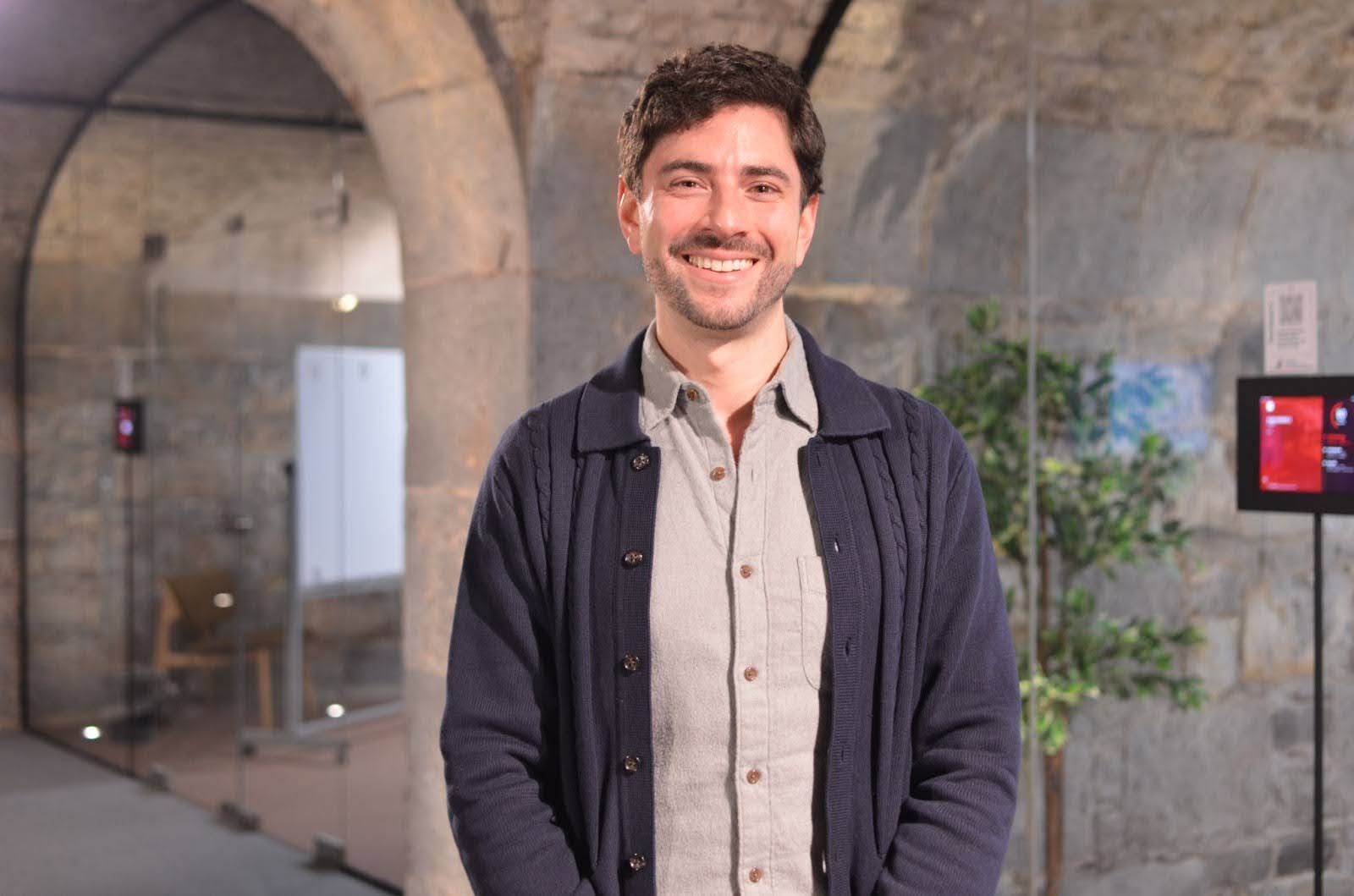
In June 2024, the founders of Snapfix did something a bootstrapped startup rarely does on its own terms: they handed the keys to someone else. Paul McCarthy and Cathal Greaney named Brett Robbins the first chief executive in the company's history. The brief was blunt - take a tool loved in Irish hotels and put it inside buildings everywhere.
Snapfix is deceptively simple. A worker sees a leak, a broken lock, a flickering light. They take a photo. They scan a QR code. The problem becomes a tracked task, color-coded like a traffic light, routed to whoever can fix it - in whatever language they speak. No forms, no jargon, no training manual. Robbins runs the company that makes that disappear-into-the-background simplicity possible across hotels, universities, offices, residential towers, and factory floors.
His own theory of the work cuts against the demo-day instinct to add features. The hardest software to build, he argues, is the kind that looks like nothing at all. On the Tech on Toast podcast in late 2025 he made the case that simple software is secretly the most difficult thing to ship - because every removed step is a fight you had to win.
The most successful service businesses don't settle for "okay" - they strive for "wow."
Robbins did not arrive at maintenance software by accident. He spent a career circling the physical world of buildings and the businesses that run inside them. There was Ohana Ventures. There was Neighborhoods.com, mapping where people actually want to live. There was StayTerra, in the short-stay and hospitality lane. And there was Orchard, the proptech company, where he helped stand up a new business unit built on software for lending.
It is a resume with a through-line. Real estate gives you the asset. Retail gives you the customer. Hospitality gives you the standard. Snapfix sits underneath all of it - the unglamorous layer that decides whether a guest's shower works, whether a campus dorm is safe, whether a factory line keeps moving. Robbins took the operator's path to the operator's product.
His Columbia degree is the tell. Economics explains the spreadsheet. Anthropology explains the human standing in front of the broken thing, deciding whether reporting it is worth the hassle. Snapfix's whole bet is that if you make reporting frictionless - a photo, not a paragraph - people actually do it. That is an anthropology problem dressed as a software one.
Ask Robbins how he builds a team and you get a specific answer, not a poster slogan. For each role he tries to name the single most critical skill it will demand over the next two years, and hires against that - not against the job as it looks today. Once people are in, he leans toward amplifying their natural strengths rather than grinding away at weaknesses.
He is also a believer in productive friction. Transparency and constructive conflict, in his telling, are not the cost of a good team - they are the engine of one. Differing viewpoints, aired openly, beat polite agreement that quietly ships the wrong thing. And he carves out dedicated room for strategic thinking, away from the gravity of daily operations, because the urgent will always eat the important if you let it.
On AI - the word every software CEO is now contractually required to say - Robbins is refreshingly unromantic. The job, he says, is to take powerful models and apply them so they genuinely make a customer's life easier. Not flashier. Easier. For a manager drowning in work orders, that distinction is the whole ballgame.
Our responsibility in maintenance software is to take powerful AI models and apply them in a way that truly makes our customers' lives easier.
Here is the part that explains the person better than any title. Robbins and his wife, Amanda Veraldi, had a plan: raise their children in New York City. Then they found Norfolk, Connecticut - a small town that talks about arts, philosophy, and intellectual curiosity the way other places talk about parking. "We fell in love with the town," he said. The plan changed. They went part-time in 2019 and full-time by June 2024.
Rural life came with a catch: the family had no home internet. For most people that is a complaint. For Robbins it was a reason to join the Broadband Advisory Committee, where he met Libby Borden - who had led the town's Economic Development Commission for roughly two decades. She invited him onto the EDC. In July 2025 he became its chairman.
His pitch for the role is pure operator. He wants the commission to build ways to evaluate which initiatives are actually worth taking on, and he wants every project to show impact inside twelve months. Drive business revenue. Raise the town's profile. Build public-private partnerships. Wire up mentorship from local talent. It is the same instinct that runs Snapfix - measure the thing, then improve it - pointed at a New England village instead of a software roadmap.
To put Snapfix at the center of how service businesses deliver great experiences - moving from hospitality into the broader world of service-driven industries, and using AI to quietly lift the daily load off managers rather than pile more on.
Reactive to proactive. Okay to wow.
Robbins on why simple software is secretly the hardest to build, and how Snapfix grew from a seaside Irish town to Dublin's Docklands and beyond: