The company that now sells control to finance departments began with a loss of control. In 2001, Therese Tucker left a comfortable technology career, cashed out retirement savings and started BlackLine. She was a computer scientist and former SunGard technology chief, which gave her the confidence to build software. It did not give her the right market. BlackLine's first product managed wealth. Three years later, the company had one paying customer, an emptying bank account and a founder who, by her own account, was terribly broke and freaked out.
Then the customer made an offer with the blunt logic of a rescue rope: it had an account-reconciliation problem and money, while BlackLine had engineers and no money. Tucker said yes. The request pulled her company out of a market crowded by established vendors and into an ugly, neglected corner of corporate life - the monthly ritual in which accountants prove that the numbers in several systems agree.
The pivot was an invoice, not a brainstorm
BlackLine's origin has become startup folklore because it cuts against the tidier mythology of vision. Tucker did have a vision. It was wrong first. What changed her mind was not a market map or a pitch-deck epiphany. It was a customer willing to pay for different work. The first failure was wealth-management software; the repair was account reconciliation. By 2005, the company had focused itself entirely on accounting automation and controls.
The price of discovering that fit was severe. Contemporary reporting put Tucker's personal investment at roughly $2 million over the long bootstrapped stretch. She has described cleaning the office toilets, losing sleep over payroll and waiting through enterprise sales cycles that could last three to five years. Even a win could sting: a customer might install the product, love it and take another three or four months to pay. BlackLine survived without outside institutional capital until 2013.
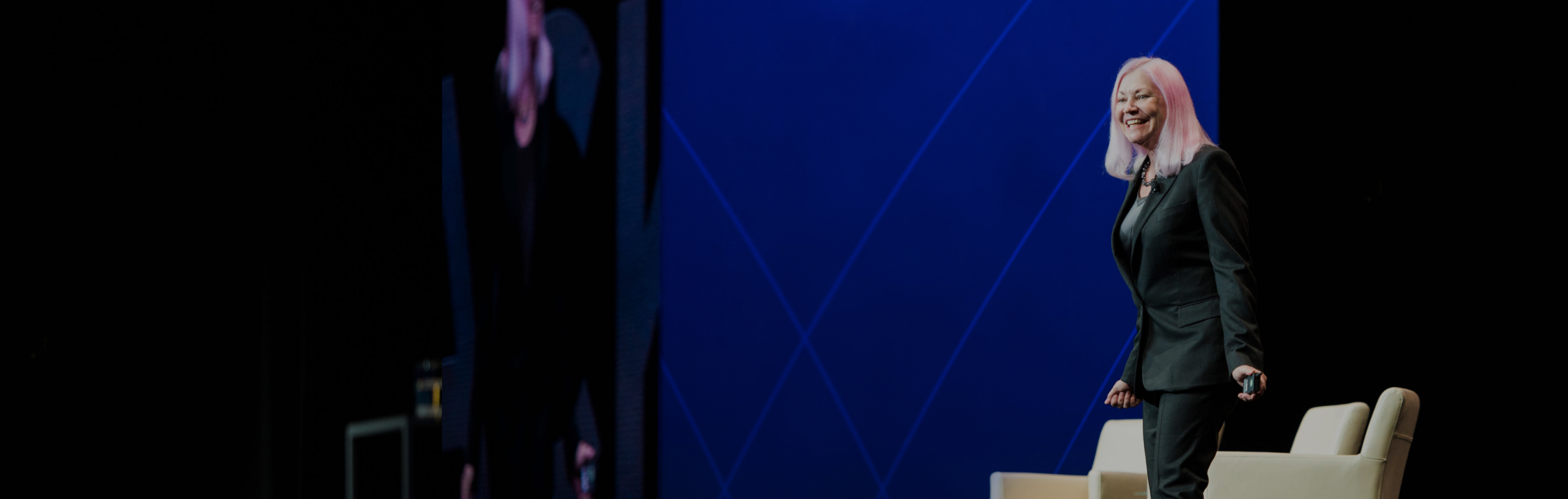
In 2007, BlackLine faced another fork. It could keep selling software installed on a customer's premises, the reassuring norm for sensitive corporate data, or become entirely software-as-a-service. Large companies barely trusted the phrase “SaaS,” much less the idea of sending financial information into a cloud. Tucker chose the cloud anyway - not as a side edition, but as the architecture, contract model and go-to-market system from that point forward.
That commitment matters. A partial bet would have left two products to maintain and two commercial models to explain. The full bet let BlackLine deliver one controlled workspace across locations, update it centrally and sell recurring subscriptions. In 2013, Silver Lake Sumeru and ICONIQ finally took a controlling interest. In 2016, BlackLine raised $146.2 million in its Nasdaq debut. Tucker had expected the journey to take three years. The IPO came after 15.
A control room above the ERP
BlackLine is easiest to understand by what it does not replace. An ERP such as SAP, Oracle, Workday, Microsoft Dynamics, Sage Intacct or NetSuite records business transactions. BlackLine sits above and across those systems, plus banks, payroll, procurement and treasury feeds. It pulls the work of proving, approving and explaining the numbers into one governed place.
Where BlackLine sits
The product family follows the path of money. Financial Close & Consolidation covers reconciliations, transaction matching, journal entries, task management, reporting, compliance and consolidation. Intercompany handles charges moving between subsidiaries, from creation through disputes and settlement. Invoice-to-Cash covers billing, cash application, credit, collections and accounts-receivable intelligence. Studio360, launched in 2024, is the connective tissue: integrate data, orchestrate work, visualize performance, apply process blueprints and control governance.
The business model is correspondingly sober. BlackLine sells enterprise subscriptions, mostly through a direct sales force, and recognizes that revenue over contracts usually lasting one year and increasingly up to three. Partners including SAP, Deloitte, EY, Accenture, Capgemini, Genpact and RSM help open doors or deliver transformations. In 2025, subscription and support produced $662.9 million of $700.4 million in total revenue. Professional services supplied the remaining $37.5 million.
The product pitch is hiding in the exceptions
The cleanest proof is a pizza company. Domino's processes more than 40 million transactions each month and says BlackLine automatically matches 99.9 percent of them. That does not eliminate accountants. It moves their attention to the 0.1 percent that is unusual, broken or potentially important. UNFCU reports that one use case saved 40 hours a week and another matched 99 percent of 800,000 monthly debit-card transactions. Aimbridge says automating historical data and 25,000 monthly journals saved more than 25,000 labor hours.
This is also where the product can disappoint. Automation magnifies a stable process; it does not invent one. If source data is dirty, ownership is vague or matching rules keep changing, software merely moves confusion into a nicer dashboard. World Fuel's finance team put the question correctly: is the process stable, or must it be fixed first? Smaller organizations with low volume, one uncomplicated ERP and light compliance demands may be better served by disciplined spreadsheets or a narrower close tool.
BlackLine's competitors expose the trade-off. FloQast often offers a lighter close workflow. Trintech competes deep in enterprise reconciliation. Workiva is formidable around connected reporting and disclosure. OneStream spans corporate performance management. SAP and Oracle can bundle adjacent capability with the systems customers already own. BlackLine's advantage is breadth without allegiance to one ERP, plus hard-earned expertise in controls and high-volume matching. Its liability is the same breadth: implementation, governance and price can be more than a small team needs.
Now the audit trail has to tame the agent
BlackLine widened its territory through acquisitions. Rimilia, bought in 2020 for up to $150 million, brought AI-assisted accounts receivable. FourQ, acquired in 2022 for $165 million upfront and as much as $75 million more, filled out intercompany tax, billing and settlement. In late 2025, BlackLine paid $23.6 million for WiseLayer, whose agents handled judgment-heavy work such as accruals and payroll accounting.
Those deals point to the present wager. Verity AI, launched in 2025, places agents and predictive tools inside Studio360. Vera acts as a supervisor. Verity Match tackles transaction matching; Collect works customer accounts; Remit reads payment information; Prepare ingests support, investigates discrepancies, drafts explanations and assembles a reconciliation package. In July 2026, Prepare became generally available after early adopters reported reductions of up to 92 percent in manual preparation time.
The sentence is marketing, but it identifies the real problem. A fluent answer is cheap. A financial conclusion must show where the evidence came from, why an exception was classified, who approved it and what changed. BlackLine says Prepare attaches reasoning, confidence scores and a complete trail while leaving final authority with a human. Its planned Finance Control Console extends that idea to fleets of native, partner-built and third-party agents.
This will not work everywhere. Auditable AI still depends on permissions, mapped data, agreed policies and reviewers with time and authority. It can reduce preparation without removing accountability. It can also lengthen buying cycles, as customers subject AI tools to deeper security and governance reviews. BlackLine's customer count fell from 4,394 at the end of 2025 to 4,260 in June 2026, while revenue grew 9.2 percent year over year in the second quarter. The platform is expanding inside a customer base that is becoming slightly smaller, at least for now.
The part worth copying
- Let a paying customer's urgent problem outrank the founder's attachment to the original idea.
- Make one architectural bet clearly enough that product, contracts and sales reinforce it.
- Automate the ordinary work, then design the human role around exceptions and judgment.
- Clean the process before measuring the automation.
- When trust is the barrier, build evidence and approval into the product itself.
A quarter-century later, the same question
Tucker retired from full-time executive work in June 2026, remaining a director and a large shareholder. Owen Ryan now runs the company. BlackLine employs roughly 1,850 people, supports around 4,300 customers and reports that more than half of the Fortune 500 use its software. It has become the established vendor its first product could not defeat.
Yet the most useful continuity is smaller. In 2004, survival depended on hearing what one customer would trust BlackLine to do. In 2026, growth depends on hearing what thousands of finance teams will trust an agent to do. The fashionable noun has changed from cloud to AI. The buying condition has not: the customer needs the work done, the evidence intact and someone accountable when the numbers look strange.