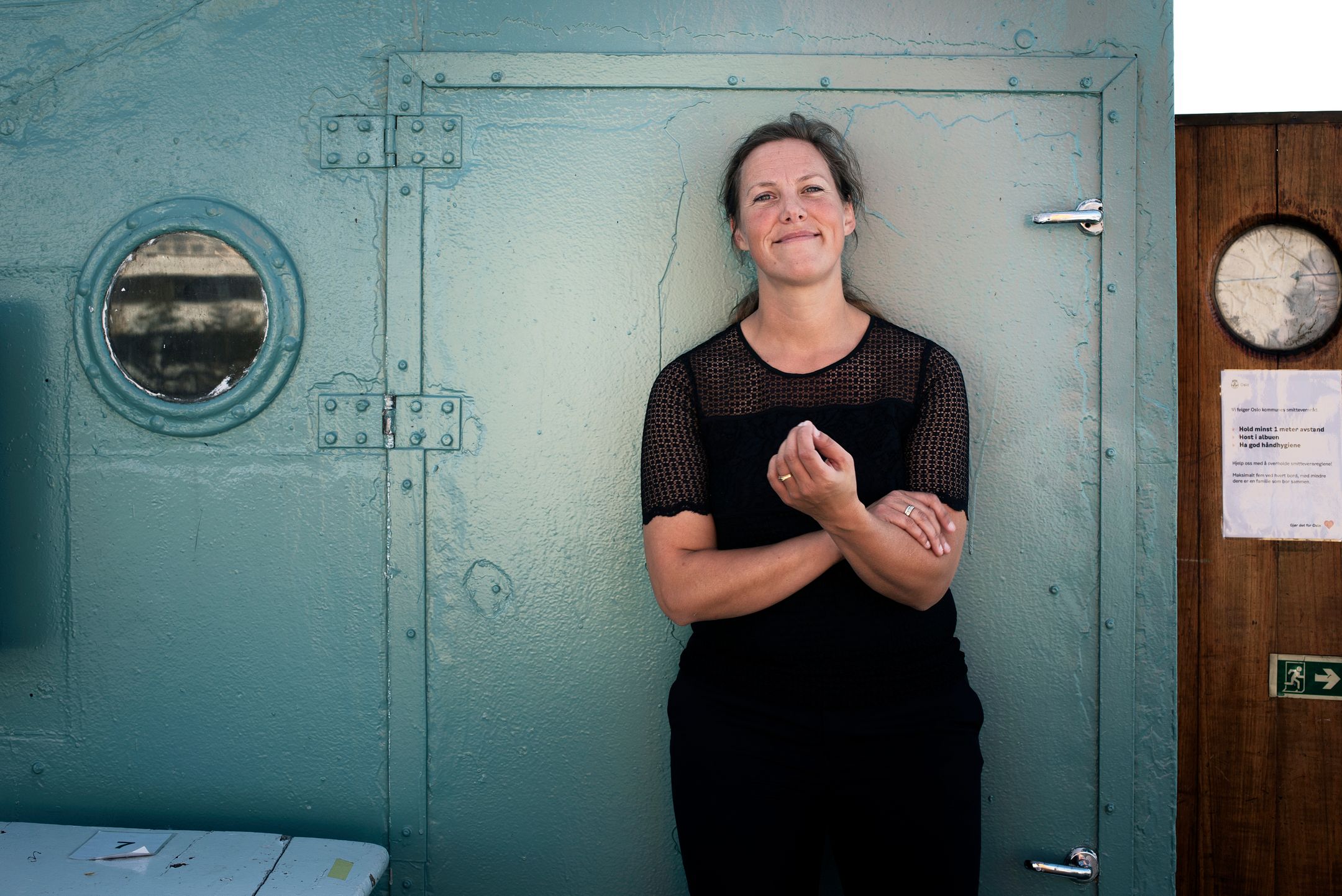
An old ferry is an unusually candid place to start a business devoted to making connections. It already has some experience. In September 2019, Birgit M. Liodden was preparing M/S Bjørvika in Oslo for a different passenger list: young entrepreneurs, students and people from established maritime companies. The Ocean Opportunity Lab, soon shortened to TOOL, would give them a place to meet. Around thirty partners had contributed resources in kind. The founder had taken six months of unpaid leave. Getting everyone aboard was already part of the business.
The setting suited a career built through introductions, volunteer work and taking on tasks before anyone had supplied an impressive title. Liodden had helped establish an international organisation for young shipping professionals and led Nor-Shipping. Now she was making a smaller, more tangible proposition: come onto the boat, bring something useful, meet someone whose knowledge differs from yours. A ferry offers limited room for keeping your distance.
The education outside the classroom
Her original ambition involved horses. As a child she worked with racehorses at Øvrevoll, near Oslo, and imagined an equestrian career. She left school at sixteen. Temporary work through Toptemp gave her a way to try different occupations and discover an aptitude for organising things behind the scenes.
The familiar shorthand, school dropout becomes executive, leaves out an interesting middle. She later spent a year studying secretarial skills at Wang and took project-management courses at BI. Someone who had struggled to find a purpose in the classroom became an enthusiastic student when the subject felt useful. Her education followed the work she wanted to do.
She went to an interview at Wilhelmsen partly for practice and found herself drawn to the person interviewing her and the industry she represented. An assistant’s job in human resources became a route into project management. By the time she left in early 2011, she was a global project manager. The progression helps explain her continuing interest in the people a conventional recruitment filter might overlook.
A volunteer job with an international horizon
Alongside her corporate work, Liodden volunteered with YoungShip. She led YoungShip Norway from 2009 to 2011, then founded YoungShip International and became its first secretary general. She also ran a project-management consultancy. The arrangement had a straightforward logic: paid assignments supported her living costs while she built the organisation she wanted to exist.
By the time her Nor-Shipping appointment was announced in 2015, the international network had eighteen branches in twelve countries and almost four thousand members. Those are historical figures, but they show what the voluntary work had become within a few years. A young professional’s place in the industry could extend beyond one employer and one city.
“My key motivation comes from being useful,” she has said. Her account of mentoring makes the point without a grand theory. Senior figures including shipowner Elisabeth Grieg and former V.Ships leader Roberto Giorgi helped her. She, in turn, mentored younger women, including women in India, Pakistan and Djibouti. She also sought younger mentors to teach her about digital developments. Knowledge was allowed to travel uphill.
Changing the guest list
Liodden became Nor-Shipping’s first woman director in 2015, aged thirty-two. She arrived with a clear interest in using the exhibition’s reach to address sustainability and diversity. The new role gave her a larger audience for subjects she had been working on through YoungShip, including who found the industry attractive enough to join.
Women@Nor-Shipping became a top-level conference addressing the environment and future leadership. Liodden delighted in describing it as her baby. She also pointed out that its participant list included as many men as women. That was a useful development for an event organised around women’s leadership: the audience itself suggested the discussion concerned the whole industry.
Her position was that diversity affected an industry’s ability to generate ideas and attract people. At TOOL, that conviction reached the company’s own rules: she described prioritising diversity and inclusion in its bylaws, including the selection of partners and members. The practical test was who could participate and what opportunities followed.
In 2017, she also called on shipping executives to confront sexual harassment and put prevention standards into their companies. Younger women had approached her with experiences they were reluctant to make public. Her response took the question beyond an individual account and into the responsibilities of leadership. Welcoming women into an industry also required attention to what happened after they arrived. The guest list was only a beginning; the conditions inside the room mattered just as much.
A recollection she shared about a CMA conference captures her approach to visibility. Invited to address maritime leaders in the United States, she brought her eight-week-old son and appeared on stage in jeans. Her message concerned the next generation. The baby made an unusually persuasive visual aid.
Three thousand people, then a much smaller boat
In September 2018, Liodden interviewed Barack Obama at Oslo Business Forum in front of three thousand people. Their conversation covered leadership, technology and sustainability. Obama spoke about the value of having people around the table who brought different experiences. It was a familiar concern in a rather unfamiliar company.
By then, Liodden had moved to Oslo Business Region, working on sustainability, ocean industries and communication. She also headed the business programme associated with Oslo’s year as European Green Capital in 2019. These roles placed her between the city, its established industries and people attempting new ventures.
TOOL made that position concrete. At its launch, partners’ contributions in kind were valued at about NOK 1.5 million. That was practical support for getting the hub ready. The ambition was to let younger people feel at home while meeting businesses with experience and resources. Her own unpaid leave supplied another ingredient: time spent making the arrangement work.
to TOOL’s 2019 ferry launch
An introduction that can travel
The venture’s digital work carries the same proposition beyond the harbour. TOOL connects ocean and renewable-energy innovators with established industry and resources. Its mapping and community tools address an ordinary difficulty beneath the language of innovation: finding the person who knows something you need.
In an April 2026 conversation, Liodden described TOOL as the “mycelium of the ocean ecosystem”. The image is useful. Attention usually settles on the visible business or technology. The connections that help it develop are harder to photograph. Mapping people and organisations gives those connections a place to begin.
Her Seatrade Cruise Sustainability Ambassador appointment in November 2024 extended this work into cruising. She wanted to connect unresolved industry problems with innovators able to offer new approaches. The language of a waste-free and emission-free future gives the work a direction; the hard part lies in the individual decisions that follow.
Her Cruise Pioneers conversations explore those details. With Hurtigruten Norway’s Gerry Larsson-Fedde, the discussion covered shore power, electrification, energy reduction and the Sea Zero project. Another episode brought together Havila’s Njål Sævik and Bent Martini. The questions move between ambition and deployment, where an appealing idea encounters the equipment, infrastructure and people required to use it.
The teenager with a difficult question
Liodden’s environmental commitments have also invited questions about her own choices. In 2019, she asked a girl at an Oslo climate strike what an adult like her should change. The reply included reducing flying. She committed to a flight-free 2020 and began asking how she might reach a conference in Mumbai by rail and ship.
Her public appeal for help included an offer to scrub decks. It was a characteristically practical addition to a complicated itinerary. The proposed journey mattered as a willingness to let someone younger challenge her habits, then ask her own industry to help work through the consequences.
Life on the water supplied a more everyday connection to the cause. She has described living on a houseboat for five years. An account of family life there included exploring the shore and children collecting beach plastic in exchange for ice cream. Even a household environmental policy benefits from a clear incentive.
“for me it's about protecting what's close to me”
Birgit M. Liodden / on her connection to the ocean
What comes aboard next
Her recent work extends into questions about the ocean’s use and protection. In April 2026, she discussed mobilising business and finance leaders behind a deep-sea-mining moratorium. Alongside that advocacy, she described plans to map alternatives to seabed minerals. The distinction matters: these were efforts and intentions she was explaining, with further work ahead.
The work on women’s entrepreneurship has continued alongside those environmental projects. She was a finalist for Initiative of the Year at the Nordic Women in Tech Awards in 2025, recognised for TOOL’s efforts to mobilise women entrepreneurs in ocean industries and new energy. In March 2026, she was helping present the finalists for WISTA Norway’s Leadership Award as part of its nomination committee. Having received that award herself in 2012, she now had a role in bringing other people’s work into view.
She has also founded Guardians of the Arctic, which invites a collective approach to custodianship and responsibility to future generations. The geographic setting is different from an Oslo ferry. The recurring interest in bringing people together remains recognisable.
There is humour in the title she uses for herself, Chief Mermaid, and persistence in the work behind it. The assistant who found she liked organising things has kept organising: a professional network, a conference agenda, an entrepreneur hub, a conversation about what should happen next. Her stated ambition has long included a maritime industry in which younger people and women have more room to contribute. The ferry was a particularly literal place to begin making that room.
Keep the conversation going
- The Ocean Opportunity Lab Explore TOOL and its ocean community ↗
- Birgit on LinkedIn Public posts and articles ↗
- @shippingsocialist on Instagram Her personal public profile ↗
- Watch TOOL’s Wavemakers on YouTube Conversations with women founders on TOOL’s channel ↗
- Ocean Collaborations: Birgit Liodden 16 April 2026 · 39-minute conversation ↗
- Cruise Pioneers: the Norwegian coast Liodden in conversation with Gerry Larsson-Fedde ↗
- An earlier conversation about mentors and motivation J.M. Baxi · 2019 interview ↗
- The ferry at launch Finansavisen · September 2019 · Norwegian ↗
- Guardians of the Arctic Her initiative for intergenerational custodianship ↗