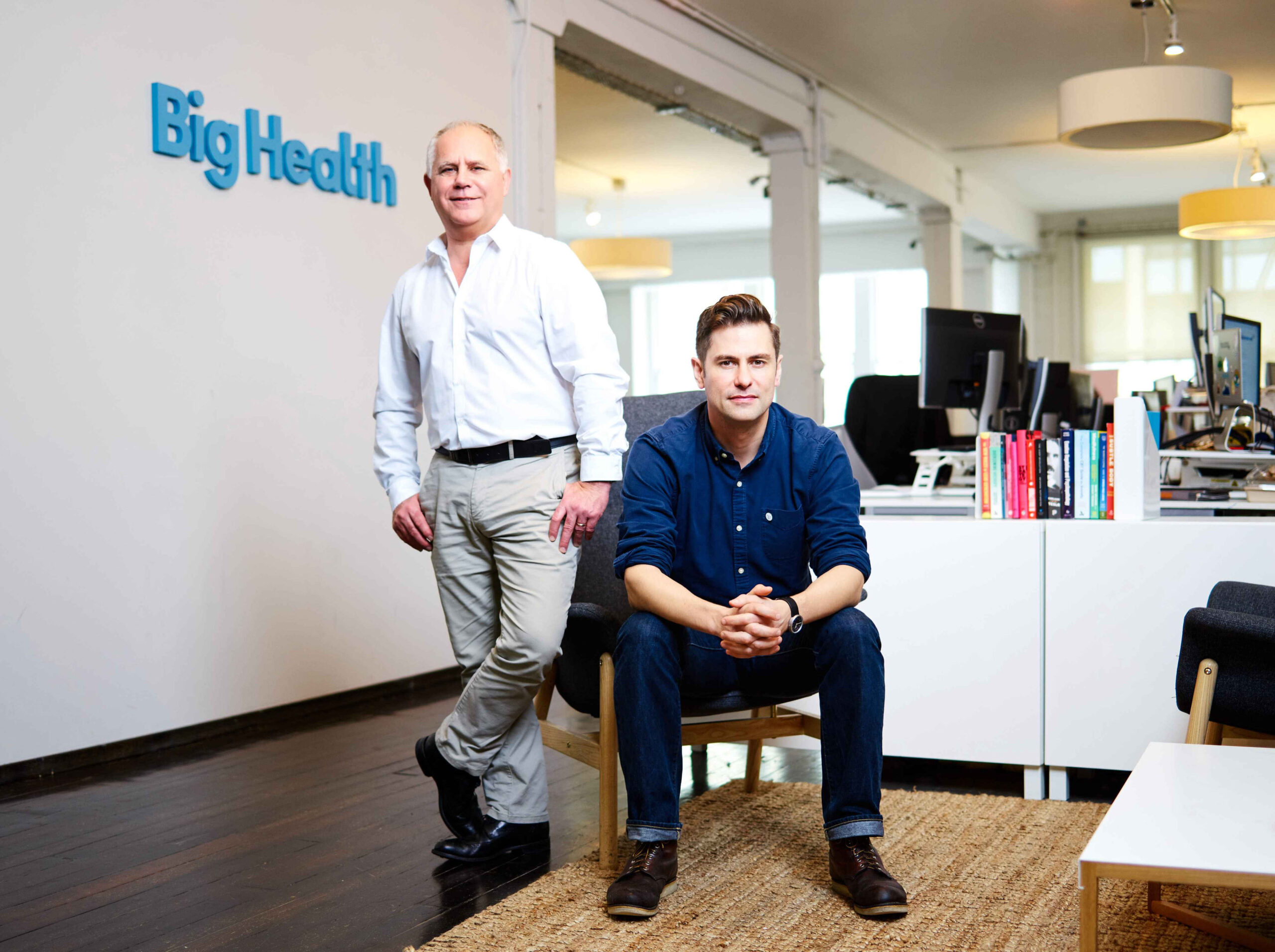
Before Big Health was a company, it was a man with a book and a photocopier. Peter Hames had insomnia. He knew enough psychology to know that cognitive behavioral therapy could help. Getting that therapy was another matter. His doctor offered sleeping pills; Hames wanted a way to change the problem that was keeping him awake.
- Big Health turns structured cognitive and behavioral techniques into self-guided software.
- SleepioRx and DaylightRx are FDA-cleared prescription treatments for adult insomnia and generalized anxiety disorder.
- Employers, health plans, providers and the NHS make up its distribution network.
- Its revealing business lesson: evidence, price and a payment pathway all have to cooperate.
So he bought a self-help book by sleep scientist Colin Espie, copied the sleep diaries and did the calculations himself. In a later interview, Hames said his sleep recovered in six weeks. The treatment had been available in print all along. What was missing was an easy way to obtain and follow it.
“All I could get was sleeping pills from my doctor.”Peter Hames, recalling the experience that started Big Health
The book before the app
Hames contacted Espie. The reader and the author became co-founders of Big Health in 2010. Their first product, Sleepio, took the work Hames had performed on paper and turned it into an interactive program. A patient’s difficulty became a design brief: make a proven intervention easier to reach, easier to follow and less dependent on finding an available specialist.
That distinction matters. Big Health did not invent cognitive behavioral therapy. Its expertise lies in adapting established psychological techniques for digital delivery, testing the result and finding organizations willing to put it in patients’ hands. The software has to do some of the instructional work normally done during a clinical session. It also has to persuade a tired person to return tomorrow.
A professor in your pocket
Sleepio’s early answer to that design problem was The Prof, an animated guide, with occasional appearances from a dog called Pavlov. Hames described an experience rich in animation and human voice. It was a curious cast for a medical intervention, but there was a sensible purpose behind it: someone who cannot sleep has limited appetite for another solemn instruction manual.
Under the approachable surface sits structured practice. Sleepio uses assessments, sleep diaries and cognitive and behavioral exercises. The prescription version, SleepioRx, delivers CBT for insomnia through a personalized program. People learn to change habits and responses that keep sleep difficulties going. Watching a lesson is part of the work; applying it between lessons is the part the phone cannot do for them.
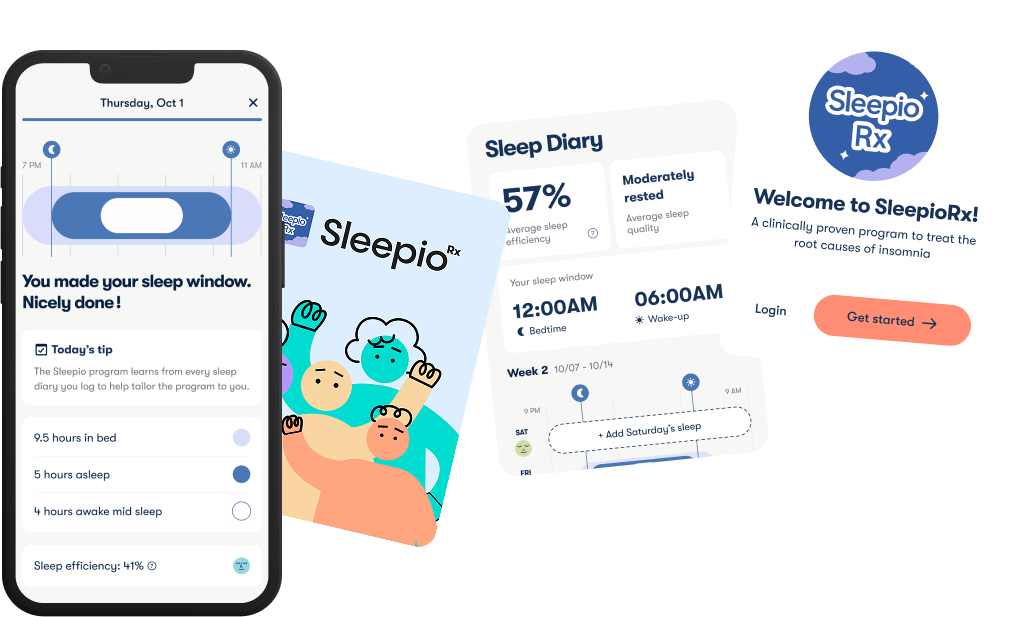
DaylightRx addresses generalized anxiety disorder with digital CBT. Its job is to teach and rehearse ways of responding to anxiety, through audio, video and interactive exercises. These are condition-specific programs. A meditation library or a soothing bedtime recording may be pleasant; it makes a different promise.
The names need careful reading. SleepioRx and DaylightRx are FDA-cleared prescription devices used alongside usual care. Big Health also offers Sleepio, Daylight and Spark Direct, which its US disclosures distinguish as digital programs without FDA review or approval. An “Rx” suffix is consequential here. It is not decoration.
Depression widened the portfolio when Big Health acquired Limbix in July 2023, adding its adolescent-focused SparkRx program. Spark Direct uses cognitive and behavioral techniques, including behavioral activation, to support mood. In May 2024, Big Health reported an adult study with 61 participants and a waitlist control. The result was encouraging, but a small study with short follow-up cannot answer every question about everyday use.
The £45 argument
The company’s most instructive encounter may have been with a spreadsheet. In 2022, England’s National Institute for Health and Care Excellence assessed Sleepio. Its reviewers found evidence of reduced insomnia symptoms. They also had to decide whether buying the program made economic sense.
The initial population-based pricing depended on uptake. Lower the number of people who actually use the software, and the effective cost per user rises. NICE’s external assessment used a lower uptake estimate than the company’s. A subsequent tiered proposal still left uncertainty about savings. Then Big Health proposed £45 per user.
*Modeled cost per user under the assessor’s lower uptake estimate. Historical 2022 UK assessment figures; these are not current US prescription prices.
At that price, the committee judged Sleepio likely to be at least cost neutral and very likely cost saving against usual care. It recommended the program for people who would otherwise receive sleep hygiene advice or sleeping pills. The intervention’s clinical story and its purchasing story had finally met at a number.
This was a change in the buyer’s conclusion, documented in public. It is more useful than guessing at a founder’s private change of heart. Healthcare software can work and still be an awkward purchase. The terms of the purchase help determine whether it reaches anyone.
A treatment needs a buyer
Big Health built several routes into care. US employers could offer its programs as a benefit. Its 2020 funding announcement named customers including Target, Comcast and The Home Depot. A CVS Health partnership, begun in 2019, made digital programs easier to adopt through pharmacy-benefit arrangements. The buyer could use a familiar channel for an unfamiliar kind of treatment.
In Britain, the NHS became a route to population access. Scotland announced national availability of Sleepio and Daylight in 2021. That is a different sale from persuading a sleepless person to enter a credit-card number. Public procurement buys access across a population and makes participation a continuing operational question.
- EvidenceDoes the intervention help?
- PurchaseWho funds access?
- PracticeWill people keep using it?
The attraction of the model is scale. Adding another user does not require booking another therapist’s hour for every lesson. Yet the distinction between access and treatment remains essential. Someone eligible for a benefit has not necessarily opened the app. Someone who opens it has not necessarily completed the program.
The prescription changes the business
Capital gave Big Health room to pursue those routes. It announced a $39 million Series B in June 2020 and a $75 million Series C in January 2022. Neither figure is a product-development cost or proof of profitability. They show the resources investors committed to research, products and distribution.
SleepioRx’s FDA clearance was announced in August 2024; DaylightRx’s followed in September. Those milestones gave the products defined prescription roles. Starting in January 2025, Medicare introduced digital mental health treatment codes covering eligible device supply and onboarding, plus treatment management. The details matter: this is a clinician-led pathway within an ongoing treatment plan, with requirements attached.
New strategic funding for expanding access to Big Health’s prescription digital treatments.
In February 2026, Big Health announced that investment, co-led by .406 Ventures and AlleyCorp. The announcement emphasized provider partnerships and reimbursement, and named Henry Ford and Northwell as adoption partners. Under CEO Yael Berman, appointed in 2024, the commercial emphasis was increasingly on fitting these treatments into clinical workflows.
That places Big Health between traditional therapy and general-purpose wellness software. It competes with other digital CBT options, and with usual care that may involve advice or medication. Its case rests on structured interventions and clinical evidence. That evidence should be read on its own terms: NICE’s 2022 review did not establish superiority over competing digital CBT-I products.
Access is only the first appointment
NICE also examined dropout and digital access. A self-guided program requires a usable device, comprehension and enough persistence to practice. Some patients need assessment for other sleep disorders or more support than software provides. The prescription products accompany usual care; their availability does not settle a patient’s treatment plan.
The lesson a builder can copy is concrete: choose a defined problem, test the intervention and make the purchase fit the institution that will fund it. Measure use and completion separately from eligibility. For patients, the practical starting point is to check employer or health-plan access, or ask a clinician about prescription suitability.
Hames’s book made treatment portable. Big Health made it interactive. The years spent on trials, contracts and reimbursement reveal how much else must travel with a useful idea before it arrives in ordinary care. Even a therapy delivered by phone needs someone to open the door.