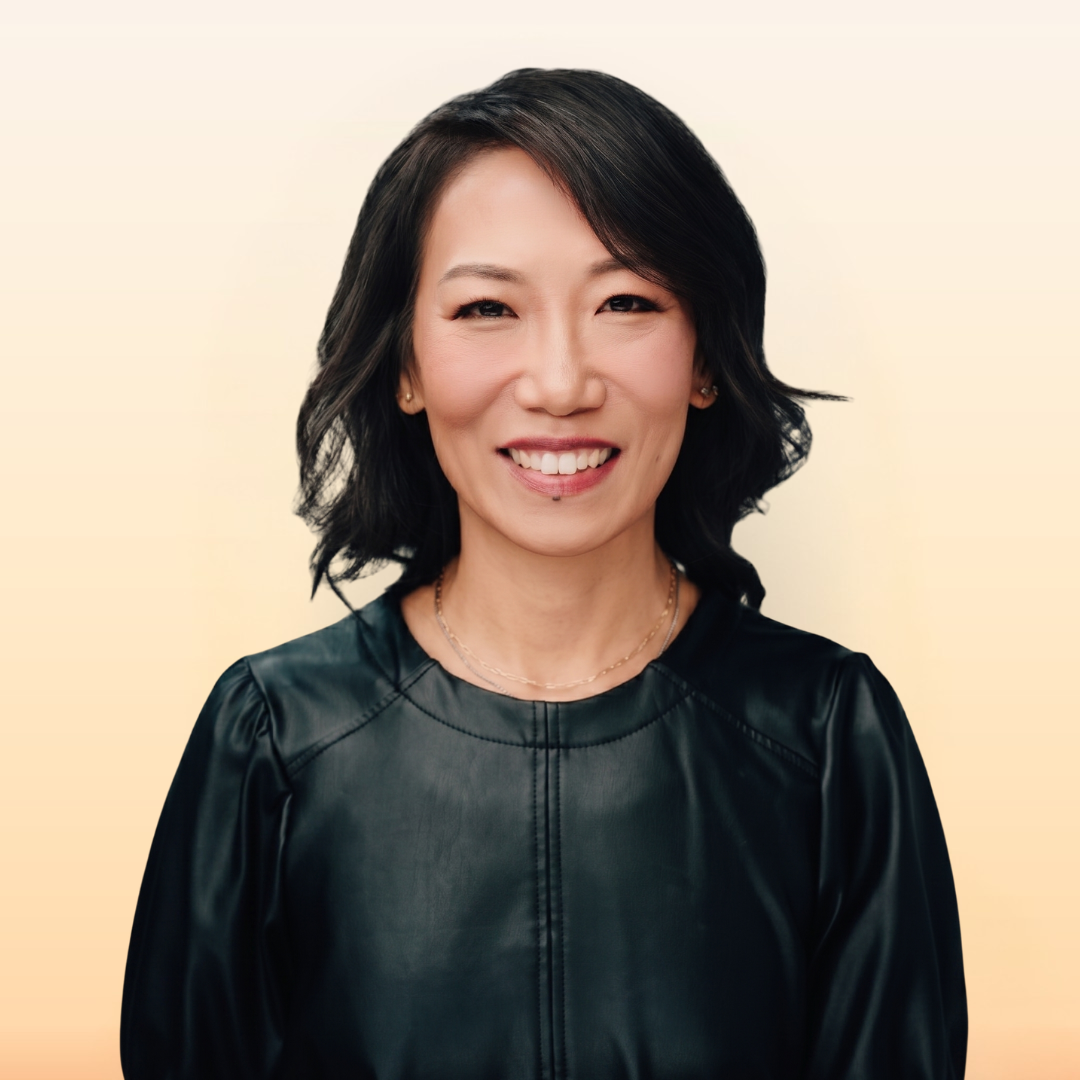
Belinda Tan builds the thing nobody else wanted to pay for: proof. Twice now she has walked out of a settled career to start a company around a single stubborn question - what if the things people already trust their bodies to could actually be tested?
The rigor merchant
Today Belinda Tan runs People Science, a Los Angeles public-benefit company she co-founded in 2020 and co-leads with her husband, Noah Craft. The pitch is deceptively simple. The wellness aisle is a $4-trillion confidence trick where, as her company puts it, most products rely on marketing over evidence. Probiotics, supplements, food-as-medicine, traditional remedies, even psychedelics - billions of people use them, and almost none of it has been put through the kind of trial that backs a prescription drug.
People Science is the workshop where that gets fixed. Its decentralized platform, branded with friendly human names like Chloe Clinical and Chloe LiveLab, runs studies out of people's homes - shipping biomarker kits, pulling data straight from Oura rings, Garmins and Fitbits, and turning a customer base into a research cohort. Wellness brands that once shrugged and said trust us can now say here is the data. That is the entire point.
Born in Malaysia, made in laboratories
She was born in Malaysia and has lived in the United States since she was four. What followed reads, on paper, like a relentlessly intentional ascent: a biology degree from MIT, then an MD and a PhD in immunology from UCLA's David Geffen School of Medicine, a dermatology residency at Harbor-UCLA, and a dermatopathology fellowship split between Memorial Sloan-Kettering and Cornell-New York Presbyterian. Fourteen years of postgraduate training. A board-certified specialist who reads skin disease under a microscope.
She is the first to puncture the tidy version. "If one looks at my CV, it looks very intentional," she has said. "But it was by no means that smooth and intentional." The straight line was drawn afterward. What actually moved her was a small teledermatology startup called DirectDerm, where she discovered that building something was more thrilling than any diagnosis. Her insight about her own field was characteristically plain: "Dermatology training is making diagnoses from photos." If that is true, she reasoned, a screen is not a compromise - it is the natural habitat.
Science 37: the trial that came to you
In 2014 she put the theory to work. As co-founder and chief medical officer of Science 37, Tan helped invent the decentralized clinical trial - studies run through telemedicine and home visits instead of forcing patients to live near an academic hospital. The company would later be valued around $1.3 billion at its public debut. But the number she points to is human: participant diversity in her trials climbed from roughly 5 percent to 40 percent. When you stop requiring people to take three buses to a research center, it turns out, very different people show up.
A family remedy that science couldn't measure
The origin of People Science is a kitchen-table observation, not a boardroom strategy. Tan and Craft are both Western-trained physicians. They also watched traditional Chinese medicine work, plainly and repeatedly, for Belinda's family. The contradiction nagged: the gold-standard randomized trial - the very machine Tan had spent a career inside - had no slot for a TCM formula, a probiotic blend, or a food protocol. The framework was built for single molecules, not for the messy, multi-ingredient, centuries-old things people actually reach for.
So they built a company to widen the aperture. People Science aggregates one person's health data into population-level evidence, generating credible answers for treatments that sit outside FDA oversight. It is research as a public good, sold as a service to the brands honest enough to want their claims tested.
Two CEOs, one company, no thrones
Running a company with your spouse is a punchline waiting to happen. Tan treats it as a design problem. At Science 37 the structure was traditional and Craft was the CEO; at People Science they share the title. "I feel like there's still a lot more work we can all do to model how partnerships and co-leadership can actually work very well," she says. Her rules are unglamorous and effective: assign each decision to one person and then fully commit, have the hard conversation immediately rather than letting it fester, and renegotiate the agreement out loud when circumstances change.
Craft has a nickname for her - the IMF, the Invisible Massive Force - the gravitational pull that turns a vision into follow-through. She prizes humility, careful listening, and the underrated discipline of letting go of being right. The two live in Venice Beach with two children and two Labrador retrievers, a household that seems to organize itself in pairs.
The next thing she wants to give away
Tan's ambition does not stop at the data set. She has talked about a dream that has nothing to do with revenue: free mental health services for the parents and caregivers of children, on the theory that childhood is where resilience and emotional intelligence are built, and that you cannot pour from an empty caregiver. It is the same instinct that runs through everything she builds - take something that should be available to everyone, and remove the reason it isn't.
She advises across the field she helped create - Apollo Neuro, Seed Health, DirectDerm, VisualDx - and has served on the Los Angeles Mayor's WiSTEM Initiative and the board of 826LA. The through-line is access: better evidence, wider trials, fewer gates. For someone who keeps leaving comfortable rooms, she is remarkably consistent about why she leaves them.