Sean Greene was driving home, unable to find a babysitter. He had called. He had texted. Somewhere nearby, he figured, a teenager or young adult would happily take the job. The problem was reaching that person. A neighborhood could contain both an exhausted parent and an available sitter, with neither knowing the other existed.
That small failure became Bambino Sitters. Greene started the company in 2015 and launched its app in June 2016 in Pacific Palisades, Los Angeles. The first boundary was wonderfully literal: ZIP code 90272. Before Bambino could become a national marketplace, it had to make one neighborhood work.
- Find a sitter through people you know.
- Request, book, and pay in one app.
- Local availability matters more than national scale.
The ZIP code was the strategy
Babysitting has an awkward search problem. A parent wants someone available, nearby, affordable, and trustworthy. A long list solves only part of that equation. Bambino made recommendations from friends and neighbors central to discovery, putting a familiar social connection beside an unfamiliar face.
At launch, the app bundled finding, booking, and paying into one transaction. The ambition was practical: fewer messages before leaving home, less uncertainty about rates, and no hunt for cash at the end of the evening. Parents could choose whom to approach rather than simply wait for applicants.
Demand pushed the company beyond its initial boundary after roughly three months. In 2017 it entered Connecticut, then launched 30 markets that March. Local community advocates helped introduce the service. Greene described the advantage plainly: “We have actual feet on the ground.” The national business still needed local introductions.

A recommendation has a return address
The distinction becomes clearer if you imagine two sitter profiles. Both look competent. Both have reviews. One has worked for a family you know. That extra connection gives a parent someone to ask a specific question: how did bedtime actually go? Bambino organizes its proposition around that conversation.
The customers are parents seeking occasional, after-school, weekend, or backup care, and sitters seeking nearby work on schedules they control. The website reports one million downloads and more than 400,000 registered sitters. Those are company figures, and registration does not tell you who is available on your street tonight.
Care.com, Sittercity, UrbanSitter, neighborhood groups, and the family group chat all compete for the same decision. Bambino’s particular pitch combines community recommendations with booking and payment. Its useful expertise lies in the handoff between social reassurance and the administrative business of arranging a sit.
The badge deserves a closer look
A recommendation is valuable information. It cannot settle every safety question. Bambino describes several layers: phone and carrier verification, sitter identity checks through Stripe Identity, a community endorsement before a profile goes live, and Family Watchdog sex-offender screening for parents and sitters.
Criminal background checks are optional for sitters generally. Those completing a Checkr screening receive a background-check badge; Elite sitters also receive ongoing monitoring. Parents should distinguish these layers when reading a profile. A community recommendation and a criminal background-check badge communicate different things.
The company also states that reporting restrictions can make background information incomplete. That matters to the product’s promise. The app supplies signals parents can examine, while the family still chooses the person entering its home. Reading the actual profile is part of using the service well.
“We have actual feet on the ground.”
Sean Greene · Palisades News · 2017
Free to join. Care still costs money.
Bambino is a marketplace, with caregivers arranging work directly with families. Its terms say it does not employ the sitters. Sitters select a base rate, and Bambino adds applicable fees to the price parents see before booking. Payments run through Stripe.
The June 2026 support guidance says downloading the app and creating a profile are free; bookings carry a service fee. Premium membership waives service fees and adds all-access chat, booking up to 12 weeks ahead, and requests covering as many as 30 dates. Apple’s US listing includes a $19.99 monthly Premium option; check the purchase screen for the applicable plan.
For a parent, the calculation starts with the sitter’s rate and hours, then the displayed fees. Premium adds another question: will repeated use justify the subscription? For the company, keeping arrangements inside the app gives it opportunities to earn from transactions and memberships after making the introduction.
Premium is an optional subscription. Compare the price shown in the app with how often you book.
The second booking was the harder problem
An early weakness appeared once a match worked. In 2017, Greene said parents wanting longer arrangements tended to leave the app. He discussed adding recurring bookings. Today’s multi-date requests address that practical need: families often want the same person again, with less scheduling work.
The business has also moved into employee benefits through BambinoWorks. Employers can sponsor childcare, pay for Premium memberships, or offer discounted voluntary access. LG Energy Solution Michigan appears as a named employer partner. A canceled sitter can disrupt a workday as easily as a dinner reservation.
Schools provide another route into the neighborhood. Partners in Education offers a PTA a $10 donation when a new parent joins using its code and makes a first booking. Separately, April 2026 referral terms reserve individual referral rewards for sitters, offering $20 after a qualifying referral. Both programs reward activity beyond merely creating an account.
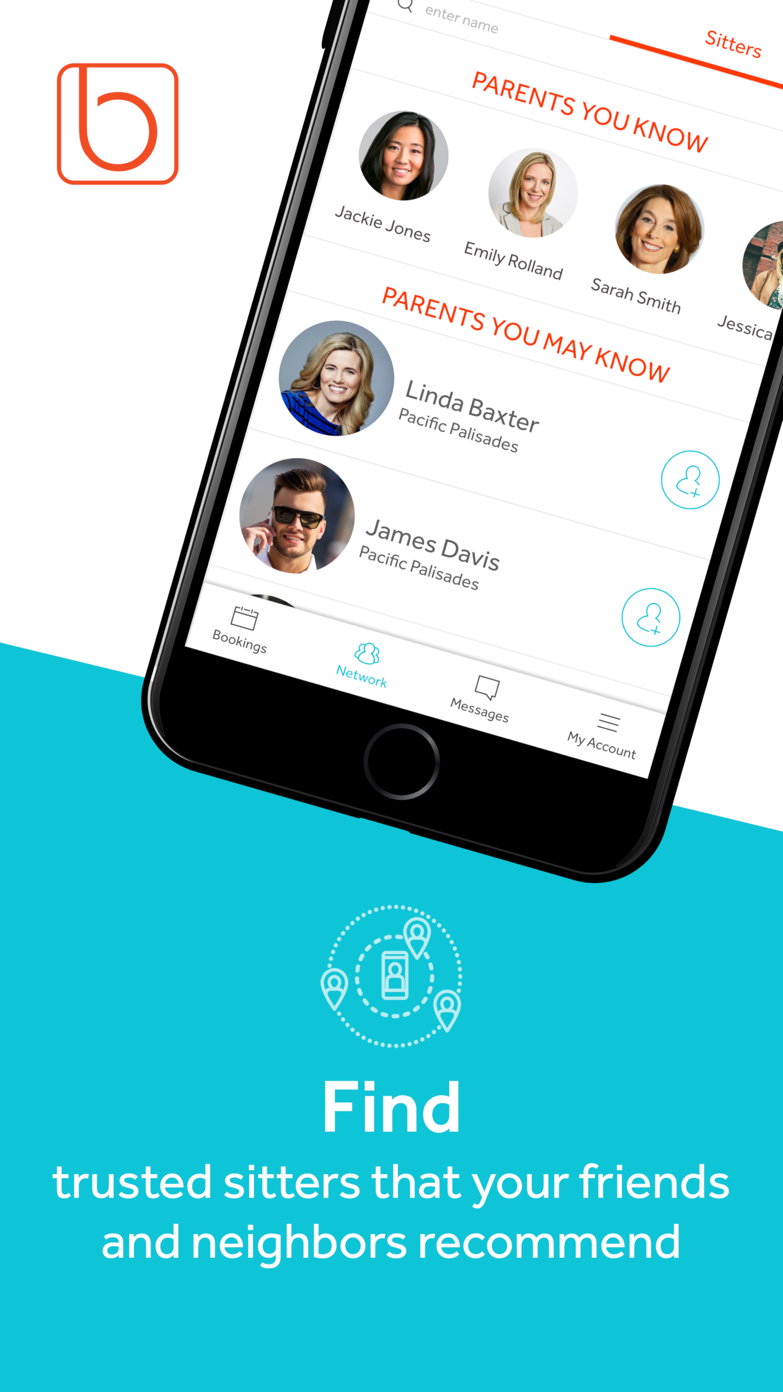
Then comes everyone’s calendar. Bambino’s App Store artwork introduces the mobile product. Premium’s multi-date requests tackle the work of booking again. Image: Bambino Technologies / Apple App Store.
Build the introductions before the map
There is a lesson here for anyone building a local marketplace. In a 2018 interview, Greene described recruiting sitters before marketing to parents. The order matters: the first customer needs a credible choice. A launch announcement cannot babysit. Someone nearby has to accept the request.
The same reasoning explains the limits. A thin local network, few recommendations, or schedules that do not overlap can leave a parent without a match. National availability is a geographic claim; a successful booking is a local event. Families needing guaranteed coverage must weigh that difference.
Bambino’s bet is that useful software can preserve the personal introduction while removing much of the coordination around it. The parent gets a clearer route to an evening off. The sitter gets another family nearby. The thing worth copying is the sequence: establish a reason to trust, then make the next step easy.