The Bet
A company named after things that won't sit still
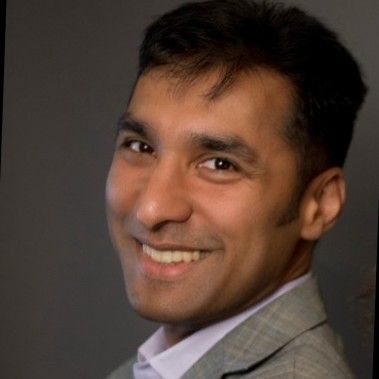
Walk into most drug-discovery labs and you will hear the same caution: some proteins are too floppy to drug. They flex, they twist, they change shape mid-reaction. Conventional wisdom says aim a molecule at something that holds still. Asit Parikh runs a company built on the opposite instinct. MOMA - shorthand for molecular machines - is wagering that those restless, shape-shifting proteins are not a problem to avoid but a class of targets nobody has properly opened.
Parikh is the President and Chief Executive Officer of MOMA Therapeutics, a Cambridge, Massachusetts biotech that closed a $150 million Series B and, by early 2024, had signed a collaboration with Roche worth roughly $2 billion in potential value. The pitch he gives investors is unusually plain for an industry fond of jargon: systematically drug the molecular machines, and you can deliver an entirely new class of medicines.
"The possibility that systematically drugging molecular machines can deliver an entirely new class of medicines to patients who need them."- Asit Parikh, on why he joined MOMA
That sentence is the whole company in miniature. MOMA's science centers on enzymes and protein complexes whose function depends on motion - the conformational changes, the moving parts, the structure-function relationships that make a protein do its job. Find the moment of motion that matters, and you can design a molecule to interrupt it. The platform is built around high-throughput and DNA-encoded library screening, structural biology, and computational chemistry stitched together to hunt for those moments at scale.
From the gut clinic to the platform
Before MOMA, Parikh spent two decades inside two of Cambridge's most consequential drug companies. At Millennium Pharmaceuticals he worked in clinical research, holding leadership roles across inflammation and oncology. It was there, and later at Takeda, that he helped move vedolizumab - sold as Entyvio - from a research program into a treatment used worldwide for ulcerative colitis and Crohn's disease. Few executives can point to a single medicine they helped carry from the bench to a global market. Parikh can.
At Takeda he became Senior Vice President and Head of the Gastroenterology Therapeutic Area Unit in 2012. The list of approvals under his watch reads like a tour of gut and liver medicine: Entyvio, Gattex and Revestive for short bowel syndrome, Takecab and Vocinti for acid-related disorders, Alofisel for perianal fistulizing Crohn's disease, Motegrity for chronic constipation. He also built a drug-discovery unit from scratch and ran more than 25 business development deals - licensing, mergers, acquisitions, and brand-new company creation. The operator who now talks about molecular machines first learned to ship products and close deals.
"MOMA's approach, coupled with its world-class team and scientific founders, represented an unprecedented opportunity to join a disruptive young biotech poised to make a true difference in medicine."- Asit Parikh
The training that reads like a syllabus
Parikh's resume before industry is a near-complete tour of American science and medicine. A bachelor's degree from Northwestern. An M.D. and a Ph.D. in biochemistry from Vanderbilt, earned through its Medical Scientist Training Program - the dual-degree track that turns out physician-scientists. An internal medicine residency at the University of Pennsylvania. A gastroenterology fellowship at Massachusetts General Hospital. Postdoctoral cancer biology research at MIT. He did not pick one lane and stay in it. He collected the clinic, the lab, and eventually the boardroom.
That dual identity still shapes him. Even while running a venture-backed company, Parikh has kept working as a consulting gastroenterologist at Newton-Wellesley Hospital. It is an easy detail to skip past, and a revealing one: the man setting MOMA's strategy still, on some days, sees the patients his industry exists to serve. The through-line from ulcerative colitis to precision oncology is not the disease. It is him.
Raising money when nobody wanted to
Timing in biotech is brutal, and MOMA's Series B landed in the teeth of one of the worst markets the sector had seen. In May 2022, as public biotechs cratered and IPO windows slammed shut, Parikh and MOMA pulled in $150 million from old investors and new ones alike. The plan was blunt: push one or more of MOMA's oncology programs toward the clinic. By 2024 the company was talking about bringing two high-impact programs into human trials.
Then came Roche. In January 2024 the Swiss pharmaceutical giant signed on to develop precision cancer drugs with MOMA in a deal that could be worth around $2 billion across milestones. For a company built on an unorthodox thesis, a partnership of that size from one of the world's most respected drug makers is a particular kind of validation - the market voting, with real money, that drugging molecular machines is worth a serious bet.
"The vision for this collaboration was crafted jointly with Roche to enable each party to bring its strengths in pursuit of this shared goal."- Asit Parikh, on the Roche partnership
Patient, on purpose
When biotech's IPO window cracked open again in early 2025 and founders rushed to file, Parikh's public posture was almost contrarian. MOMA was preparing, he said, but it was "not in a rush." For a sector that often confuses motion with progress, the restraint is telling. He has spent his career on long arcs - a drug from research to global approval, a discovery platform from thesis to partnership. The IPO, in that frame, is one more step on a horizon measured in programs reaching patients, not press releases.
What makes Parikh worth watching is not that he is a careful executive, though he is. It is the shape of the bet. He took the operator's discipline he sharpened at Takeda - ship the product, close the deal, build the unit - and pointed it at the part of biology most people had written off. If MOMA works, the science that other labs called too floppy to touch becomes a new category of medicine. If it does not, it will not be for lack of someone who knew how to build the company around it.