He writes the first check, then writes the playbook. A General Partner who would rather meet a founder before the deck than after the round.
That is how long Ashu Garg says he needs to know whether a founder has the thing. The thing is rarely on the deck. It is the way someone answers when the script runs out.
On any given Tuesday in Palo Alto, Ashu is across a table from someone who has not raised a dollar, has not shipped a product, and has not slept in a week. They are explaining a system that does not exist yet for a customer who does not know they want it. Most investors hear nothing. Ashu hears a company.
He is a General Partner at Foundation Capital, one of the firms that helped invent the modern venture-capital ecosystem from a building on Sand Hill Road. He has been there since 2008, which by the math of his industry makes him an elder. He does not act like one. He still writes the first check. He still answers the email at 11:43 p.m. He still believes, in a Silicon Valley where conviction has been outsourced to AUM, that the job is to find the founder before anyone else thinks the founder is fundable.
The list of companies he saw early is the part of the resume that does the talking. Databricks, when a data lakehouse sounded like a real-estate listing. Cohesity, when secondary storage was still a chore. Eightfold, when "AI for HR" got laughed off the page. Turing. Anyscale. Alation. Amperity. TubeMogul before Adobe wrote a check with nine zeros on it. Aggregate Knowledge. Custora. FreeWheel. Tubi. The pattern is not luck. It is a temperament.
The temperament: high conviction, no decoration. Ashu does not subtweet competitors, does not run a personal brand machine, does not announce a thesis after the round closes. He runs a podcast called B2BaCEO, which sounds like a typo and is actually a quiet conspiracy. The guests are people like Eric Yuan of Zoom, Ali Ghodsi of Databricks, Aaron Levie of Box, Jennifer Tejada of PagerDuty, Frank Slootman of Snowflake. They show up because Ashu does not waste their time.
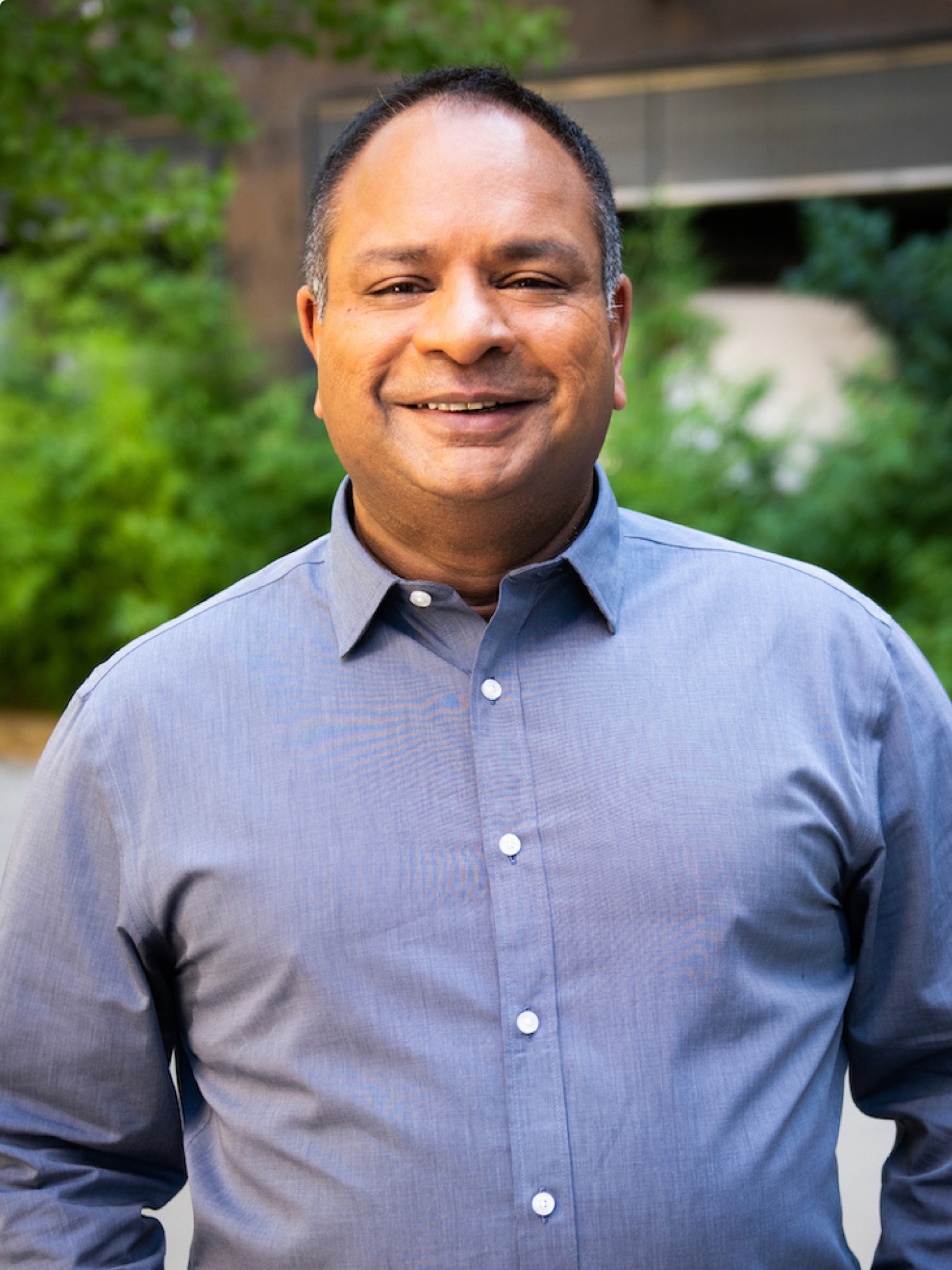
Nothing in the last 45 years comes close to the transformation AI is bringing right now.- Ashu Garg
Before he was an AI investor, Ashu was a kid who lived in three countries on three different difficulty settings. India, then Nigeria, then Sudan, then back. The early biography of a person who learns to read a room is usually a person who has had to read a lot of different rooms.
He went to IIT Delhi, then IIM Bangalore, where he picked up the President's Gold Medal - the school's top academic honor. Then a stretch nobody expects on the CV of a Silicon Valley VC: he set up Unilever's operations in Nepal. He sold soap in Kathmandu before he sold software in Redmond. He says it was the best business school he ever attended.
Cadence Design Systems came next, then McKinsey, where he helped technology companies figure out how to actually sell what they had built. In 2003 he joined Microsoft and ran the online-advertising business as General Manager during the years when Google was inventing the playbook everyone is still running. He left in 2008 for Foundation Capital and never went back.
Somewhere in between he founded TringTring.com, one of the first search engines in Asia. The company did not become Google. The founder became something more useful - a venture capitalist who has actually built things, lost things, sold things, and stood in front of customers who said no.
Early checks. Sometimes the first institutional check. The pattern is enterprise software with a moat that gets deeper as the data and the workflows pile up.
Training data was the old story. Ashu argues the durable advantage in AI is the searchable record of how an agent actually executed a workflow - the trace, not the corpus.
If you build on top of a foundation model, the model provider can ship your product next quarter. The strategic question is not GPT-5 vs. your launch - it is GPT-7 vs. your survival.
Pre-revenue. Pre-product, sometimes. Foundation Capital wrote the first institutional checks into Databricks and Cohesity. Ashu keeps doing that for a reason.
Every startup building on top of foundation models should remember: your vendors will also be your competitors.- B2BaCEO, 2025
B2BaCEO is the long-form receipt of Ashu's relationships. The guest list reads like the board of an unwritten trade association: Eric Yuan, Ali Ghodsi, Aaron Levie, Jennifer Tejada, Frank Slootman. The format is not theater. The format is two operators comparing notes while someone records.
The conversations stay technical when they should be technical. They stay practical when most podcasts go philosophical. Ashu, who once ran a marketing function at Microsoft, knows the difference between a story and a sales call - and refuses to confuse the two.
He also runs the Foundation Capital annual CEO Summit. The agenda is not public. The relationships built there are part of what a founder gets when Ashu wires the seed money. The check is the easy part. The phone book is the asset.
His first real job after IIM Bangalore was establishing Unilever's operations in Nepal. The lesson, by his telling: distribution beats brilliance.
Top of the class at IIM Bangalore. A medal that does not get mentioned in his own bio. Other people mention it.
One of the earliest search engines in Asia, founded by Ashu before joining the institutional machine. Becoming a VC who built things changes the way you sit across the table from a founder.
India, Nigeria, Sudan, then California. Pattern recognition is a learnable skill, and most of his was learned before B-school.
His wife Pooja is an entrepreneur. They have two sons. Dinner-table conversations are presumably uneditorialized.
Foundation Capital is one of the oldest enterprise franchises in Silicon Valley. Ashu does not chase headlines for a firm whose returns already speak.
"He's the kind of person I would've wanted on our founding team from the very beginning. In every way that matters, he has been."
- Jonathan Siddharth, Founder & CEO, Turing
"My superpower is identifying someone's unique strengths and hidden opportunities in 15 to 20 minutes."
- Ashu, on Ashu
A published essay arguing the rivalry tells you more about the shape of AI's data layer than any keynote.
Reported $600M raised. The check size for the AI-first thesis just got bigger.
The framing Ashu uses for the next generation of AI agents - software that performs the work rather than enabling it.