In 2013, Artsy’s researchers admitted that an elegant idea had stopped working. They had chosen a handful of characteristics meant to apply to every artwork. Then they looked at the art. The categories, they concluded, carried assumptions from the nineteenth century that could not comfortably describe modern and contemporary work. The paintings had declined to cooperate with the spreadsheet.
- Discover art across galleries, follow artists, make offers, and buy eligible works online.
- Galleries pay subscriptions and commissions; collectors can research auction results for free.
- Since April 2026, Artsy and Artnet have shared leadership while keeping distinct websites.
That small correction is a good place to begin. Artsy’s challenge has always been to translate an unruly, relationship-driven trade into something a stranger can use. Search must make the unfamiliar approachable. Checkout must make an expensive leap feel reasonable. Neither task is accomplished simply by putting pictures on a screen.
The categories that would not behave
Carter Cleveland began Artsy in 2009 while studying computer science at Princeton. The original opportunity was discovery: people could find art online without first acquiring a dealer’s address book or an art historian’s vocabulary. Sebastian Cwilich brought experience from Christie’s; early collaborators and co-founders Wendi Murdoch and Dasha Zhukova brought connections and backing.
The Art Genome Project gave that ambition a structure. It connects works through more than 1,000 characteristics, spanning subject matter, movements, materials, and visual qualities. Its 2016 explanation described experts grading each gene from zero to 100. A characteristic could be present by degrees. Art rarely behaves like a yes-or-no questionnaire.
Crucially, the vocabulary could change. In their 2013 account, researchers explained that examining thousands of artists and artworks had exposed missing dimensions. They expanded the categories and dropped their required genes. Here is an idea another business can borrow: build the classification, then allow the things being classified to embarrass it into improvement.
characteristics connecting artworks
Classification is a route into art, not a verdict on it.The gallery stays in the picture
Artsy’s commercial answer was to work with galleries. The dealer supplies inventory, specialist knowledge, and a relationship with the artist. Artsy supplies a shared destination where buyers can encounter that inventory. Its marketplace brings gallery works and partner auctions into the same browsing environment, alongside editorial explanations and recommendations.
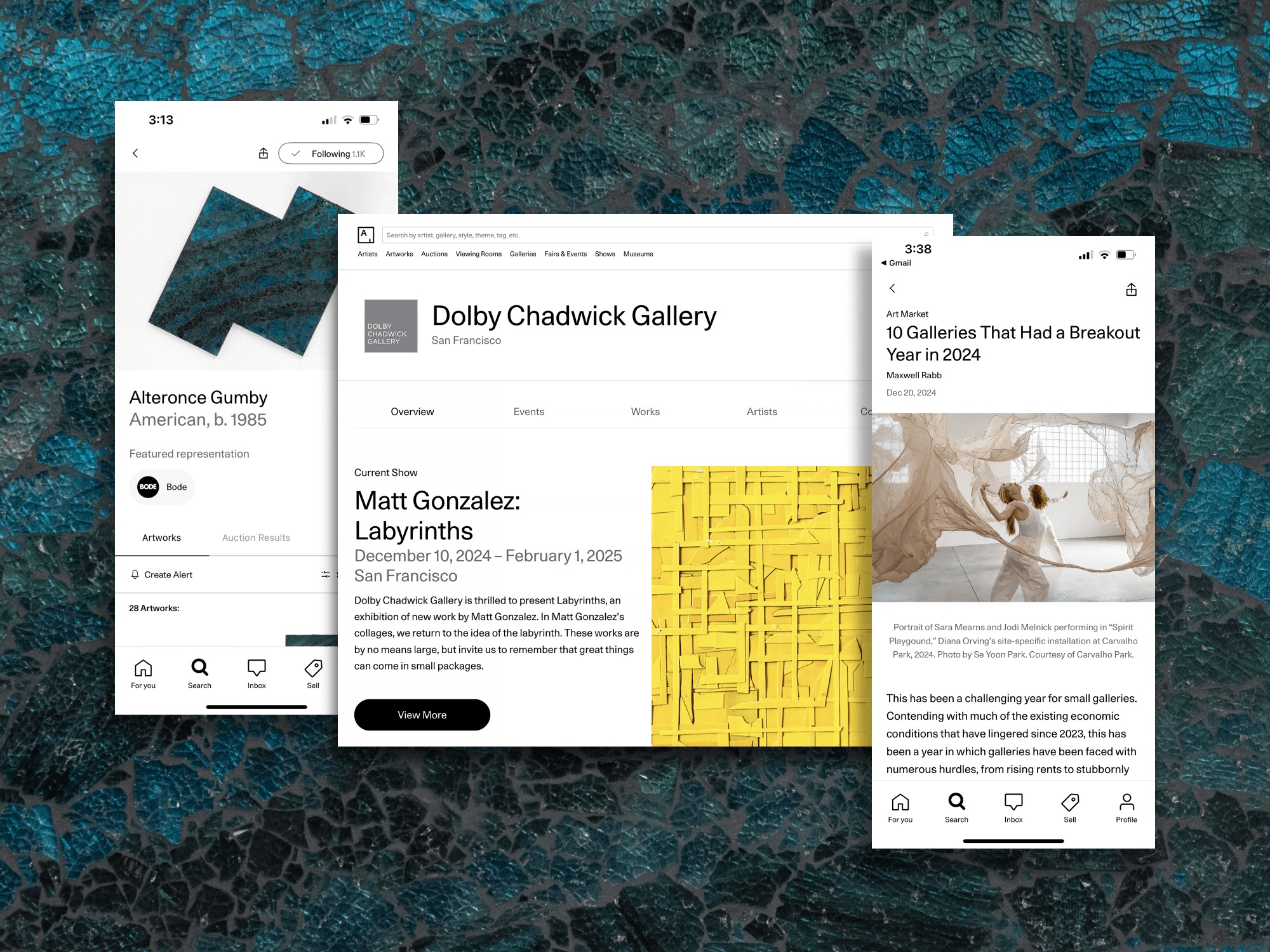
A collector can follow artists, save works, and receive alerts. A beginner can explore a style before learning which artists belong to it. A gallery can present exhibitions and answer inquiries from people beyond its usual geography. The useful distinction is the combination: browsing, learning, contacting a seller, and purchasing belong to one journey.
Buyers can also go directly to galleries or auction houses, or browse alternatives such as Saatchi Art and 1stDibs. Artsy occupies the space between individual sellers and an aggregated market. That position depends on partners continuing to see a reason to participate. A handsome listing that never produces a worthwhile conversation is an expensive decoration.
A checkout button changes the brief
The build-out required capital. Catterton led a $25 million Series C in 2015. Two years later, Avenir Growth Capital led a $50 million Series D, with expansion of online and live auctions on the agenda. Those figures describe financing, not the cost of a particular feature or proof that the business was profitable.
“The investors always told me no one would ever buy art online.”Carter Cleveland / Webby Podcast, 2017
In January 2019, Artsy introduced direct purchasing by credit card. Later that year, under new chief executive Mike Steib, it cut roughly 20 employees and exited its content-sales business. The company described the move as concentrating resources on its core marketplace. The narrowing had a human cost; it also made the commercial priority plain.
Today its gallery offering combines subscription fees, typically paid monthly, with commissions on e-commerce transactions. It includes listings, marketing, inquiry management, and analytics. Views and saves tell a gallery what attracts attention. Offers and completed purchases tell it something more demanding: whether attention becomes business.
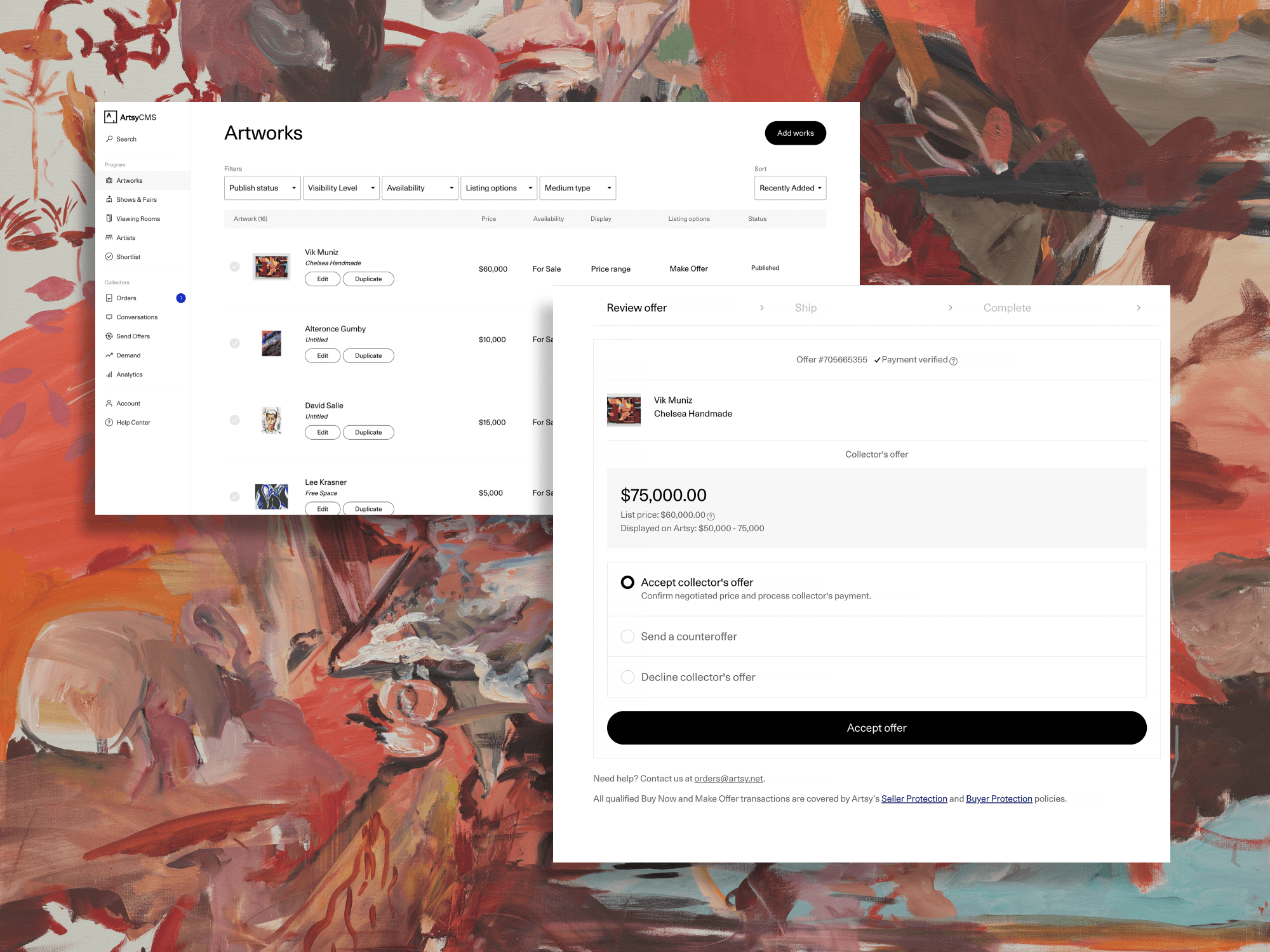
Artsy’s published gallery toolkit makes the bottleneck unusually concrete. It says a survey of thousands of collectors found slow gallery responses were the most common reason for abandoning a possible purchase. That is a warning to any marketplace operator: discovery can succeed while the sale stalls in someone’s inbox. Improving the handoff may matter more than adding another recommendation. Software can summon interest; a seller must still respond.
The price of confidence
For a buyer, usefulness starts before checkout. Artsy’s Price Database offers unlimited free access to millions of auction results. A prospective collector can compare records before making an offer. Comparisons still require judgment: medium, size, condition, edition, and provenance can make two works by the same artist very different purchases.
After checkout, trust becomes operational. The Artsy Guarantee covers qualifying transactions up to $100,000 for problems including damage, non-delivery, significant misdescription, and inauthenticity. Issues generally must be reported within seven days of delivery; authenticity concerns have a 180-day window. Payment outside Artsy or arranging your own shipping can remove eligibility. Changing your taste is not a covered defect.
- 01 / DISCOVERFollow artists. Save works.
- 02 / RESEARCHCompare records. Ask questions.
- 03 / TRANSACTCheck terms. Use eligible checkout.
This approach works best when sellers respond, descriptions are dependable, and buyers accept that a screen cannot settle every question. A database cannot promise investment returns or reproduce the experience of standing before a painting. It can make the next question easier to ask. For a new collector, that is already a considerable service.
Two databases, one new wager
In April 2026, Artsy and Artnet announced shared leadership under Jeffrey Yin, with Beowolff Capital’s Andrew Wolff as chairman. The brands and websites remain distinct. Their announced direction pairs Artsy’s discovery and buying experience with Artnet’s market intelligence, journalism, and transaction data, alongside plans for additional gallery tools.
The practical test is whether that combination makes a gallery’s working day easier and a collector’s decision better. Artsy began by helping people find what they might like. Its business now rests on everything that happens afterward: the question answered, the price understood, the work delivered. The database opens the door. Someone still has to walk through it.