She funds the founders other firms file under "too weird." A product manager who became the seed investor for outliers and misfits - and called the fund a love letter to life itself.
She picked the fund size before the math. $181,818,181 - because 18 in Hebrew is chai. Life. A spreadsheet that whispers a prayer.
The pitch arrives in your inbox, and it doesn't read like a pitch. It reads like a question. The deck is missing a TAM slide. The founder is wearing a hand-knitted hat. There is, somewhere, a footnote about mushrooms. Most investors thank the founder for their time. Arielle Zuckerberg books a second call.
This is the part of seed investing nobody puts in the keynote. The willingness to sit with a sentence that doesn't immediately make sense, and not flinch. Zuckerberg has built a career around that posture. At Long Journey Ventures, the San Francisco firm where she is General Partner, the working term for what she's looking for is "magically weird" - a phrase the firm uses without apology in its marketing, its decks, and the bio of nearly every partner.
In March 2025 the firm announced its newest fund: $181.8 million. Read it again. One hundred and eighty-one point eight. Not a round number. Not a power of ten. It's the number 18 stretched into a fund size, because 18 in Hebrew - chai - is the word for life. The whole vehicle is, quietly, a benediction. You could argue this is the most Zuckerberg thing about Long Journey: the LP commitment hides poetry inside arithmetic.
Long Journey was founded in 2020 by Lee Jacobs and Cyan Banister. Zuckerberg joined as a General Partner in 2022, sliding in next to the kind of investors who keep tabs on Burning Man builders, mushroom foragers, and obscure Tokyo hardware tinkerers. Today the firm has put roughly 130 companies on its cap table and raised around $450 million across its funds. It is not a megafund. It does not pretend to be.
What Zuckerberg brings is a product brain wrapped in a hospitable temperament. Before she ever wrote a check she was the person shipping the feature - first at Wildfire Interactive, the social marketing startup Google bought in 2012. She stayed at Google to ship product on social ads. Then she went to Humin, the contacts app, where she led product before Tinder acquired the company. Two of her first three jobs ended in acquisitions, which is a kind of CV that tends to mean somebody knows when to ship and when to fold.
In 2015 she crossed the fence to venture, joining Kleiner Perkins as an early-stage partner. There she backed The Wing, the women's co-working network, the video interviewing platform Willo, the 3D printing company Voodoo Manufacturing, and Handshake, the student-facing jobs marketplace that has since grown into one of the dominant graduate-hiring platforms. The bets were a mix of consumer warmth and unglamorous infrastructure - a hint of the catholic taste she'd later refine.
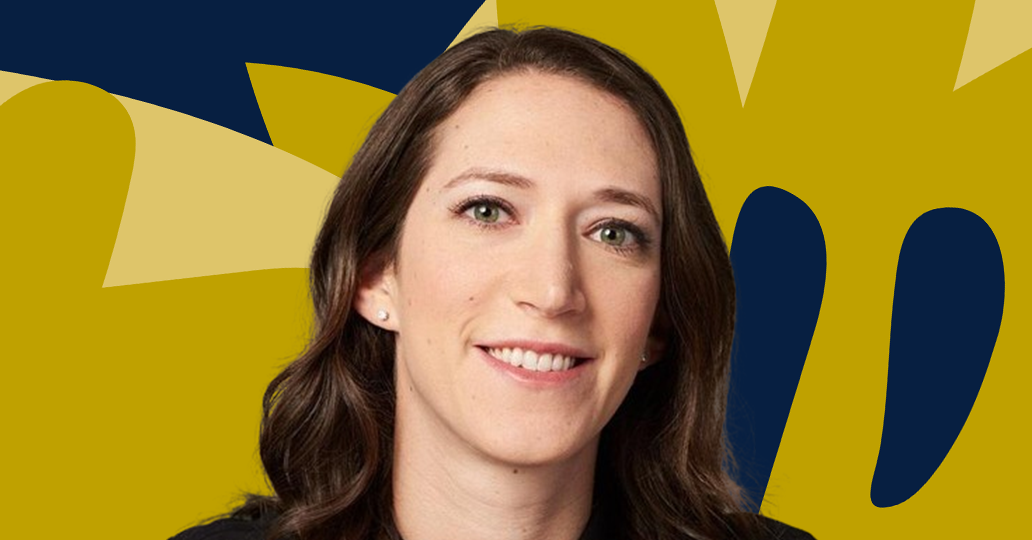
Most VCs come up through finance or consulting. They learn to read numbers first and people later. Zuckerberg came up the other way around. By the time she joined Kleiner, she had already lived through the inside of two acquisitions and the daily work of a PM - the user interviews, the prototype that didn't ship, the feature that landed sideways. That changes the questions you ask in a pitch meeting.
She has spent years describing this difference in interviews and on podcasts - notably on The Twenty Minute VC, where she did a now-cited episode reviewing her first six months in venture. The short version: a product manager sees a startup from the inside out. They look at the loop, the hook, the moment the user comes back. The growth chart is a downstream artifact. The product is the thing.
After Kleiner she joined Coatue Management, the crossover firm best known for late-stage and public tech investing. She wasn't there to chase IPOs. She helped design and launch Coatue's first early-stage fund - the work of bolting a seed and Series A practice onto a multi-stage operation built for larger checks. It is the kind of assignment that teaches you what investing infrastructure looks like at scale, and it sharpened her view of what she did and did not want her own practice to be.
What she wanted, it turned out, was Long Journey. A smaller firm. A weirder thesis. A higher tolerance for the unfundable-looking. Cyan Banister and Lee Jacobs were already building a fund around the principle that the future shows up dressed strangely. Zuckerberg joined in 2022 and the place clicked.
The clearest distillation of her view sits in a public post she wrote about the role of a seed investor inside a partnership: "You're the person who says 'wait... what's going on over there?' And then you dig in, work with the founder, separate the signal from the noise, flag it to the team, and quietly guide that $50K seedling into a $3M+ tree. Overalls optional. Watering can encouraged." It reads like a job description for a gardener. Which is the point.
"Overalls optional. Watering can encouraged."- Arielle Zuckerberg, on the seed investor's actual job
Editorial estimate based on her public writing, podcast interviews and portfolio composition.
Studies Philosophy & Public Affairs and Computer Science at Claremont McKenna College. (An unusual combo. The first half teaches you to question; the second half teaches you to build.)
Joins Wildfire Interactive as a product manager. PM by day, hackathon host by night.
Google acquires Wildfire. Stays on to PM social ads.
Leads product at Humin, the contacts app that tried to make your phone book act human.
Crosses into venture at Kleiner Perkins as an early-stage partner. Backs The Wing, Willo, Voodoo Manufacturing, Handshake.
Humin acquired by Tinder. Two acquisitions, three jobs in.
Joins Coatue Management. Helps design and launch its first early-stage fund.
Becomes General Partner at Long Journey Ventures.
Long Journey announces a $181.8M fund - chai - in March.
You're the person who says "wait... what's going on over there?" And then you dig in, work with the founder, separate the signal from the noise, flag it to the team, and quietly guide that $50K seedling into a $3M+ tree.
- @ariellezuck on X, on the seed investor's jobThe best venture partners don't just write checks - they remove barriers, open doors, and walk alongside founders.
- Long Journey Ventures team page$181.8 million isn't a round number. It's chai - 18 - the Hebrew word for life. A spreadsheet with a soul.
Two acquisitions before she ever wrote a check. She knows what shipping feels like at 2am.
The firm's thesis is one phrase: back the founders whose strangeness is the moat. She picks the strange ones.
Goal: ski one hundred days by age one hundred. The long journey isn't only the fund's name.
@az on Instagram. The kind of asset you can't buy and don't sell.
The double major. Builds the thing. Then asks what it's for.
Spend an hour with the public Zuckerberg - the tweets, the podcast appearances, the team page bio - and a posture comes into focus. She is not selling herself as the smartest person in the room. She is selling herself as the person willing to keep showing up after the room empties out.
That is a real distinction in venture. The popular caricature of the early-stage investor is the contrarian who sniffs out the unicorn and then dines out on the war story. Zuckerberg's version is humbler. She talks about removing barriers. She talks about walking alongside. She talks about the $50K seedling becoming a $3M tree, slowly, with weather.
If there's a tradition she fits into, it's the gardener school of venture - the partner whose job is patience plus a watering can, not a hot take. The Long Journey brand leans into the same idea: the name is the thesis. Capital that sticks around long enough for the strange idea to ripen.
It helps that the strange ideas are her actual taste. Long Journey's portfolio includes Burning Man-adjacent hardware, niche consumer experiments, mushroom-related research and other categories where the slide deck doesn't tell you anything until you talk to the founder for an hour. That is exactly the kind of pitch most firms struggle to grade. It is the kind Zuckerberg appears to relish.
You can hear it in how she frames the work to other juniors and emerging investors: the value isn't the check. The check is table stakes. The value is the partner who notices the thing happening in the corner of the cap table, sees what it could be, and quietly defends it inside the partnership meeting until it gets resources.
To be the investor outliers and misfits write to first. The one whose first reply is a question, not a term sheet. The one still on the cap table in year ten.
The Long Journey thesis is the personal one too. Strange-looking ideas, from strange-looking founders, in strange-looking markets - the kinds of bets where being early is the whole alpha.
The firm's name is a promise. Capital that doesn't get jumpy when the first six quarters look slow. A founder relationship measured in years.
Recruiting help. Customer intros. The 11pm phone call. The "wait, what's going on over there" question that quietly turns a seedling into a tree.