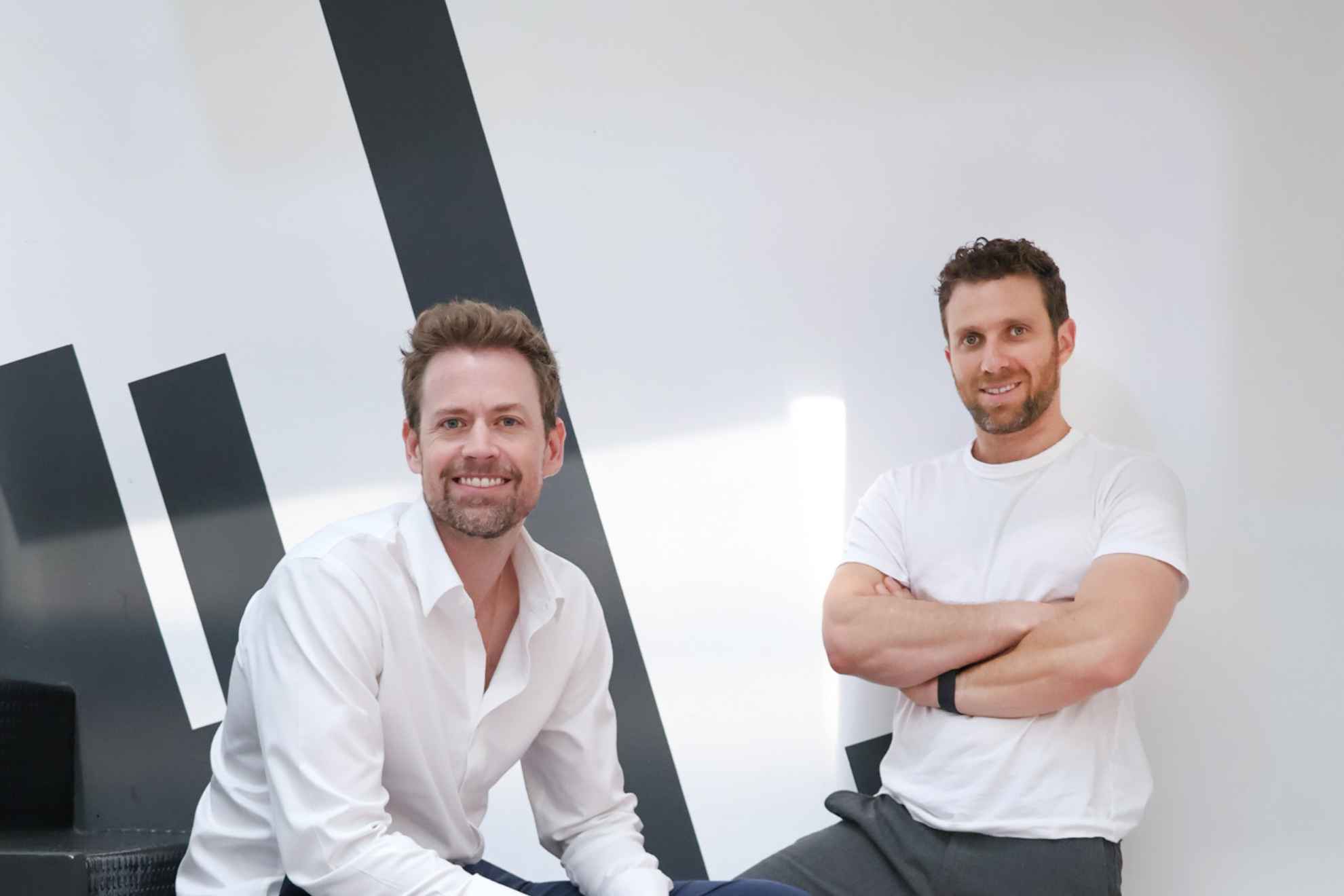
Someone heard Andrés Budnik speaking Spanish. That was the beginning. In 2012, at Laurel Hardware in West Hollywood, Liam Scholey caught a familiar language in the conversation around him. Scholey had grown up in Panama; Budnik was Chilean. Both were working in entertainment. They started talking, became friends, and eventually decided to start a company together. Hollywood has elaborate machinery for arranging introductions. This one managed without it.
Budnik was an assistant at Creative Partners Group; Scholey was at WME. Their conversation touched on something they had noticed inside the business: the limited presence of Latino employees and talent. They could speak the language, in several senses, of a creative world that their workplaces did not seem fully equipped to navigate.
A Thanksgiving surf trip gave the idea room to develop. The business began taking shape in Budnik’s small studio apartment. By December 2013, Vision Entertainment was official. The setting had changed from restaurant to beach to apartment; the concern remained how to get underrepresented people heard. For Budnik, that concern became a profession with several increasingly complicated departments.
The price of arriving from somewhere else
The job is easier to understand through a negotiation Budnik later described. A well-known Latin American actor represented by the company received an offer of $15,000 an episode from a U.S. show. Budnik challenged it. The explanation, as he recalled it, was that the actor had never worked in the United States.
There is an entire argument about recognition tucked into that exchange. A performer’s existing career could apparently become less legible at a border. Budnik’s objection was that the work deserved to be valued. The anecdote leaves the negotiation’s outcome open, but it makes his position unusually clear: arriving in a new market should not erase everything a person has already done.
That is a concrete responsibility for a manager. The language of opportunity can sound generous until somebody writes down a number. At that point, advocacy needs to survive the conversation about the fee.
The role begins before the audition
There is another limit to what a manager can accomplish by making introductions. An actor needs a part. Someone needs to write it. A producer needs to believe the project can be made. The decision about whose face appears on screen begins well before the casting call.
Vision’s work with writers gives Budnik a place in those earlier conversations. Its literary management offering includes script development, pitch preparation, packaging, series staffing and showrunner opportunities. These are practical tasks with consequences for authorship. Helping a writer prepare a project can change what is available for performers later.
The details matter here. Pitch preparation concerns how a writer presents an idea; staffing concerns finding a place on a series; a showrunner opportunity carries responsibility for leading creative work. Vision names each within its offering. For Budnik’s company, representing writers therefore reaches across several stages of a working life. A first feature and a leadership role on television ask different things of their creator, and the company’s stated services account for both.
Its talent management practice, meanwhile, describes a longer relationship than arranging the next booking. Career planning, selecting scripts and roles, brand consulting and mentorship all form part of the work. In that model, the next job belongs to a sequence of decisions about what a person wants to do.
Budnik has put the ambition in personal terms: “Nuestro enfoque está en construir no solo carreras sino también legados.” His focus, translated from Spanish, is on building careers and legacies. “Legacy” is a large word for an industry whose immediate concerns can be so small and urgent. It asks the manager to look beyond the next available opening.
“It adds weight to it”
Andrés Budnik, on experience across entertainment markets, 2023
A story can keep its accent
By 2023, Budnik was discussing collaborations between U.S. and Latin American production companies as a way to combine different strengths. The appeal involved experience and resources, alongside the local understanding that keeps a story connected to the place it comes from. His argument gave creative freedom a business setting: put the right collaborators together, then let the people who know the world help shape it.
One project he discussed then was an adaptation of Isabel Allende’s The House of the Spirits. He emphasized its Spanish-language approach and the involvement of represented talent Fernanda Urrejola as a writer, performer and co-showrunner. Another was a bilingual project about the murder of Chilean diplomat Orlando Letelier in Washington. Both brought questions of language and perspective directly into development.
These examples make his idea of international work more specific. A project can connect companies and audiences in different places while retaining its language. The creative person has something to contribute precisely because they understand a particular world. Budnik’s business depends in part on helping other people recognize the value of that understanding.
A chance meeting in West Hollywood
Vision becomes official in December
A dedicated studio division is announced
Budnik has also taken the subject into an industry classroom. At PLATINO go to AFM, his speaking topic was talent representation agencies and their role in a project. It is an apt assignment for someone working where careers and productions meet. The programme also included him in a Hollywood pitch-training session, alongside Jaime Otero and María Aceves. Helping someone explain a project is part of making an introduction useful.
Giving the idea a production office
In September 2024, Vision announced a studio division and appointed Chilean producer Matías Ovalle Head of Development and Production. His remit covered film and television, scripted and unscripted work, across regions. The company had moved beyond asking where its clients might find a project. It was organizing more capacity to develop projects itself.
Budnik’s comments about Ovalle stressed his taste and ability to work across genres and territories. Those are revealing qualifications. When a company wants to connect markets, the person overseeing production has to exercise judgment about both the material and the setting in which it can be made.
At the time of the announcement, Vision’s represented roster was reported to include more than 200 actors, writers and directors. That figure describes the company, rather than Budnik’s personal client list. It also suggests why the production expansion mattered: there were many creative relationships around which new combinations might form.
The studio’s stated work includes development, financing, packaging, production and international distribution. The sequence contains plenty of places for an idea to stall. Giving those responsibilities a home is an organizational decision. Its value eventually has to appear in the projects that get made.
- DevelopStory, script and creative choices
- AssembleTalent, partners and financing
- ProduceA project made for the screen
- DistributeA route to its audience
The work between the announcements
The company also expanded its brand and publicity capabilities. In August 2024, it announced appointments in talent endorsements, brand relationships and press. That gives a creative career another set of conversations to manage: how a performer presents their work, which commercial relationships fit, and how the public encounters them between releases.
The appointments put names to those responsibilities. Alice Bellevre joined to direct talent endorsements and brand relationships; Adryan Torres de Oz joined to direct press and public relations. The company described advising brands on entertainment and talent marketing, with campaigns across media and commercial channels. These additions broadened the kinds of decisions passing through a business that began with two founders. They also gave clients more people to work with on the presentation and commercial life of their careers, alongside the acting and writing work.
For Budnik, co-leading a company with these activities means working around several kinds of creative decision. A role, a script, a production partnership and a brand relationship do different things for a client. Their usefulness depends on the person involved. It is easy to list services; harder to make their combined effect coherent over years.
That longer timescale appeared in the founders’ 2025 discussion of their roster. Scholey described advising Spanish actress Priscilla Delgado to move to Los Angeles five years earlier. He then pointed to her work on Euphoria and a role in a new Prison Break project. The interval matters. Advice given at one stage of a career may take years to acquire a visible result.
The founders also described looking outside the United States for opportunities for American talent. The direction of travel could change with the person and the project. For a company built around international careers, that is a useful discipline: keep looking at where the work might be, rather than assuming every itinerary has the same destination.
The audience still gets a vote
By June 2026, Budnik was discussing a slate involving Netflix, Amazon, ViX and Secuoya, with projects at development and sales stages. He also described work with represented filmmaker Carlos Cuarón on a project involving Frida Kahlo and Leon Trotsky. His account dwelt on intrigue, danger and romance. Even while discussing a production pipeline, he was pitching the experience of watching.
He spoke about the importance of stories that interest people, provoke emotion and deserve the time an audience gives them. Marketing and distribution entered his explanation too. A story needs a way to reach viewers; once it reaches them, it still has to hold their attention.
That is a fitting test for a business whose origin involved listening. Budnik first found a partner because Scholey heard something familiar. Since then, the work has grown to include helping performers, writers and producers make themselves understood in more places. The restaurant conversation made an introduction possible. The company’s continuing task is to give the people it represents something consequential to say, and a chance to be heard saying it.