The revealing thing about a school district is that it looks like one organization and behaves like several hundred. A kindergarten teacher has a field-day photograph. A principal has a weather update. The treasurer has a bond table. The superintendent has a crisis brewing on Facebook. Each possesses one piece of the story; almost nobody has Tuesday afternoon free to assemble it.
This is the small, persistent mismatch Allerton Hill Communications turned into a company. From Columbus, Ohio, its strategists act as an outside communications department for public schools. One district contact gets a client strategy director; behind that person sit social media, design and video teams, plus experience in legislation, campaigns, school funding and crisis response. The arrangement is less like hiring an ad agency for a burst of cleverness and more like installing a publishing routine.
The problem appears before the bad headline
School communications usually looks adequate right up until the moment it is not. A handful of employees post when they can. Departments invent their own language. Good news arrives in the district office after it has gone stale. Then a budget cut, safety incident or tax request lands, and leaders discover that a collection of channels is not a communications system.
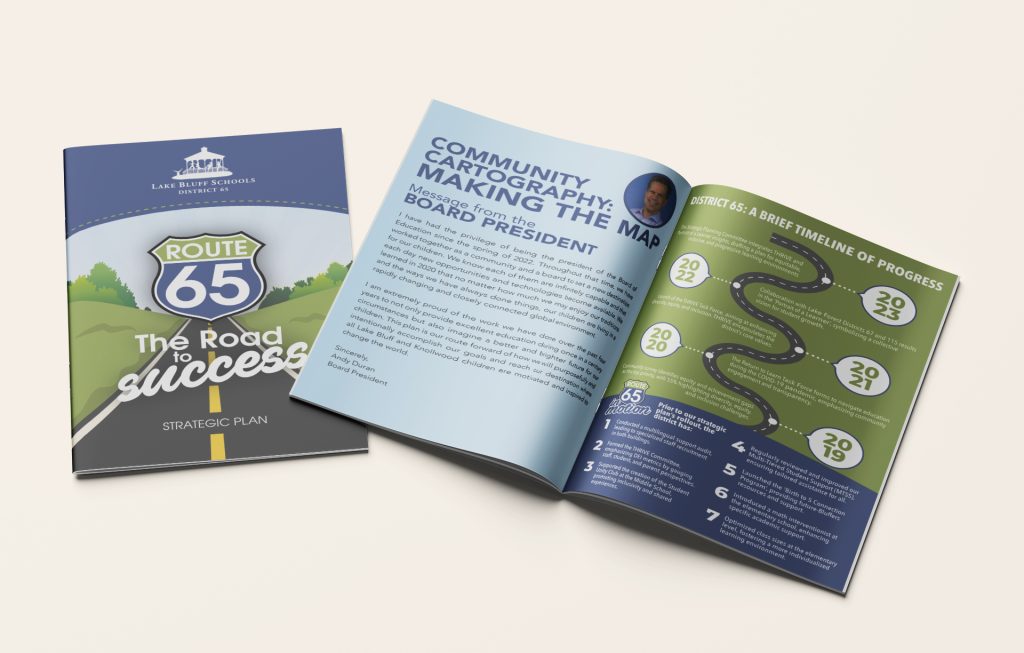
At Lake Bluff School District 65 in Illinois, the first thing to fail was coherence. The district had strong values, a new strategic plan and engaged leadership, but responsibility was scattered and the public message was reactive. Allerton Hill did not begin with a grand campaign. It branded the strategic plan as “Route 65,” established a monthly email, mailed an annual calendar, co-produced a quarterly community publication, made videos and repeated the district's values throughout the year. Mundane objects did the heavy lifting. A calendar hangs around longer than a launch speech.

We meet bi-weekly with the professionals from Allerton Hill, and it's like having somebody in-house.Mark Robinson, retired superintendent, Buckeye Central Local Schools
A political operator's instinct, minus the campaign bunting
The firm's roots explain its temperament. Founder Steve Avakian, a former press secretary to Senator John Glenn, began advising school districts in 1981, when paying for school marketing could look suspiciously corporate. Joel Gagne, now CEO and partner, came through political campaigns, public affairs and school-board service. He learned the basic asymmetry of public life: the loudest person at a meeting is vivid, but not necessarily representative.

That is why the company's older work leaned hard on surveys. Gagne once described a farmer who told a pollster that, in 28 years, nobody had asked his opinion about the schools. The anecdote contains Allerton Hill's proposition in miniature. Communication is not merely distributing the superintendent's answer. It is finding out what question the community is actually asking.
The offer now spans five visible lines: custom strategy, crisis and reputation management, social media management, content and outreach, and referendum support. Communication audits and third-party research sit underneath. In practice, that can mean drafting a crisis guide in the morning, coaching a superintendent at lunch and turning a STEM lab into a short film in the afternoon.
For Ontario Local Schools, Allerton Hill scripted, filmed and produced a video about a K-12 career-tech pathway. It featured the district's STEM lab, students and staff, then traveled across social media, the district site, presentations and a local news story. Other districts began asking about Ontario's model. The interesting product was not the video file. It was portability: one clear story made to work in several rooms.
The public price of an invisible department
Private agencies usually hide the useful number. Public schools vote on it. Board records show Mansfield City Schools approving $62,040 for a year of crisis management, social engagement and content development. Celina City Schools published a comprehensive consulting proposal at $5,000 per month. Two Mundelein districts agreed to split a $60,000 annual engagement, paying $30,000 each. These are examples, not a universal rate card, but they draw a credible band around the model.
Observed annual examples run from a shared $30,000 district contribution to $62,040 for a broader package. Scope, staffing and deliverables differ.
The buying argument is simple. Around five thousand dollars a month is comparable to one salary after benefits in many markets, but the district receives several specialties. The catch is equally simple: the outside team still needs access, fast approvals and someone inside the schools who can surface the stories. Outsourcing production does not outsource judgment.
What changed the superintendent's mind
Usually, it is not an agency pitch. It is accumulated embarrassment: an important message nobody read, a rumor answered too late, a social feed that feels like an online bulletin board, a staff member doing design after dinner. One client described knowing the district was not where it needed to be but not knowing how to get there. Another said the firm created a regular cadence and clarified what to share, when to share it and with whom.
Technology accelerated that realization. Families stopped waiting for a printed newsletter. Competition for students grew. By 2026, accessibility rules also widened the job: alt text, captions, transcripts, usable links and readable PDFs were no longer optional production flourishes. Allerton Hill says those checks are now built into its workflow. The market moved from “Should schools communicate?” to “Can every family use what they publish?”
A four-question note worth copying
- Needs: What does the community actually need to know or feel?
- Information: What facts, research and stories are available?
- Methods: Which channels will reach the people who matter?
- Outcomes: What observable change would count as success?
That is NIMO, a planning shorthand Avakian passed down inside the firm. A district can borrow it without buying anything. It prevents the common error of starting with the method - “we need a video” - before naming the need. Worthington City Schools offers another copyable device: a Key Communicators Network of parents and residents that carries information out and brings questions back. The best communication channel is sometimes a group of humans with permission to disagree.
The fit is narrower than it looks
Allerton Hill is unusually specialized. That is its advantage and its boundary. A university, consumer brand or private school shopping for growth marketing is outside the firm's stated focus. A large district with a mature communications office may need a campaign vendor rather than an embedded bench. A district unwilling to share facts quickly, empower a point person or sustain a publishing cadence will purchase activity without building trust.
That restraint is part of the product. School PR is not selling sneakers. The customer is a public institution; the audience includes people who did not vote for the board, do not have children in the schools and still receive the tax bill. Allerton Hill's best work recognizes the peculiar dignity of that arrangement. The job is not to manufacture affection. It is to make the district legible, before the public has to guess.
Follow the work
The firm's case studies are most useful when read as operating manuals: one begins with scattered responsibility, another with opaque school finance, another with an excellent program that nobody outside the building could see. Each asks the same practical question. What would make this story easier for a resident to understand and easier for a district to repeat?