Factories adore certainty. They like the same part arriving in the same pose, the same tool meeting the same screw, the same motion repeated until someone changes the product and ruins the arrangement. Allen Pan has built a career around the moment certainty ends. His work has moved from autonomous control at General Motors to advanced manufacturing automation at Tesla, then through mobility technology companies Momenta and Neolix. In 2021, he co-founded Industrial Next with Lukas Pankau around a practical question: can a factory learn a new job without first enduring weeks of custom programming?
It is an engineer's question disguised as a business model. Modern products change quickly. Physical production lines do not. A new model, package or component can send specialists back into code, fixtures and debugging while the expensive machinery waits with the patience of a monument. Traditional automation excels when the world agrees to remain still. Pan is designing for a world that declines the invitation.
Industrial Next builds modular robotic work cells for precision manufacturing. The company says new tasks are taught through simulation and demonstration, while its foundation models connect vision, task context and robot motion. The ambition is not a robot with a party trick. It is a production system able to absorb variation, acquire another skill and return to useful work while the calendar is still young.
The factory was always part of the vehicle
Pan's route into this problem began well before Industrial Next. He studied at Lakehead University from 2011 to 2013 and worked there as a research assistant, lab supervisor and teaching assistant. His public career record then traces a progression through General Motors roles in infotainment, active safety and advanced autonomous control. The titles changed, but the subject remained recognizably the same: how sensing, software and physical machinery negotiate with an untidy world.
At Tesla, where Pan worked on advanced manufacturing automation from 2018 to 2019, that negotiation moved to the production line. A car may carry autonomy onto the road, but the factory that builds it is another vast machine with its own inputs, decisions and corrections. Later roles as director of hardware and vehicle engineering at Momenta and chief engineering architect at autonomous-vehicle company Neolix kept him at the boundary between code and consequences.
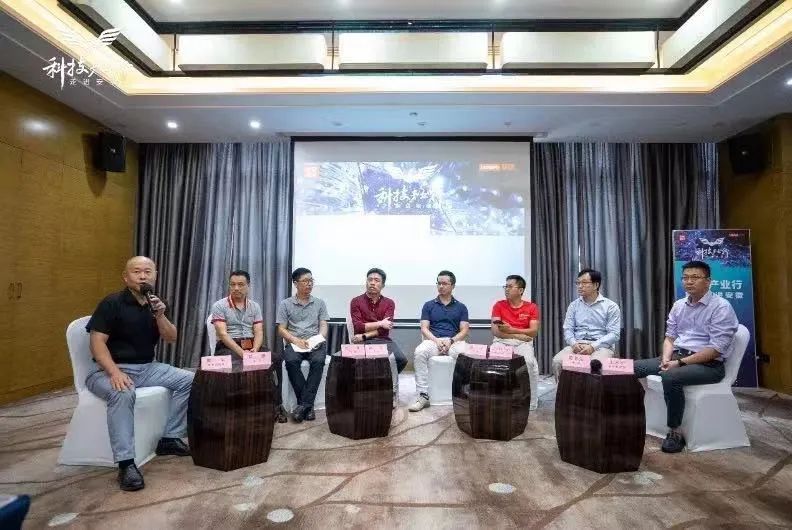
“Tesla's biggest advantage is that its production lines are modular and are continually being updated.”Allen Pan at a 2022 manufacturing roundtable, translated from Chinese
That line contains the seed of Industrial Next. In Pan's account, many factories stop optimizing the line once a product is finalized. Tesla treated the line as something more provisional and more alive. Modularity allowed it to change. Data collected in final assembly could travel backward, informing whether parts were sensibly designed and where they might be combined or improved. Manufacturing became a feedback loop rather than the last station on a one-way railway.
There is a pleasant modesty to the idea. The breakthrough is not announced by smoke or a humanoid bow. It appears as a shorter changeover, a part handled despite arriving at a slightly odd angle, or a station that can be redeployed when the next product comes along. In factories, intelligence wears a stopwatch and gets judged by yield.
When the operator becomes the teacher
Industrial Next's approach also changes the role of the experienced operator. The company's account of its system describes people moving from execution toward guidance and process correction. A worker who knows the awkward grip, the misleading reflection or the order that avoids a jam holds knowledge the automation needs. Demonstration becomes an interface. The machine is taught from production experience rather than receiving every useful behavior as a hand-written script.
This matters because factories are full of what automation vendors politely call unstructured scenarios. Parts vary. Surfaces curve. Upstream demand shifts. Assembly, testing and packaging may demand flexibility that makes traditional fixed equipment expensive to adapt. Industrial Next's first-generation manufacturing platform, launched in the second half of 2024, combined its AI software architecture with modular hardware. The hardware provides a body; the learning system tries to keep that body from becoming obsolete whenever the assignment changes.
The current proof point is unusually concrete. Industrial Next reports that one of its production cells operates around the clock on the main line of a major electronics contract manufacturer, handling the full range of product variation without repeated scripting. The company reports more than 99.9 percent match accuracy and a cycle time under 3.3 seconds. Those are company figures, but they reveal the standards that matter. A factory does not grade on charm. It asks whether the cell is accurate, quick and still working at three in the morning.
Pan's systems view extends beyond the cell. At the 2022 roundtable, he argued for taking a material-centered logistics idea into final assembly and then outward across the product. The sequence is important. Observe what happens where the thing is actually made. Collect the data. Let the evidence revise the component, the process and eventually the wider production system. The robot is one actor in a larger argument between design intent and factory reality.
A company stretched across two factory worlds
Industrial Next was founded in November 2021 and joined Y Combinator's Winter 2022 batch. Its footprint spans San Francisco and Suzhou, a geography that suits the thesis. San Francisco supplies an AI and venture ecosystem; Suzhou sits inside one of the world's densest manufacturing regions. Pan himself is based in the Greater Windsor area, another city shaped by the automotive industry and the daily practicalities of making vehicles.
The company is therefore less a story of software arriving to lecture hardware than one of two engineering cultures being forced to share a workbench. Its team draws from autonomous systems, robotics and production. Co-founder Pankau brought experience from Tesla Autopilot and Waymo. Pan brought the perspective of manufacturing automation and autonomous control. Their common ground is reliability, the unglamorous virtue without which an intelligent machine becomes expensive décor.
There is another continuity in Pan's map. Windsor, Shanghai, Suzhou and San Francisco each sit near a different piece of the manufacturing puzzle. Windsor carries generations of automotive knowledge. Suzhou offers a dense electronics and supplier network. San Francisco concentrates AI talent and capital. Pan's public work history crosses those ecosystems rather than pretending one can substitute for another. The result is a founder profile shaped less by a single startup scene than by the places where vehicles are engineered, algorithms are tested and products must finally be made. Industrial Next's global ambition follows naturally from that route. Its technology may be written as software, but its usefulness depends on understanding the local rhythm of a line, the customer's process, and the exact physical nuisance causing delay. Geography, like automation, becomes practical at the point of contact.
Capital has followed the work. The company raised early backing from Y Combinator and investors including Lenovo, Xiaomi, AlphaX Partners and MiraclePlus. In April 2025, Industrial Next announced a Series A led by Khosla Ventures, with existing investors participating. It said the money would go toward hiring, research and development, mass production, delivery and global expansion. Those priorities sound almost comically sober beside the usual AI vocabulary. That sobriety fits the factory. Before a model can transform an industry, somebody has to install the cell.
The elegance of changing quickly
Pan's career makes a coherent claim about autonomy. It is not merely the absence of a driver or programmer. It is the capacity of a system to perceive what has changed, make a defensible decision and act without requiring the entire world to be rebuilt around it. On the road, that means traffic, weather and human improvisation. On the factory floor, it means parts, tolerances, new products and the occasional screw that behaves like it has retained counsel.
His aspiration is global and industrial: carry this adaptable approach into more high-end manufacturing settings. The challenge is not only technical. Production buyers are appropriately suspicious of novelty that interrupts production. Every claim must survive procurement, safety reviews, integration and the long shift. Flexible automation wins only when flexibility ceases to be an inspiring noun and becomes a repeatable operating fact.
That is why the 24/7 cell is more revealing than any grand prediction. It places Industrial Next's thesis where noise, variation and deadlines can object. Pan has spent years moving closer to that objection. From the autonomous vehicle to the autonomous factory, from software decisions to physical work, he keeps returning to systems that must adapt while remaining dependable.
The old factory was designed as a monument to repetition. Pan's factory is closer to a student with excellent attendance: watch carefully, learn the task, do it reliably, and be ready when tomorrow's lesson bears only a passing resemblance to today's.