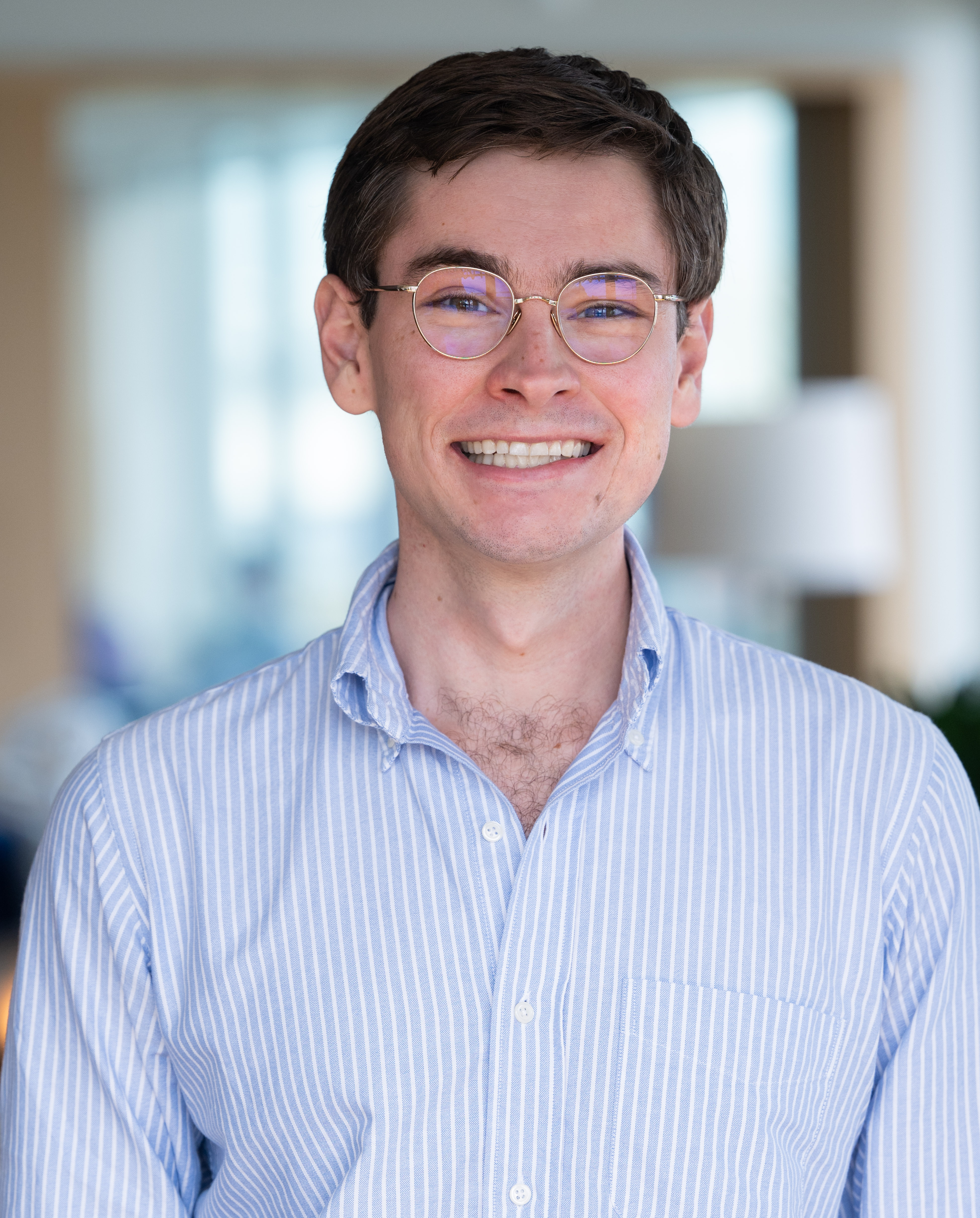
Alex Nichols spent January 2026 doing something rare for a venture investor under 40: he kept his head down. CapitalG had just named him General Partner alongside Jill Chase, the first time Alphabet's growth fund had promoted two GPs at once since it was founded in 2013. The press release used the word "transformative." Nichols, by all accounts, used the word "thanks" and went back to a deal sheet.
That deal sheet is the interesting part. Since joining CapitalG in 2018, Nichols has had his fingerprints on a list that reads like a brief history of growth-stage technology: Stripe. Duolingo. Whatnot. Rippling. UiPath. Waymo. Odoo. Tebi. Base Power. He didn't write every cheque alone - much of it ran through managing partner Laela Sturdy, with Nichols as the working partner who lived inside the companies. But the pattern is his. Find a market that's about to get rearranged. Find the team rearranging it. Stay.
The thesis comes in two halves. The first is economic or distribution novelty: a company doing something with technology that fundamentally lowers the cost of reaching customers, or fundamentally changes the unit economics of an old business. Stripe did it to payments. Duolingo did it to language learning. Whatnot did it to a live-shopping format that nobody in American venture believed in until it worked. The second half is compounding scale - the idea that, once you're ahead, the lead widens. Network effects. Data flywheels. Brand. Marketplace liquidity. The boring economic moats that win in year nine.
"Technology is the engine of economic progress and startups are the conduit through which these advancements reach the world." - Alex Nichols, on the day he was promoted to GP.
You can hear the University of Chicago economics department in that sentence. Nichols studied economics there before doing the standard tech-investment-banking apprenticeship at Goldman Sachs. The standard route would have been a hedge fund, or a generalist mega-fund, or business school. He skipped all of it. CapitalG made him an associate in 2018 and never let go. Partner in 2024. General Partner in 2026. Eight years, one logo. In an industry that treats job-hopping like a sport, that's its own statement.
To understand what Nichols actually does inside CapitalG, look at Base Power - the energy startup founded by Zach Dell, son of Michael Dell. Nichols led the firm's investment. He doesn't have an energy background. He has a thesis: batteries and solar are improving at rates comparable to Moore's Law, and over a long enough horizon, that pushes electricity prices down. When Fortune asked him about it in January 2026 - in the middle of a wave of panic about AI data centers driving up power costs - he gave a one-line answer that has since been quoted in three different industry newsletters: "I'm actually very optimistic about the future of energy prices."
This is contrarian, on purpose. The dominant story of 2025 and 2026 has been that AI is hungry, the grid isn't ready, and we're heading into a structural energy crunch. Nichols's view is the opposite: cheaper energy follows the same cost curves as cheaper compute, and cheaper energy is the precondition for the next leg of growth. He doesn't say this on a podcast circuit. He says it once, in a portfolio bet, and lets the cap table do the talking.
The CapitalG way, in his hands
CapitalG isn't a normal venture fund. It's Alphabet's independent growth fund, which means two things in practice. The cheques are bigger - this is growth equity, not seed - and the value-add is unusual. A CapitalG portfolio company can be plugged into the Google machine for distribution, AI infrastructure, security review, hiring help, and the kind of enterprise sales co-selling that takes a year to build from scratch. Nichols's job, when he's not sourcing, is to be the connective tissue. The investor who returns the email at 11pm because the founder needs an intro to a Google product lead before the morning.
That kind of work doesn't show up on a Crunchbase profile. It shows up in how often founders take his next call. By every available measure - and CapitalG's quiet internal one of who repeats with whom - they keep taking it.
His portfolio has a tilt, even if he resists being called a vertical investor. Marketplaces and consumer-network businesses (Whatnot, Duolingo). Infrastructure and developer platforms (Stripe, Webflow). Workflow software with viral distribution (Rippling). Frontier physical-world bets that depend on a hard technology curve bending (Waymo, Base Power). The connecting tissue isn't industry; it's the shape of the moat.
Ask people around him for the thing they didn't expect, and you get the same answer: he reads. Not earnings reports - history. Economic history, mostly. The kind of slow, dense books that don't make it into Twitter threads. He's an avid cook. He skis, cycles, hikes, and plays tennis, preferably with his wife and his dog. He's a Bay Area transplant who has the good sense not to talk about the Bay Area constantly. The CapitalG team page lists those facts under "outside of work" like they're a punchline. They're not. They're the source code.
What he is doing now
The General Partner title at a growth fund is less of a promotion than a license. It means a wider mandate to lead deals, a louder voice in fund strategy, and a seat at the table when the firm decides which themes to lean into next. Nichols has used it the way you'd expect from someone who never seemed to need a title to do the work. He's still showing up in the same companies, still keeping the same hours, still saying very little in public.
The themes he's pursuing in 2026 are visible in the cap tables. Energy and the physics of cheap electricity. Vertical AI applications that touch real workflow. Enterprise software that monetizes through usage rather than seats. Consumer-network businesses that have figured out distribution through a single channel and now need to scale the second one. None of these are surprising. All of them are early enough that the easy money has not yet showed up.
He is also, by the firm's own description, one of two general partners now defining what CapitalG looks like for the next decade. The fund's older identity was built on Sturdy, who has been at it since the start. The newer identity is being shaped by Chase, who brought consumer instincts; by Nichols, who brought a thematic generalist's eye; and by a partner bench - Mo Jomaa, Jane Alexander, James Luo - that thinks of itself as a single instrument rather than a roster of solo operators.
The quiet bet
If you wanted to summarize Alex Nichols's career in one image, it would not be him on a stage. It would be a graph: the long, slow exponential of compounding scale advantages, with a small arrow at the front pointing to "investor enters." There's no fireworks at the front. The fireworks are in year nine.
This is, in some ways, a defiantly old-fashioned way to do growth investing in 2026 - a year in which the dominant style is to write very fast cheques into very loud rooms. Nichols's style is slower. More University of Chicago than Sand Hill Road. He sources from theme, not from feed. He underwrites for compounding, not for momentum. He stays once he's in.
The reason it works is the same reason it has always worked. Markets are not efficient at the growth stage. Founders know who actually returns the email at 11pm. And the companies that get built across cycles - the Stripes, the Duolingos, the Whatnots, the Ripplings - tend to find their way to the investors who think on the same time horizon they do.
Nichols thinks on a long horizon. He has, by his own admission, been at the same firm for almost a decade. He has, by his own admission, been backing the same kind of company the entire time. The promotion to General Partner is not a pivot. It's the market catching up.