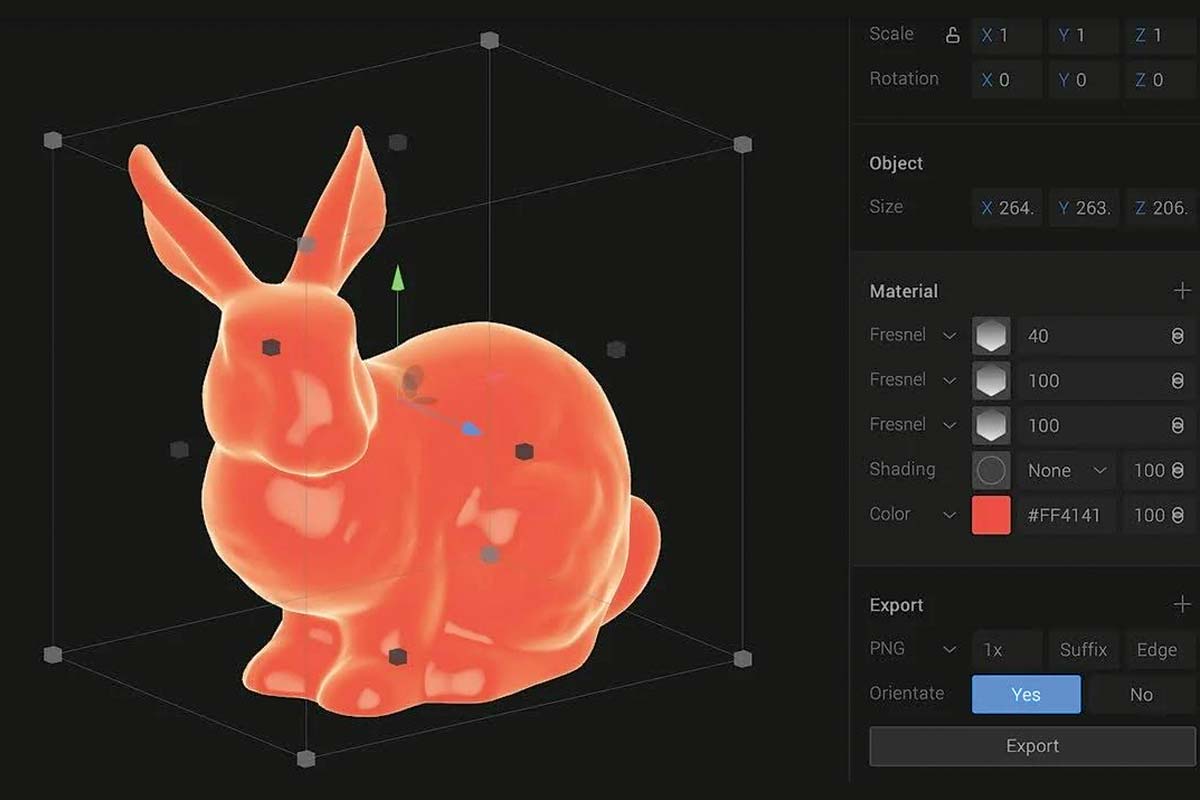
An orange rabbit sits inside a dark software window, looking rather pleased with its material settings. It has tall ears, a rounded body, and the polished surface of a boiled sweet. Around it are the practical controls of creation: scale, rotation, shading, export. This is an early glimpse of Spline, the company Alejandro Leon founded in 2020. The rabbit is a useful introduction. His work concerns the pleasure of making something, and the amount of machinery a person must negotiate before that pleasure arrives.
Leon is a designer and developer. Those two occupations share a desk comfortably in his career. One wants a particular effect; the other has to arrange for it to happen. Spline grew from his experience of both, and from a conviction that more people should be able to work in three dimensions.
The picture behind the interface
His interest began in Venezuela. As a youngster, he worked through an AutoCAD instruction book. PlayStation graphics prompted another question: how were the things on the screen made? He and his father found Autodesk Maya. With no internet connection at the family’s rural home, he pursued his interest at an internet café.
Later came freelance web design and PleiQ, an augmented-reality startup he co-founded. Its acceptance into Start-Up Chile brought the founding group to Santiago. Leon led design there before leaving in early 2020 to concentrate on Spline.
There is a pleasing continuity to that route. The child curious about a game’s graphics became an adult concerned with the tools behind the picture. By Spline’s launch, he had accumulated more than ten years of professional design and development experience. He had spent time with the software whose difficulties he hoped to reduce.
A browser with room for depth
Spline’s initial proposition brought a familiar approach from 2D design into 3D creation. Designers could work in a browser, collaborate, and build material that belonged in real interfaces. The appeal was straightforward: people who already understood visual composition should have a more approachable way to give it depth.
“3D design has been historically complex and inaccessible for designers,” Leon said in 2021. That observation supplied a demanding brief. Simplification sounds agreeable until someone asks which capabilities should survive it. A tool must offer enough room for the beginner’s first object and the experienced designer’s next revision.
Leon’s chosen problem therefore extended beyond making a friendly screen. A creator needs to understand what can be changed, see the effect of a change, and carry the result somewhere useful. An approachable editor earns its place when the person using it can continue after the first small success.
“3D design has been historically complex and inaccessible for designers.”
Alejandro Leon, 2021
Spline entered Y Combinator’s Winter 2021 batch. In March that year, NXTP announced seed backing alongside Y Combinator, Chapter One, and angels from the design and development community. The company was already reaching tens of thousands of monthly users. A question Leon had lived with professionally was becoming a shared workplace.
An editor needs other people
A creative tool has an unusual introduction to its customers. People often encounter it through something somebody else made. The work arrives before the explanation. A curious designer follows the trail back to the editor, opens a file, and begins wondering what they could make themselves.
Spline’s community activity gives that curiosity somewhere to go. Leon has been listed as a host for Design Buddies workshops introducing 3D web scenes. Another workshop, with the League of Moveable Type, invited people into 3D typography. These are useful settings for a founder whose product asks designers to try an unfamiliar dimension. A workshop has to get from invitation to accomplishment.
Collaboration adds another kind of invitation. A file can become a meeting place. Someone arrives to adjust the design; someone else wants to see how it responds. The shared object gives their conversation a specific subject. “Make it feel better” becomes easier to discuss when both people can inspect the thing that needs changing.
The commercial work grew alongside that creative work. Spline announced a $10 million Series A in August 2024, led by Third Point Ventures. Participants included Gradient Ventures, Y Combinator, Firestreak, Framer’s Jorn van Dijk, and Vercel’s Guillermo Rauch. Third Point partner Dan Moskowitz joined the board. For Leon, the product now came with an expanding set of people invested in its next decisions.
Spline founded
in Santiago
Y Combinator
batch
Series A announced
August 2024
A cube that left the screen
One way to understand Leon’s ambition is to look at what another designer did with the software. At the email platform Resend, founding designer Zeh Fernandes wanted abstract infrastructure to feel tangible. The team used Spline for an interactive black cube on its website.
The design began with a community version and changed over time. Its materials, lighting, and style evolved within the same file. Resend embedded the cube through Spline’s React integration. Then the object travelled in the other direction: the company had physical versions 3D-printed and sent to early customers.
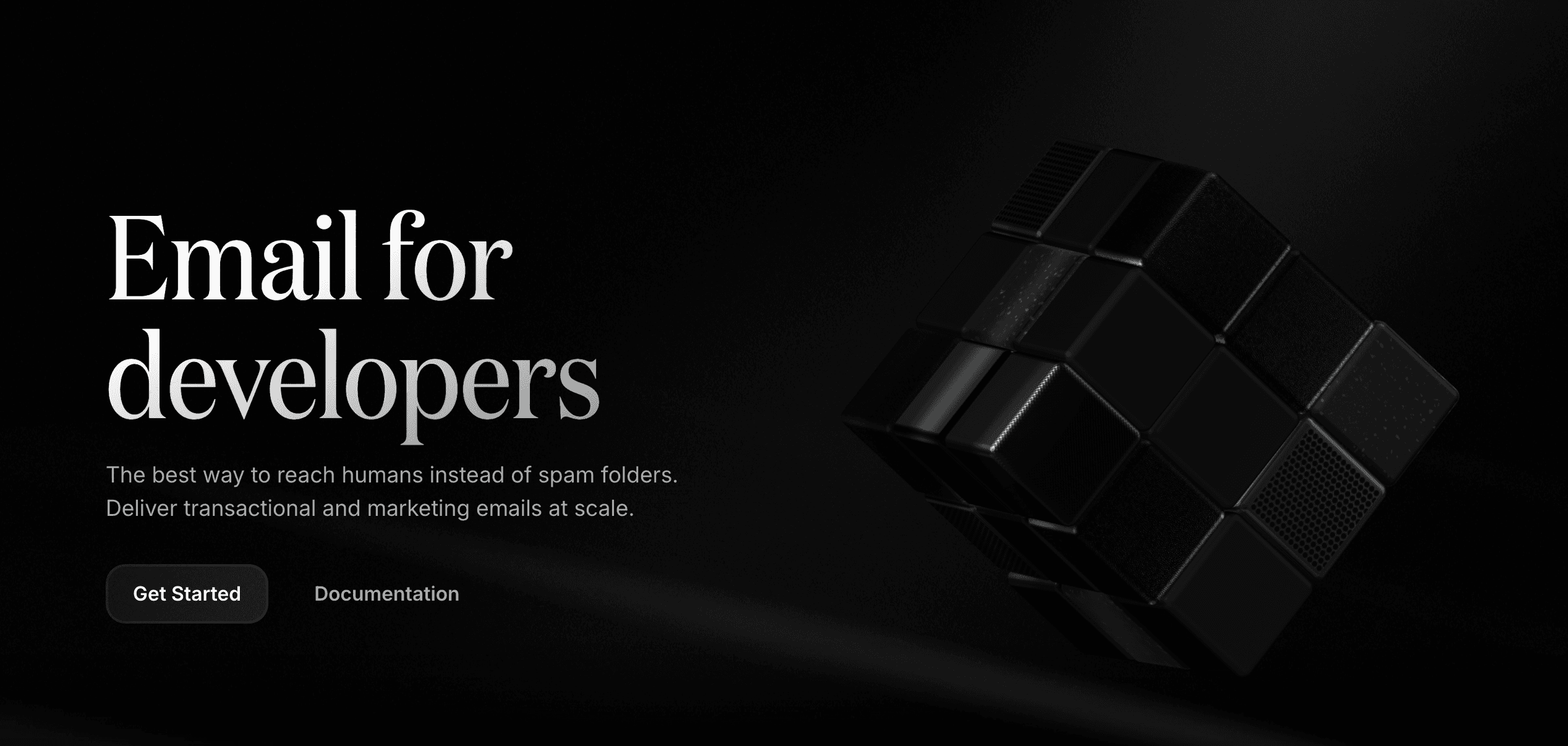
That little journey carries a practical point about creative software. A useful design file can keep serving its maker after the first launch. It can be revised, embedded, adapted, and made into something a customer actually holds. The original act of creation remains available for another round of decisions.
For a founder building at the meeting point of design and development, this is an instructive outcome. The designer’s work survives contact with implementation. The cube provides a compact example of the distance Leon’s tools aim to cover: from an object somebody wants to make to an experience somebody else can use.
The extra dimension was interaction
In April 2025, Spline introduced Hana, a canvas for interactive 2D design. On the face of it, a company associated with 3D was moving back toward the flat page. The more interesting connection was behavior. Hana let creators draw, animate, and build responses to input in the same environment.
Frames could be played inside the editor. A creator could share a link with a collaborator or export a live interactive frame. Motion belonged within the working process. A visual idea could be tried while it was still being made.
Seen through Leon’s career, the expansion has a recognizable logic. Design and development keep asking questions of each other. How should an object look? What should happen when somebody touches it? How does the designer test that decision? An interface becomes easier to discuss when it can answer back.
A conceptual view of the work, rather than a measured performance comparison.
Let the machine begin. Keep the controls.
Omma, launched in March 2026, added a conversational way into that work. Creators could generate interactive designs through natural-language prompts and continue refining them with visual tools. Leon’s explanation focused on the combination. “Professional teams need speed during ideation without sacrificing production quality,” he said.
The second half of that sentence does considerable work. A professional result usually has to withstand somebody else’s requirements. The initial idea may be quick; the changes can be particular. A team still needs to alter the object it has been given.
Spline V2 arrived on August 20, 2026. Its changes included an AI agent operating through the editor’s tools, a renderer rebuilt on WebGPU, and separate Edit, Code, and Preview modes. The range of entry points had widened again. A creator could work visually, use code, or ask an agent to help build the scene.
A week later, Hana V2 added its own agent and support for imported 3D models. The distinction between a flat layout and a three-dimensional object became less rigid inside that canvas. In both releases, the machine’s output remained material that could be worked on.
Leon also pays attention to less theatrical problems. Discussing Hana’s 3D text, he singled out the difficulty of making fonts behave in a real-time system. “Each letter in a font is complex and has many edge cases,” he wrote. He credited the development team’s work and acknowledged room for improvement.
It is a revealing subject for a designer to dwell on. A letter seems like a settled thing until software has to give it depth. The small, familiar shape brings its own collection of awkward cases. Making the result feel ordinary takes work that the person typing may never notice. That quiet effort belongs in the story alongside the launches.
The next person opening the file
Leon’s public descriptions of himself are brief. His Y Combinator biography calls him a designer and developer with an interest in computer graphics. His DEV profile uses those same two occupations. They explain a good deal about the business without requiring an elaborate founder mythology.
The designer wants freedom to make decisions. The developer understands the systems those decisions depend on. Spline’s newer products keep bringing those concerns together, even as the interfaces change. A prompt may now get the work started. Someone must still decide whether the result is right.
For Leon, making creation more accessible remains a continuing assignment. Every new capability introduces another opportunity to help, and another opportunity to confuse. The next person opening the editor will judge it through the thing they manage to make. Perhaps it will be an interactive interface. Perhaps a cube. The orange rabbit has already made a respectable case for itself.
Keep exploring
Explore Spline · Alejandro on LinkedIn · Alejandro on X · GitHub · DEV profile
Listen: Forward Thinking Founders, episode 295
Listen: Designing Spline, a 3D tool for a 3D world
Watch: Spline V2 on YouTube
Read the 2023 biographical profile · 2024 funding news · Product journal