In London in 2019, Agustin Martin offered a short explanation for a decision that might otherwise have required a very long presentation. Why put Toyota’s new European connected mobility business there? Because, he said, “you need to be part of the tech ecosystem”. A car company was going where the software people were. The address was part of the strategy.
Martin was speaking at SMMT Connected, a gathering of more than 450 industry specialists, policymakers and journalists. He had come from a business with factories, dealerships and a familiar transaction: somebody buys a car. His assignment now involved services, data and journeys. The customer might share a vehicle, manage a fleet or combine different kinds of transport. Sometimes, the useful thing Toyota could provide would be something other than a Toyota.
That is the interesting turn in Martin’s career. He had already reached the presidency of Toyota Spain. He could talk about products and marketing from experience. Instead, he became the founding CEO of Toyota Connected Europe, with the task of helping an established manufacturer learn another business. Years later, his route would lead to a Spanish electric vehicle startup and to advising other executives. The subject running through those changes is how an experienced organisation learns to move.
A marketing education, followed by the whole business
Born in Valencia in 1969, Martin studied business at the University of Valencia, specialising in marketing. He joined Toyota in 1995. His early responsibilities covered after sales, product planning and marketing, a useful tour of the places where the promises made about a car meet the practicalities of owning one.
By 2006 he was marketing director at Toyota Spain. In 2010 he returned to Toyota Motor Europe as general manager of product planning; two years later, he became marketing director for the European market. These jobs ask different questions. Product planning concerns what should exist. Marketing concerns why someone should care. After sales, less glamorous in a presentation, concerns what happens once the applause and the advertising have stopped.
In January 2015 he became president and CEO of Toyota Spain. His career had moved between the national business and the wider European organisation. That combination matters to the work that followed. A mobility service can be described on a continental map, but it must make sense on a particular street, in a particular city, for a particular customer.
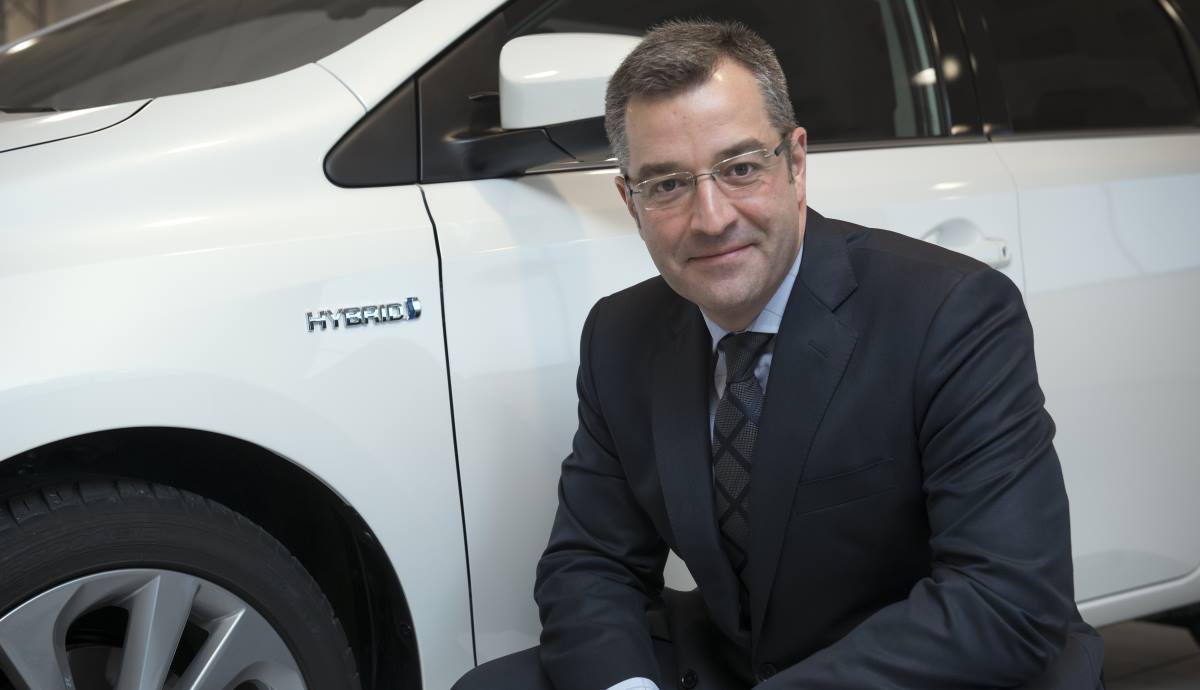
A startup with a very familiar surname
Toyota announced Toyota Connected Europe on 26 April 2018. Martin would be CEO; Zack Hicks, CEO of Toyota Connected North America, would be chairman. The London business began with an announced investment of £4.5 million and plans to recruit 35 to 50 data scientists, engineers and software developers.
Those numbers give the venture a useful sense of proportion. This was a new team inside a much larger industrial enterprise. Its work would draw on Toyota’s cloud based Mobility Services Platform and support shared mobility and fleet management. The technical foundations already belonged to a wider Toyota effort. The European team had to turn them into services appropriate to its own markets.
London base. European customers. Vehicle data put to work in mobility services.
A startup within Toyota gets a recognisable name, relationships and infrastructure. It also inherits the difficult business of working across an existing organisation. Retailers and distributors were part of the launch plan, alongside consumers, businesses and governments. A service might need software, but it would also need people elsewhere in the company to understand it, support it and explain it.
Martin’s London explanation gets better with that context. Proximity to a technology community was a practical recruiting decision. It also put the new operation among people whose working assumptions could differ from those of a car manufacturer. The team had to connect two professional worlds before it could connect much else.
“You need to be part of the tech ecosystem.”
Agustin Martin · SMMT Connected, 2019
The customer who might never buy
In May 2018, asked about the future of vehicle ownership, Martin resisted an all or nothing prediction. Some customers would want to buy. Others would want to rent or share. Toyota’s challenge was to answer that range of needs. It is a less theatrical proposition than announcing the death of ownership, and rather more useful to anyone trying to organise a Tuesday.
Consider the difference between buying a car and needing to reach a meeting. The purchase is one possible answer to the journey. A shared car is another. A transport service that combines modes asks the company to think about the whole route. Once the route becomes the organising idea, the vehicle becomes one part of a broader transaction.
Martin was also careful about geography. In a January 2020 interview about KINTO, he described cities developing different answers to their transport problems. He discussed collaboration and the need for Toyota to build capabilities it did not yet have. There was no suggestion that a familiar badge would make every unfamiliar business work automatically.
- OwnBuy a vehicle
- AccessRent or share
- ConnectCombine the journey
He also cited studies suggesting that new mobility businesses could account for 35 percent of revenue in 2030. That was a forecast discussed in 2020, with a decade still to run. Its value here is as a measure of the question on his desk: how much of an automotive company’s future might come from activities that were not its conventional business?
Learning in public
The connected car assignment also put Martin in rooms with people building younger companies. In February 2020, he was scheduled to help launch Toyota’s startup accelerator in Barcelona with ISDI director Miguel Ángel Díez Ferreira. The programme offered selected startups training, mentoring and funding. His responsibilities included the winners announcement alongside other Toyota and ISDI executives.
The Barcelona programme offered places in the accelerator to a maximum of three winners. Eight finalists were invited to pitch to an audience of investors, media and executives. It placed a large manufacturer and younger businesses in a structured conversation, with support attached to the selection. For Martin, the scheduled launch and announcement roles extended the connected technologies job beyond a software team. They put him at the meeting point between Toyota’s resources and the proposals of entrepreneurs trying to develop their own mobility businesses.
There is a practical connection between that work and the London operation. A company seeking new capabilities needs ways to encounter them. Recruiting a technical team is one route. Working with startups is another. Both require an established organisation to make space for ideas and working methods that arrive from outside.
In October 2020, Martin moved to become president and managing director of Toyota GB, succeeding Paul Van der Burgh. Frank Okoisor took over Toyota Connected Europe and the concurrent connected technologies role. Martin’s founding assignment had become a business someone else would lead. His next responsibility brought him back to a national Toyota operation, carrying the experience of having worked on the services surrounding the car.
Another company, a different scale
The next chapter widened the set of organisations on his CV. In July 2024, design consultancy Mormedi announced him as an expert and senior advisor. In July 2025, LIUX appointed him strategy director and a member of its executive committee, working with CEO Antonio Espinosa de los Monteros as the company prepared the LIUX BIG for series production and commercial launch.
The LIUX appointment brought him into a young Spanish electric vehicle company after his years in Toyota’s national and European operations. The change of scale is striking. An established manufacturer and a startup have different resources and different immediate problems. Getting a product towards production and a commercial launch gives strategy a fairly unforgiving appointment in the diary.
LIUX described his arrival in terms of experience across technological transformation, strategy and industrial work. Those were relevant connections to make. His Toyota career had included the product, the customer and the supporting organisation. At LIUX, that accumulated experience would be applied to a company still bringing its proposition to market. An appointment is the beginning of that work; the announcement was not a production result.
- Toyota Spain
President & CEO - Toyota Connected Europe
Founding CEO - Toyota GB
President & MD - LIUX
Strategy director - Bros Group
Advisory council
Experience becomes something to pass on
In February 2026, Martin joined the advisory council of Bros Group, the executive search and development firm. The remit was specific: mentoring newly appointed executives, contributing to assessments of senior talent, and speaking about leadership, innovation and continuous improvement. His industry, manufacturing and mobility experience would inform that work.
In his own LinkedIn announcement, he described helping people develop and grow as one of his passions. The advisory role gave that interest a formal setting. There is a pleasing continuity here. Earlier assignments had concerned what a business needed to learn. This one concerned how the people leading businesses could learn, especially when taking responsibility for something new.
For all the corporate titles, there is room for a smaller, noisier ambition. In 2024 Martin said he had begun learning the drums. He also described long walks with Grillo, the family’s Border Collie, and an appetite for nonfiction, including books about AI. A senior executive becoming a beginner at an instrument is a useful detail: experience in one room does not grant competence in the next.
His career has repeatedly taken him into that next room. Spain to European product planning. National leadership to connected services. Toyota to a young electric vehicle company and advisory work. The task changes; the need to learn survives the promotion. Somewhere beyond the strategic discussions and the production plans, a drum kit offers its own immediate feedback. It is unlikely to be impressed by a CV.