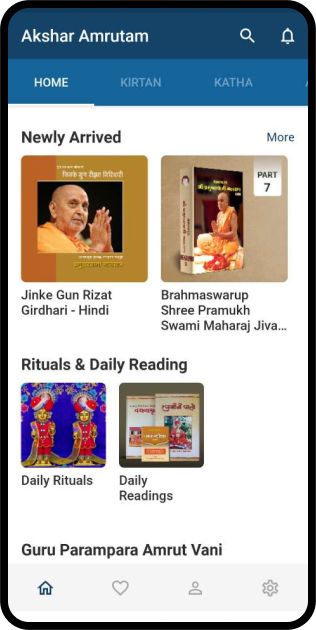
A devotional recording is an unlikely place to begin a story about enterprise software. Yet consider the problem facing Akshar Amrutam: more than 8,000 recordings collected over four decades. There were songs, discourses, and audio books. A growing archive can become less useful precisely because it keeps growing. Finding the right recording was another matter.
- Custom software, AI integration, and development teams for businesses.
- The revealing work: archives, patient portals, and systems that need to talk.
- Buyer’s takeaway: test one troublesome workflow before expanding the brief.
AGILE Infoways built iOS and Android applications that gathered the material into three sections, with playlists, an audio player, and downloads for offline listening. A listener travelling without dependable internet needs the recording to play. The engineering begins with an ordinary human inconvenience.
This is a revealing introduction to a company whose current pitch centres on AI engineering. Its portfolio also contains patient records, ship movements, and restaurant operations. The connecting thread is the troublesome distance between having information and being able to use it.
recordings
40 years of material
3 listening sections
02The business between the systems
Founded in 2006 by Ronak Shah and Vimal Shah, AGILE Infoways sells engineering services to other businesses. Customers commission software, extend their own development capacity, or ask it to connect systems already in place. Its market includes startups needing a first product and established organisations carrying years of technical baggage.
The distinction is practical. Buying a standard application gives you someone else’s carefully defined workflow. Hiring a custom development company lets you specify your own. You also inherit decisions about maintenance, scope, and ownership. AGILE occupies that space between a software subscription and building an entire internal engineering department.
Its public offering spans web and mobile development, cloud operations, data engineering, Salesforce, Odoo ERP, and AI. The company advertises relationships with AWS, Salesforce, ServiceNow, and Odoo. Breadth is part of the proposition: a customer can ask one team to work across the application, its integrations, and the infrastructure underneath.
03The robot met the signup form
Kiksasa provides a less tidy example. Its KIKI assistant helps users create profiles, while a central hub organises their software tools. AGILE’s account describes onboarding hesitation over privacy, trouble understanding specialist terminology, and older applications that would not connect. New users were overwhelmed by configuration choices. More possibilities had produced more places to get stuck.
The response was a collection of adjustments: clearer explanations of data handling, correction loops for the assistant, compatibility bridges, and an interface that revealed complexity gradually. The case study reports twice-as-fast adoption and integration success above 95%. Those are the developer’s reported results, rather than an independently measured benchmark.
The interesting change was in the design assumption. The project had to accommodate hesitation and misunderstanding. A clever assistant still needed an intelligible invitation. For anyone designing an AI product, the copyable idea is pleasantly unglamorous: inspect the point where the user stops.

04What the engagement costs
Clutch lists a $10,000 minimum project size and an advertised hourly range of $25-$49. Its featured Kiksasa review places that engagement in the $50,000-$199,999 band. That is a reported project range, not a fixed package or an exact invoice.
The review, published in July 2024, identifies Kiksasa founder Kelly Flynn and an engagement beginning in June 2023. Flynn says, “We are proud to tell people that they are our development team.” The same review mentions the familiar difficulties of working across time zones.
AGILE offers fixed bids, time-and-material billing, dedicated teams, and staff augmentation. Each arrangement assigns uncertainty differently. A tightly defined build suits a bounded scope; an evolving product needs room for discovery. A prospective buyer should compare the proposed team, delivery responsibilities, and ongoing support alongside the rate.
“We are proud to tell people that they are our development team.”Kelly Flynn · Kiksasa · July 2024
05A permission is a product feature
For Ivira, the deliverable was a healthcare portal with separate views for care managers, pharmacists, and system administrators. Staff could add patient details, assign remote care programmes, and review connected-device readings. Administrative access belonged in a different panel.
The engineering account describes encryption, two-factor authentication, and controls tied to user roles. These details are easy to overlook in a sales presentation. In daily use, however, deciding who may see or change a record is part of the product itself. A useful screen must also be an appropriate screen for the person opening it.
Navig8 Connect posed another version of the coordination problem: maritime records, vessel tracking, and updates shared among users without refreshing a page. AGILE describes database indexing and partitioning for a system designed around up to 50 million records. At that scale, the organisation of information becomes as consequential as the information.
06AI has to live somewhere
AGILE’s current ERP and CRM offering adds AI to existing business systems. Examples include extracting information from documents, scoring leads, forecasting demand, and asking questions of operational data. The appeal is continuity: staff can work inside familiar software while a new capability handles a specific task.
Its proposed sequence starts with a data audit, then a prototype using actual customer records, followed by integration and monitoring. This gives buyers a useful test to copy. Before commissioning a broad rollout, choose one workflow, establish the current result, and see whether a small implementation improves it.
That approach depends on usable data, access to the relevant systems, and someone able to decide what a good outcome means. When a standard product already meets the requirement, custom development may add avoidable responsibility. When records are unreliable, automating their movement can spread the confusion faster. These are buying considerations, not a prediction about any particular engagement.
- 01AuditKnow the data
- 02PrototypeTest real records
- 03IntegrateFit the workflow
- 04MonitorCheck the result
07The archive is the clue
AGILE’s GitHub Android guidelines provide a small counterweight to the expansive AI pitch. They cover project structure, coding conventions, build speed, and libraries: the daily mechanics of making software maintainable. The company’s identity includes that accumulated development practice as well as its newer positioning.
Its customer work suggests a sensible way to evaluate it against another development agency, a specialist implementer, or an internal team. Bring a messy workflow. Ask who will build it, how progress becomes visible, and what happens after launch. The answer should be specific enough to argue with.
Return to the recordings. Forty years of material did not need forty years of new content. It needed organisation, a usable interface, and a way to keep playing when the connection disappeared. That is a promise a customer can test.