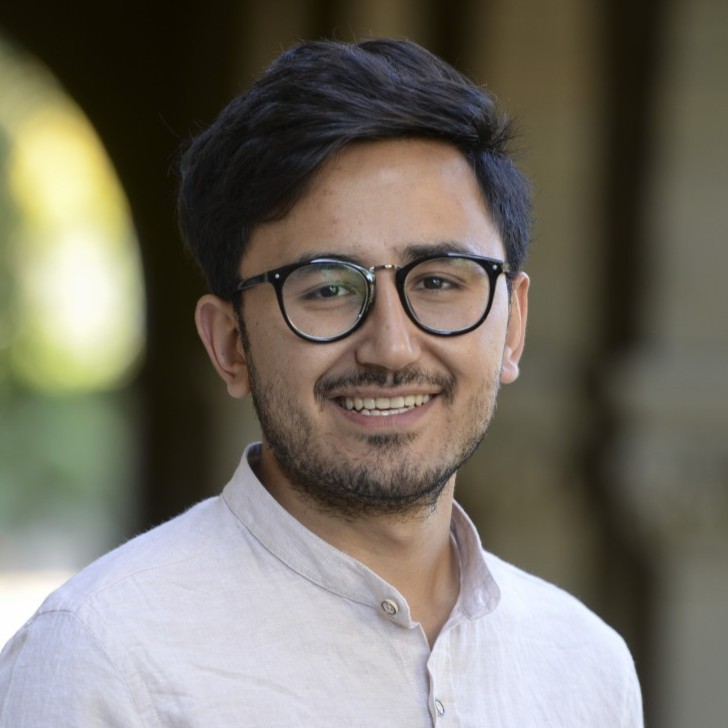
A founder who walks toward the hard markets
Most fintech follows the money to the biggest cities and the biggest banks. Abuzar Royesh pointed his company at the opposite end of the map - and built the tools those banks had been told they were too small to deserve.
Today Royesh runs Pastel, which also goes by DataServe AI, a company writing agentic AI software for regional, mid-tier, and community banks. The pitch is unglamorous and enormous: let software handle the grinding work of customer onboarding, due diligence, fraud detection, and compliance monitoring, so a bank with a few branches can move like one with a thousand. Pastel's flagship, Sigma, reads a bank's data and returns real-time verdicts - is this transaction fraud, is this customer who they claim to be, does this pattern smell like laundered money.
The detail that matters is where the intelligence comes from. Sigma was not a Western fraud system with an African coat of paint. Royesh has been blunt about it: the models were trained on African data, against Central Bank of Nigeria standards, using risk patterns drawn from across the continent. When Nigerian banks lost a reported 52 billion naira to fraud in a single year - nearly triple the prior year - Royesh's argument stopped being theoretical. Local fraud needs local memory.
“The innovation in fintech was flowing to the biggest markets and the biggest institutions. We went the other direction.- Abuzar Royesh, on why Pastel serves the banks others ignore
Born into instability, fluent in rebuilding
Royesh grew up in Afghanistan, with a stretch of childhood spent as a refugee in Pakistan during Taliban rule before his family returned home in 2002. His father, Aziz Royesh, is one of the country's most respected teachers and co-founded the Marefat High School in Kabul - a co-educational school that became a small, stubborn experiment in what Afghan education could be. Dinner-table politics and a father who taught for a living set the trajectory early.
That upbringing produced a conviction Royesh states without hedging: education comes first. "Above security, above economy, above anything else, I think it's education." Before he ever touched a line of fraud-detection code, he spent years on the policy side of the same problem - working from 2010 with marginalized and displaced young people, then leading research at the Afghanistan Holding Group, where he ran assessments for the Afghan President's office, government ministries, USAID, UNHCR, and GIZ. One early reform he championed was almost comically modest: move ministries off pen and paper and into Excel, so that findings could actually be acted on instead of filed away.
He carried that instinct into Tufts University, graduating magna cum laude in international relations and collecting the Presidential Award for Citizenship and Public Service. Then came Stanford, where as a Knight-Hennessy Scholar he did something slightly greedy: two master's degrees at once, one in international policy and one in management science and engineering. Policy taught him what was broken. Engineering gave him the tools to fix it. A research stint at the Stanford Internet Observatory sat in between.
Reflecting on what Stanford changed in him, Royesh put it plainly: "I've seen that some of the things that I thought were dreams to me, could be very easy to accomplish."
From bookkeeping app to bank brain
Pastel did not start as compliance software. In 2021 Royesh co-founded it with fellow Stanford graduate students Olamide Oladeji and Izunna Okonkwo, aiming squarely at small African businesses. The early products were friendly and concrete: Sabi for digital bookkeeping, a standalone Quick Receipt tool that crossed tens of thousands of users, and Swift Money, a financing app built on the logic of traditional Nigerian savings circles - ajo and esusu - rather than against them. Merchants signed up by the hundred thousand. In August 2022, TLcom Capital led a $5.5 million seed round, on top of an earlier $620K pre-seed.
Then Royesh followed the deeper problem upstream. The thing strangling small businesses was the same thing strangling the banks above them: fraud, regulatory pressure, and a thousand manual decisions a day that no human team could keep pace with. So Pastel climbed the stack - from serving merchants to serving the institutions that serve merchants - and became the agentic-AI compliance company it is now. The belief underneath it all is a governance one as much as a technical one: bank teams should keep the controls, and the AI should execute only inside the thresholds humans set.
"Above security, above economy, above anything else, I think it's education."
"I've seen that some of the things that I thought were dreams to me, could be very easy to accomplish."
"The innovation in fintech was flowing to the biggest markets and the biggest institutions. We went the other direction."
Sigma, he insists, is "not a Western system retrofitted for Africa" - it is built from African data up.