Walk through Paris with Le Walk and the city stops being a checklist. The Netflix tour drops you where Emily got her croissant. The history tour turns a quiet square into the night the city refused to burn. Chanel and Dior haunt a single boulevard. You never look at a screen. You walk, and the place talks back.
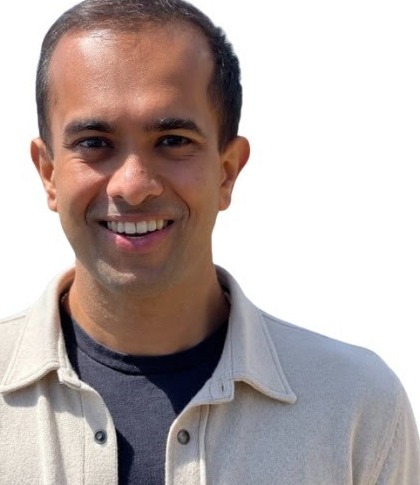
That is the product Aaron Sekhri runs as co-founder and CEO. Le Walk is an audio tour app that uses your phone's GPS to trigger narration timed to your exact steps, scored with cinematic sound, written and voiced by real expert guides. It launched publicly in September 2025 with a $4.1 million seed round co-led by Adverb Ventures and Lerer Hippeau, with Origins Fund and Point72 Ventures along for the ride. By then it had already done the quiet work: more than 110,000 downloads in beta, north of 160,000 social followers, and over 20,000 tours actually taken.
The pitch fits on a luggage tag. "Le Walk elevates travel by making the world's best guides accessible to every traveler - regardless of cost, timing, or language," Sekhri says. The unglamorous translation: the best guide in Rome can only stand in one piazza at a time, charges accordingly, and probably does not speak your language. Le Walk records that person's knowledge and hands it to everyone, in 22 languages, at once.
The rebellion against the feed
Here is the part that makes Sekhri's resume read like a confession. Before Le Walk, he was a product manager at TikTok. He built the mini-program developer platform - TikTok Jump, the mini-game product, a paywalled content business - infrastructure that more than 30 companies used to reach tens of millions of users. He was, in other words, very good at keeping you on your phone.
He and co-founder Stephen Boyle watched what they were building do to people. The phrase they kept coming back to was the "undirected and uninspiring scroll with no tangible benefit." So Le Walk is a deliberate inversion of the thing they helped perfect. The whole design goal is to get you to stow the device and lift your eyes. An app whose success metric is you ignoring it.
Our company literally wouldn't exist without ElevenLabs. Period.
Aaron Sekhri on the AI voice engine behind Le Walk
The engineering under the calm is not small. Le Walk runs on ElevenLabs for text-to-speech, sound effects, and dubbing - which is how a guide's script becomes a multilingual soundscape without a recording studio in every city. The next layer is conversational: an AI companion (Lora, the in-app planner) so you can ask a question mid-walk, hear a historical figure answer in character, get a live translation, or just ask which way is the river.
From self-driving cars to slow walking
Sekhri did not arrive at travel by the obvious road. He grew up in Hong Kong and studied Symbolic Systems at Stanford - the famously interdisciplinary major that staples computer science to linguistics, philosophy, and psychology, and tends to produce people who think about how humans and machines talk to each other. It is a fitting degree for someone now building a machine that narrates the world.
His first big product job was at Uber ATG, the self-driving division, where he owned the third-party program - the unglamorous, high-stakes work of getting partners' autonomous vehicles onto the Uber network safely and at scale. From cars that drive themselves he went to TikTok's developer platform, then served as a scout for Andreessen Horowitz, learning the venture side from the inside before raising his own round. Autonomy, attention, distribution. Then he pointed all three at the simple act of taking a walk.
The founding trio met in that TikTok crucible. Sekhri, Boyle, and Anthony Privitelli all worked together there before deciding the most interesting product they could build was one that sent users outside. They kept the consumer-social instincts and dropped the infinite feed.
What the catalog actually is
It helps to look at what Le Walk ships rather than how it pitches. The Paris library reads like a streaming service for a single city. "Emily's Paris" walks you through the Netflix show's locations. "Is Paris Burning" reconstructs the night in 1944 the city was nearly destroyed. "Haute & Historical" traces the boulevards that shaped Chanel and Dior. Each one is a route, a script, a voice, and a layer of sound, stitched to physical coordinates so the right line arrives at the right corner. The phone stays in your pocket; the only interface is your stride.
That design choice - no screen, no headset, just GPS and audio - is the quiet bet of the whole company. Augmented reality usually means hardware on your face. Le Walk's version is augmented reality you hear, which is cheaper to make, easier to wear, and far less likely to make you look ridiculous in a museum. The numbers suggest people stay: a 53-minute average session is not a glance, it is a commitment.
Why the suits showed up
Lerer Hippeau, writing the check public, framed the bet plainly: technology mostly traps us in a vortex of content, and there is real demand for guided experiences that feel personal and authentic. AI made the production economics work; changing traveler taste made the timing right. Le Walk sits at the seam where cheap, convincing audio meets a generation that wants the trip to mean something more than a camera roll.
The roadmap is geographic and conversational at once. The catalog already spans Paris, Versailles, Florence, and Rome. Barcelona and London are next, with a target of 25-plus destinations by summer 2026. The bigger leap is the live AI layer, which turns a scripted tour into a responsive one - cities that answer back instead of just playing.
There is a through-line in how he describes the mission, too. The aim, in his words, is to give anyone access to a guide anywhere, anytime, and in any language. Each clause is a different barrier the company is trying to delete. "Anywhere" is the expansion map, from four cities toward twenty-five. "Anytime" is the obvious advantage of software over a human who sleeps. "Any language" is the ElevenLabs dubbing pipeline doing what no single guide could. Put together, it is an argument that the great city tour should not be a luxury rationed by geography and budget.
Strip away the funding language and the thesis is almost old-fashioned. The most memorable part of any trip is usually a person who knew the place and was willing to tell you about it. Sekhri's whole career - the autonomous cars, the developer platforms, the AI voices - is in service of cloning that person and handing them to anyone with a phone and a free afternoon. He spent years learning how to capture attention. Le Walk is what he does with the lesson: give the attention back, and point it at the street.