Somewhere inside a large manufacturer, the same company may be recorded 300 different ways. XSB once found that many versions of Hewlett Packard in one customer’s systems; 3M appeared more than 50 ways. A human recognizes the family resemblance. A procurement database sees strangers. The result is duplicated inventory, missed alternatives, unreliable price comparisons and engineers hunting through systems that refuse to agree.
This is XSB’s territory: the stubborn middle ground between information and usable knowledge. Founded in 1998 and based in East Setauket, New York, the company applies semantic technology, knowledge graphs and rule-based artificial intelligence to parts, prices, technical standards and engineering documents. It is small - LinkedIn lists 14 employees, while other public records vary - but the data asset it assembled is not. When supply-chain risk company Exiger bought XSB in August 2024, it said XSB’s catalog covered more than 100 million parts and 400 million attributes.
The unglamorous layer that makes automation work
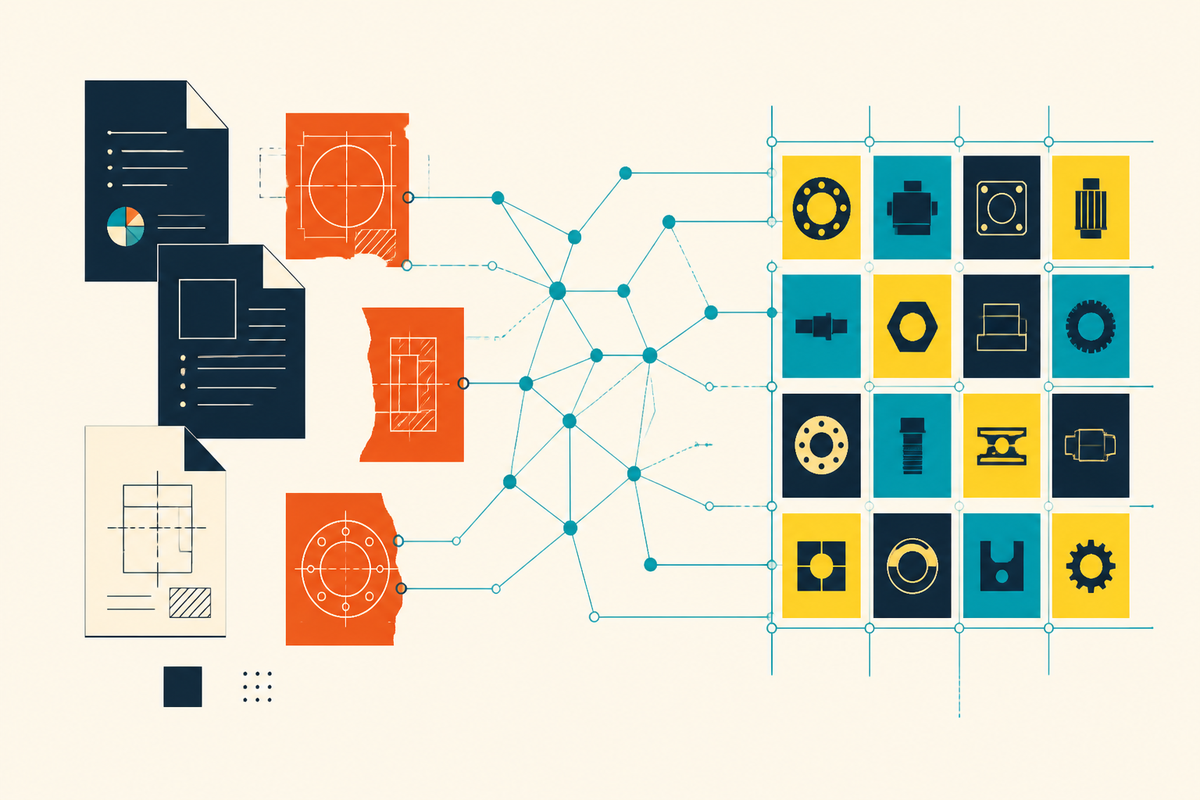
Most enterprise AI pitches begin with the answer. XSB begins with the mess beneath it. Product records arrive from internal databases, legacy systems, manufacturer websites, distributors and government catalogs. Names conflict. Part numbers carry stray punctuation. Attributes are missing. Products are obsolete but still selectable. Identical components masquerade as separate items, while different components appear deceptively similar.
XSB’s Master Data File technology aggregates those records, standardizes manufacturers and part numbers, enriches attributes, discovers duplicates and substitutes, and can rank preferred parts using criteria agreed with a customer. That last phrase matters. XSB’s AI is designed to show its reasoning. In engineering and public procurement, an answer that cannot be defended is often no answer at all.
The underlying approach descends from logic programming rather than the present wave of generative chat. XSB uses ontologies - formal maps of concepts and relationships - and reasoning systems written largely in XSB Prolog. The aim is not merely to predict that two records match, but to expose the chain of logic behind a recommendation. That makes the technology less theatrical and more appropriate for a contracting officer defending a price or an engineer deciding which component belongs in an aircraft.
“The same part can wear a dozen names. XSB’s job is to give it one usable identity.”
Four products, four moments of doubt
XSB’s product line can be understood as answers to four practical questions. Pin Point asks: which part should we use? Price Point asks: is this price defensible? Warwick asks: what is the government market buying? SWISS asks: what if the knowledge trapped in a document behaved like live data?
Searches technical and management information by NSN, NIIN, part number, CAGE code, characteristics or keyword. It supports alternates, obsolescence work, regulatory checks and preferred-parts lists.
Benchmarks commercial-item offers against normalized catalog and transaction data, helping public buyers document fair-and-reasonable price decisions and acquisition compliance.
Gives public-sector sellers SKU-level demand, competitor, pricing and contract intelligence across channels such as GSA schedules, FedMALL and NASA SEWP.
Converts specifications, drawing notes, work instructions and other static documents into linked, change-aware data that can feed engineering systems through APIs.
Pin Point is the mature data utility. XSB says it is used by thousands of engineers, government item managers and catalogers. Authorized government users can access it at no cost; enterprise and commercial users buy software, data and services around the platform. Warwick is sold as on-demand subscription intelligence to suppliers navigating the peculiar rules of business-to-government commerce. Price Point serves the other side of the desk.
The evidence for Price Point’s usefulness is unusually concrete. XSB says the U.S. General Services Administration used its benchmarks to renegotiate millions of catalog prices, producing an average reduction of 12 percent on high-volume items and tens of millions of dollars in customer savings. A GSA regional commissioner called the system a “substantial force multiplier.” It is not a glamorous phrase, which may be why it sounds credible.
The model is a blend of subscription software, licensed data, API access, implementation work and government contracting. That mixture follows the products. A seller can subscribe to Warwick for recurring market intelligence. A major manufacturer needs integration, ontology work and continuing data maintenance. A federal agency can buy through a contract vehicle or use an authorized application. The recurring asset underneath each arrangement is the normalized data itself: every cleaned manufacturer name, classified attribute and linked reference can improve the next search or analysis.
That creates a modest but durable advantage. A general software provider can build a catalog screen; reproducing decades of industrial terminology, federal purchase history and parts relationships is harder. The knowledge base also benefits from domain experts who decide what “equivalent” means in context. Two fasteners may share dimensions but differ on a material, coating or compliance requirement that makes substitution unsafe. The software narrows the work while the rule set preserves the judgment.
The PDF at the end of the digital thread
SWISS is the more conceptual bet. Manufacturers have spent decades building digital models of products, yet essential context still lives in static PDFs, Word files and paper: specifications, standards, test methods, requirements, drawing notes and work instructions. A search may find the document, but it does not necessarily find the applicable sentence, confirm that a reference is current or alert every downstream user when the source changes.
SWISS - Semantic Web for Industrial Specs and Standards - decomposes those files into connected elements: text, tables, equations, images, requirements and references. XSB calls the result a “digital twin document.” Engineers can reuse controlled fragments in work instructions or technical packages while retaining a link to the authoritative source. A changed requirement can trigger an impact trail rather than another round of manual copy-and-paste.
The platform is built to deliver data into familiar environments, including PTC Windchill, Siemens Teamcenter, Microsoft Office and SharePoint, or a customer’s own knowledge graph. XSB says it works with three of the five largest aerospace and defense manufacturers. Its public materials also describe work with the Department of Defense and Defense Logistics Agency, and standards activity involving ASTM and ASME. Space exploration, energy and engineering-procurement-construction projects present the same basic difficulty: facilities and vehicles live for decades, while their documentation drifts.
Where XSB fits - and where it does not
XSB sits between master-data management, engineering lifecycle software, parts intelligence and public-sector procurement analytics. A company can attack pieces of the problem with a PLM platform such as Windchill or Teamcenter, a component-risk database such as SiliconExpert or Z2Data, a federal market tool, or a broad data-management suite. XSB’s distinction is that it crosses those borders with the same semantic machinery and a proprietary parts corpus accumulated over decades.
That breadth is also the business logic behind Exiger’s acquisition. Exiger maps suppliers, ownership, sanctions, cyber exposure and other forms of third-party risk. XSB contributes the object-level view: which part is this, what attributes does it have, what did buyers pay, which standard governs it and where else is it referenced? Put together, the platforms can connect a geopolitical or supplier signal to the engineering and purchasing decisions it affects.
The purchase price was not disclosed. Neither was a valuation. Public SBIR records show XSB receiving nine Phase I and three Phase II awards totaling about $2.45 million beginning in 2000, evidence of a company that grew alongside government problems rather than venture fashion. Its GSA schedule remains current into the next decade. An annual revenue figure of roughly $8.5 million circulates in commercial company data, but XSB has not publicly confirmed it.
Logic meets logistics
Rupert Hopkins and his co-founders establish XSB around semantic data and defense-technology commercialization.
The federal research trail begins
XSB receives the first award in what becomes a 12-award SBIR/STTR portfolio.
Price Point reaches the buying desk
Federal procurement guidance highlights the tool for evaluating schedule offers and modifications.
Exiger buys the missing layer
XSB’s parts, purchasing and engineering intelligence joins a larger supply-chain risk platform.
A useful kind of boring
The company’s culture, at least from the outside, reflects its material. Founder and CEO Rupert Hopkins came from defense industrial work and served as an adviser across government and policy circles. Co-founder David Warren is a computer scientist associated with the foundations of tabled logic programming. The leadership bench mixes ontology, operations and long-tenured engineering expertise. This is not consumer software built around a habit. It is infrastructure built around institutional memory.
For customers, the practical payoff is time returned. An engineer can find a viable alternate before an obsolete component blocks production. A parts manager can collapse duplicates before inventory expands. A buyer can interrogate a price before signing a contract. A supplier can see which products the government actually buys. A standards team can publish information that machines can use without abandoning the document humans still expect.
XSB’s wager is that industrial intelligence depends on patient classification before dazzling prediction. The machines may be learning, but first someone has to teach 100 million parts what they are called.