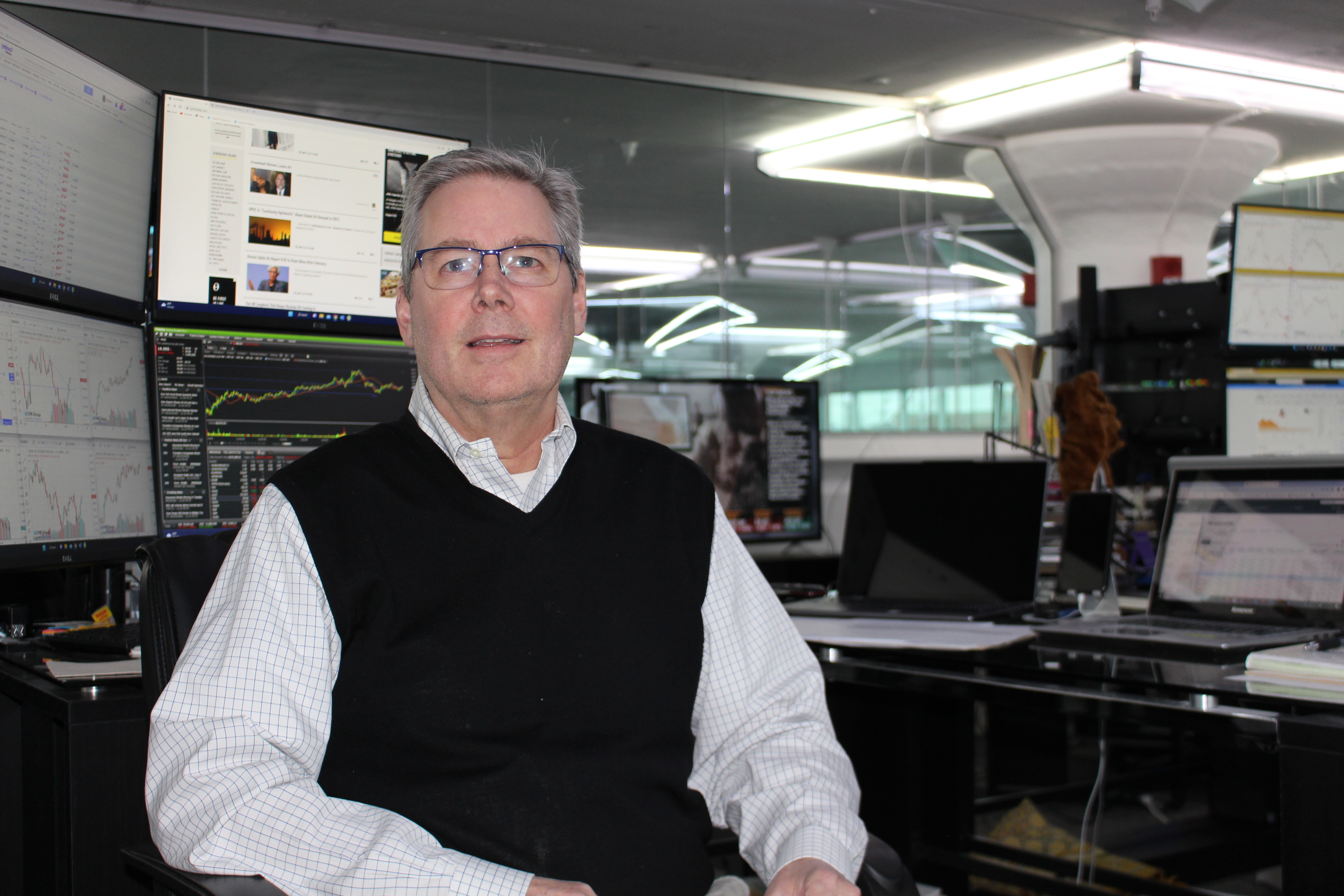
A fund engineered to survive the worst day, not chase the best one.
Today William Feeley runs Barometer Trading out of Granger, Indiana - an equity long/short shop with one stated enemy and it isn't the market. It's loss. Most funds are built to look brilliant in a bull run. His is built to still be standing after a 50% drawdown, because he knows the arithmetic that humbles everyone else: lose half your money and you need to double what's left just to break even.
So the strategy is short where it has to be, long where it earns, and allergic to the kind of swagger that gets funds wiped out in a "lost decade." It is a contrarian's portfolio run by a man who has watched enough cycles to distrust the easy ones. The pitch is not "we'll get rich fast." The pitch is "you'll still be here."
I hate losing money.
The bet nobody else would make
The most interesting line on Feeley's resume isn't a deal. It's a hire. Several hires, actually - associate analysts and traders he recruited out of prison re-entry programs, people who had earned college degrees while incarcerated and who Wall Street's standard filters would have rejected on sight. He hired roughly a half-dozen of them, trained them on his desk, and pointed them at the market.
The desk beat its hedge-fund benchmark by more than 18% per year for 39 straight months. Not a charity outcome. A trading outcome. The talent was real; the only thing missing was permission. Allocators - the people who write the checks that let a fund scale - wouldn't back a team of former felons, no matter the numbers. Feeley eventually pivoted to a conventional staffing model and kept the track record. The experiment ended. The proof didn't.
The number that should have changed minds
Before Indiana, the trading floors
Feeley did not arrive at this from the outside. He spent the bulk of his career in the engine room of corporate finance: EVP and head of corporate finance and distribution at Kemper Securities, co-head of equity capital markets at Bankers Trust, head of capital markets at Wit SoundView. Across those seats he helped hundreds of issuers - Fortune 50 names among them - raise tens of billions through IPOs and secondary offerings.
He took a detour as CFO of an award-winning internet retailer, then built Feeley Capital Markets to advise and finance corporate issuers and make selected private and public investments. Barometer Trading absorbed that practice on July 1, 2021, folding a lifetime of deal experience into a fund with a much narrower obsession.
The thread through all of it: he's a markets operator who keeps choosing the harder, less obvious version of the job. Raising capital is hard. Running a long/short book is harder. Doing it with a team the industry refuses to fund is hardest of all - and he did that one on purpose.
What he's really after
Strip away the strategy decks and Feeley wants two things that don't always sit comfortably together: a track record durable enough to outlast any market, and a quiet argument that talent shows up in places the resume screeners never look. The first goal is still very much alive. The second one ran into a wall - not of performance, but of prejudice dressed up as risk management.
He's a Georgetown undergrad with a Loyola Chicago MBA and a CAIA charter, which is to say he has every credential the establishment respects. He spent it betting on people who had none of them. That tension is the whole man: a capital-markets insider who keeps siding with the outsiders, and who'd rather not lose money proving the point.