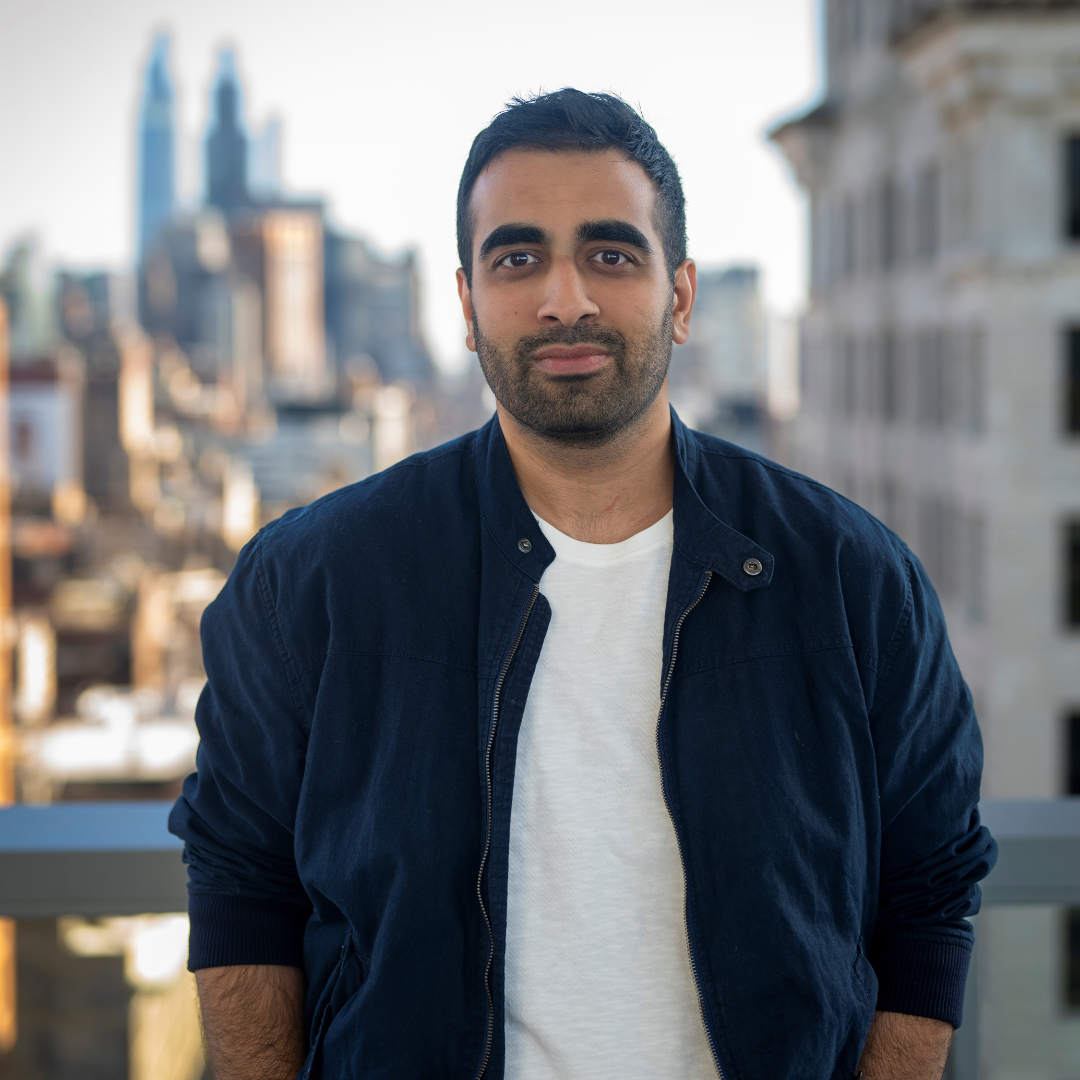
Start with the friend who was drowning. He had done the hard part: passed the bar, hung a shingle, opened a personal injury practice. Then the cases came, and with them the medical records and the police reports and the lien letters and the insurance calls, and he found himself turning away people who needed a lawyer because there was no one left to do the paperwork. That is the scene that became Finch.
Viraj Bindra co-founded Finch in 2024 with his longtime friend Benjamin Weems, and runs it as CEO out of New York. The pitch is deceptively plain: pair experienced, U.S.-based paralegals with purpose-built AI agents, and let them swallow the administrative weight of pre-litigation. Intake. Claim setup. Medical record retrieval. Police reports. Lien management. The first draft of a demand letter. The grind that decides whether a small firm can take the next client or has to wave them off.
The why is bigger than the workflow. More than three-quarters of Americans who need legal counsel can't get it, and Finch's wager is that the bottleneck isn't a shortage of lawyers so much as a mountain of admin. Move the mountain, and a two-person firm starts to behave like a ten-person one. Finch says partner firms have tripled their case volume, and that an average firm is running Finch on two and a half times more cases by month three.
Investors noticed. Finch emerged from a private beta in April 2025 with a Seed round led by Sequoia Capital, then announced a $20 million Series A in October 2025 led by Redpoint Ventures, with Sequoia, Roar Ventures and Liquid 2 Ventures along for the round. The cap table reads like a DoorDash reunion crossed with a legal-tech who's-who: DoorDash CEO Tony Xu, former DoorDash President and COO Christopher Payne, and Ironclad CEO Jason Boehmig.
That line is the through-thread. Bindra's resume isn't a straight climb up one ladder; it's two distinct careers stacked inside a single company. He joined DoorDash as its founding designer, back when the product was a set of screens that someone had to draw for the first time. He studied Symbolic Systems at Stanford with a concentration in human-computer interaction - the interdisciplinary program that sits at the seam of people and machines - and the early work was exactly that seam: making a delivery app feel obvious.
Then he switched ladders without switching buildings. Bindra moved from design into product, and over roughly eight years helped build and scale lines of business that supported restaurants, liquor stores and retailers across the country. Pickup, Grocery, Convenience, International - the unglamorous machinery of a marketplace growing up. He relocated from San Francisco to New York along the way. By the time he left, he had run something close to two full arcs at one of the defining consumer companies of the decade.
The Finch insight borrows directly from that education. DoorDash didn't ask whether software or humans should run a delivery; it wired the two together until the seams disappeared. Finch does the same trick in a courtroom-adjacent setting. The AI drafts, retrieves and chases. A human paralegal checks, judges and reassures. The technology is the muscle; the person stays the face. In an industry where a client is often having the worst month of their life, keeping a human on the other end of the line isn't sentimentality - it's the product.
It helps that Bindra still thinks like a designer. His usernames everywhere are the vowel-stripped "vrjbndr," he keeps a Dribbble profile from the old days, and the company's whole posture - say yes to every case worth taking - reads like a design constraint more than a sales slogan. The constraint forces the build. If a firm should never have to decline good work for lack of hands, then the hands have to be reinvented. That's the assignment Finch set itself.
The legal world has met him with a mix of curiosity and relief. He was the first guest on Trial Lawyers University's founders podcast, a series about the technology reshaping the plaintiff bar, and he has made the rounds of legal-tech shows explaining the "paralegals plus robots" formula to rooms full of skeptical attorneys. The skepticism is fair - law is allergic to hype, and pre-litigation is where cases quietly live or die. Bindra's answer is to talk less about disruption and more about cash flow, staffing math, and the number of clients a firm can actually serve.
What makes him worth watching isn't that he found AI; everyone found AI. It's that he spent a decade learning how to scale an operation where every order is a small promise to a real person, and then pointed that exact muscle at an industry where the promises are larger and the people more vulnerable. Finch is, in a sense, DoorDash logic applied to justice: take a fragmented, human-heavy, trust-dependent service and make it run without dropping the human part. Whether that scales the way a marketplace does is the open question. Bindra is betting his second career on yes.