A customer asks where a parcel has gone. It is a small question with a surprisingly large appetite: someone must find the order, establish which store sold it, locate the conversation and decide who should answer. Imagine that sequence repeated through a busy afternoon. The customer sees silence. The support agent sees tabs.
- UVdesk turns incoming questions into tickets with owners, rules and a history.
- Ecommerce apps bring order information closer to the person answering.
- Choose a hosted subscription or a free, self-hosted edition with operating responsibilities.
The queue came first
Webkul, the ecommerce software company behind UVdesk, describes an origin familiar to anyone who has outgrown a shared inbox. Customer queries became difficult to manage without a dedicated system. Then a support tool arrived, but its limited automation left the team struggling again. After trying alternatives, Webkul decided to build ticket management and automated workflows itself.
The sequence matters. Collecting the messages solved only the first problem. Someone still had to sort them, assign them and keep work moving. UVdesk grew from that second problem: the repetitive decisions surrounding every reply. Its origin gives the product a practical centre of gravity. The queue has to become manageable before the answer can become useful.

Webkul was founded in 2010 by Vipin Sahu, Vinay Yadav and Prakash Sahu. Its wider catalogue covers ecommerce extensions, marketplaces and related business software. That background helps explain UVdesk’s emphasis on connecting systems: the company already works on the software surrounding an online sale. Building the support layer gives those connections another job once the customer starts asking questions.
The order is part of the answer
UVdesk sells both hosted and open-source helpdesk software. The working ingredients include email-to-ticket conversion, agent collaboration, saved replies, a knowledge base and rules that trigger actions. A support request can acquire an owner and a status rather than remaining an email that three people assume somebody else has handled.
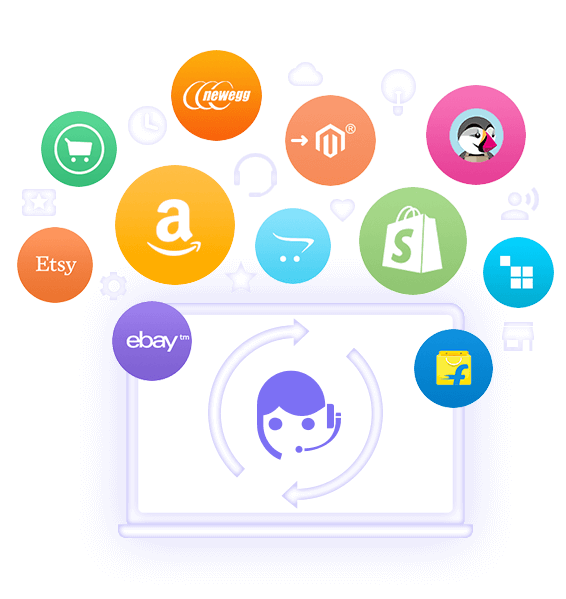
Its particular interest is commerce. The app catalogue includes connections for platforms such as Shopify, Magento, PrestaShop and OpenCart, alongside marketplace integrations. Order-fetch apps let agents retrieve purchase information during support work. Exact capabilities depend on the platform, edition and module. The point is straightforward: a question about a purchase should travel with information about that purchase.
There are quieter tools too. Form Builder structures the information customers submit. The knowledge base gives recurring answers a public home. Binaka puts a knowledge-base or contact widget on a website. A sensible use would be to collect an order identifier in a form, route the resulting ticket to the appropriate team and offer a relevant article. That is an example workflow, not a measured customer result.
Free has an operating budget
The two editions change who does the operating. The free Community Edition runs on the customer’s server and supports unlimited agents. The hosted service charges per agent. Published Pro pricing is $11 per agent each month, or $8 per month with annual billing. Enterprise is $18 monthly or $15 with annual billing. Both hosted plans require at least two agents.
Monthly billing
Annual billing
Enterprise: $36 monthly or $360 annually for two agents. Checked October 24, 2026.
The open-source download removes the per-agent software bill. It leaves hosting, deployment, backups, maintenance and any development work on the operator’s side of the ledger. Webkul also sells extensions and assistance: its store lists a $99 installation plan and paid modules for additional functions. A purchasing decision therefore needs two columns: the subscription or licence price, and the work required to keep the service useful.
The free download still needs someone to run it.An operating reality, not a licence fee.
A toolbox with the lid open
Underneath Community Edition is a PHP application built around Symfony and Backbone.js. Separate packages handle the core framework, extensions, mailboxes, automation and support portal. The code is distributed under OSL-3.0. For a technical team, that structure offers places to change behaviour or add integrations, subject to the licence. UVdesk’s public documentation covers installation, users, productivity and knowledge-base management.
The public release history supplies a more concrete signal than a marketing promise. GitHub records Community Edition v1.1.8 on September 19, 2025. UVdesk also documents a Flutter mobile client for handling tickets. That guide asks operators to configure the source and generate app builds for agents. Mobile access here comes with a development task attached; it is worth understanding that before planning a rollout.
Start with one repeated question
UVdesk’s published customer stories include electronics retailer Tanotis, Little Angels Prams and Elite Express Cargo. Its website also names the Open University of Sri Lanka. Those examples show how a product centred on ecommerce can serve other organisations: incoming questions, team ownership and repeated answers are hardly exclusive to shopping carts. They establish use cases without proving a particular improvement in response time.
The market is crowded with helpdesks, including Freshdesk, Zendesk and Help Scout, as well as self-hosted alternatives such as osTicket. UVdesk’s useful distinction is the combination of commerce connections and a choice of operating models. A team needs to check its actual storefront, required channels and preferred edition. An integration listed somewhere in the catalogue does not mean every deployment includes it.
The idea readers can borrow is small enough to try this week. Choose one recurring question. List the information needed to answer it. Put that information into the form or ticket, define who receives it, and save the reply that keeps being rewritten. A self-hosted setup is a poor fit if nobody can maintain it. Even a hosted one needs clear ownership. The parcel question becomes easier when the organisation has already decided where its answer lives.
Take a closer look
UVdesk website ↗ · Plans · Live product demo · Documentation · Explore the code
LinkedIn · X · Facebook · Product blog · Release notes · Watch the mobile-app demo ↗ · YouTube