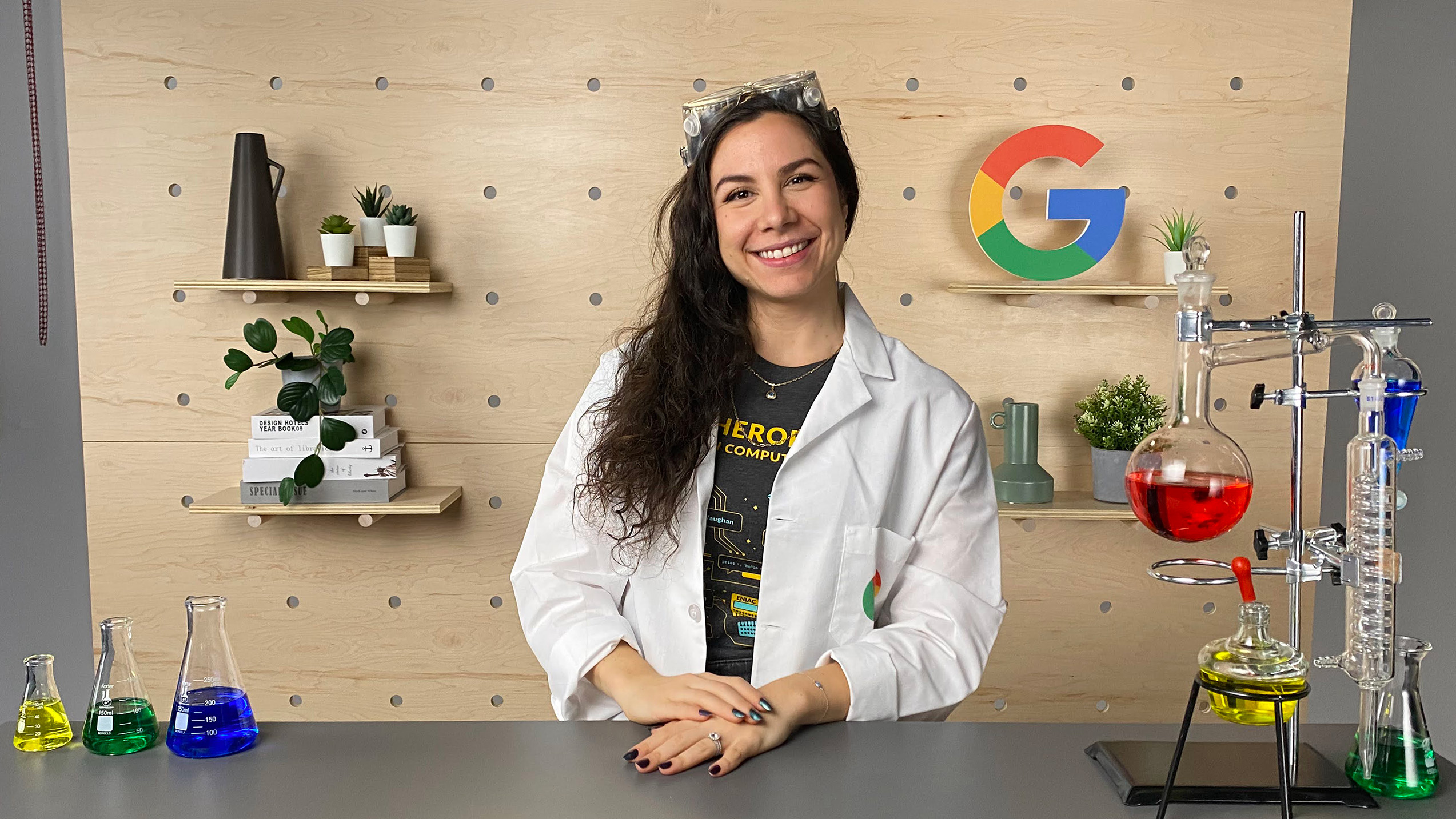
The CSS Whisperer of Chrome
There is a person inside Google Chrome who is, right now, thinking about whether your dropdown menu needs JavaScript at all. Spoiler: it probably does not. Her name is Una Kravets, and her job - as Staff Developer Relations Engineer and head of the UI & Tooling DevRel team - is to make the browser smart enough that you can stop fighting it.
She is a member of the CSS Working Group and the OpenUI Community Group. She has spoken at more than 80 developer conferences around the world. She co-hosts The CSS Podcast with Adam Argyle. She created CSSgram, a library that recreates Instagram's photo filters with nothing but CSS. Her Twitter handle is simply @una - four characters that carry more weight in the frontend community than most people's full names.
This is not someone who stumbled into influence. Una spent years building real products - at IBM Design (where she contributed to the early days of the Carbon design system), at DigitalOcean, at Bustle Digital Group where she directed product design across four publications. She knew what developers needed because she was one of them, staring at browser inconsistencies and writing workarounds at 2am.
"Before reaching for JavaScript, always ask: can modern CSS do this natively first?"
- Una Kravets, React Paris 2026When she joined Google's Material Design team in 2018, she did not just make YouTube videos explaining CSS. She sat in the rooms where web standards get decided. She listened to what developers were frustrated about. Then she went back and advocated - hard - for the features that would actually solve those problems.
Container queries. Anchor positioning. Scroll-driven animations. Customizable select menus. These are not theoretical improvements. These are things that eliminate entire categories of JavaScript boilerplate. They are features that Una has championed, written about, talked about, and helped ship into browsers that real people use. Every time a developer removes a dependency because CSS can now do the thing, there is a small thread of that back to Una Kravets.
The most recent example: scroll-state() container queries, which
landed in Chrome 144 in early 2025. With this feature, CSS can detect scroll
direction and adapt layouts without a single line of JavaScript event handling.
It sounds small. It is not small. It is the kind of thing that changes how
developers think about what CSS is for.
"I hope to hear about the things people wish they could do on the web platform - I want them to complain to me about things they're stuck with or ideas for improvement."
- Una KravetsAmerican University, 2014: she graduates with degrees in both Graphic Design and Computer Science. Not either/or - both. That combination is not an accident. It explains everything.
At IBM Design, she helps build Carbon - one of the first major enterprise design systems. She learns that consistency at scale is its own kind of engineering problem. It sticks with her.
Google Chrome, 2021 to now: she leads the UI & Tooling Developer Relations team. Her job is to be the translator between browser engineers and the developers using what they build.
CSSgram and the Art of the Experiment
One evening, Una decided to see if she could rebuild Instagram's photo filters using only CSS. Not for a client. Not for a conference talk. Just to see if it was possible.
CSSgram was the result - a library that applies CSS blend modes and filter functions to make photographs look like they have been run through Instagram's Clarendon or Hudson or Valencia filter. No Canvas API. No JavaScript. No image processing. Just CSS, applied elegantly.
The project now has more than 5,400 stars on GitHub and nearly 400 contributors. It went from a personal experiment to a community-maintained library that developers actually use in production. That trajectory - from "I wonder if this works" to open-source infrastructure - is how Una operates. She builds the thing that demonstrates the possibility, then hands it to the community.
The same instinct drives her work at Chrome. Anchor positioning was possible to implement in JavaScript with enough effort. But Una's argument - the one she takes into working group meetings - is that if CSS can express something declaratively, it should. Accessibility, performance, and maintainability all improve when the browser understands the intent rather than executing imperative instructions.
CSS Features She Helped Ship
Responsive components based on their own size rather than the viewport. One of the most-requested CSS features of the past decade - now in all browsers.
CSS can now react to scroll direction without JavaScript event listeners. Sticky headers that know they're stuck. Overflowing containers that know it.
Position tooltips, menus, and popovers relative to other elements using pure CSS. No more JavaScript position calculations for UI overlays.
A native, styleable dropdown that replaces the ungodly combination of hidden inputs, JavaScript listeners, and ARIA patches that every UI library ships.
The Podcast, the Platform, the Person
In 2020, Una co-founded The CSS Podcast with Adam Argyle. The premise is simple: go deep on every CSS property and concept, make it accessible to developers at any level, and treat CSS as the serious language it is rather than the butt of a joke about boxes. The show has built a following that treats each episode as practical reference material.
Before that, there was Toolsday - a podcast she hosted for years covering the tools, tips, and techniques of modern development. Both shows reflect something consistent about how Una approaches the web community: she teaches by showing, not by telling.
Her speaking record is unusual even by developer-conference-circuit standards. More than 80 events. Keynotes. Workshops. Panels. Smashing Conf, An Event Apart, Full Stack Fest, Nordic.js, Epic Web Conf, Beyond Tellerrand - the list runs to several screens. In March 2026, she opened React Paris with the first keynote of the day, walking through what modern CSS means for React developers specifically. The message: your component library might be doing too much JavaScript.
That accessibility - in the sense of willingness to engage - extends to individuals too. "I try my best to answer people who reach out to me for advice pretty quickly," she has said. "People who make the effort to reach out are the people who are going to be really successful in the future." She has 30,000+ posts on X under @una. She is available on Bluesky, Mastodon's front-end.social, GitHub, CodePen. She makes herself findable because she thinks accessibility is a practice, not a principle.
"I try my best to answer people who reach out to me for advice pretty quickly. People who make the effort to reach out are the people who are going to be really successful in the future."
- Una KravetsBeyond the Browser
Una is based in Brooklyn, and her interests are broader than the browser tab. During the pandemic, she got deeply into calligraphy and hand-lettering - not as a hobby to fill time, but as a serious creative pursuit. She took courses from her favorite lettering artists. She explored what an income stream from code calligraphy might look like, with online workshops and merchandise. The designer brain and the engineer brain kept working together even off-screen.
She plays ukulele. She listens to what she describes as "way too many audiobooks." She travels internationally when conferences call her there - which, at 80+ events, is often. She has 182 repositories on GitHub, which means even her side projects have side projects.
The aspiration underneath all of it is coherent: make the web platform good enough that building on it is a joy rather than a negotiation. Every CSS feature she advocates for, every podcast episode she records, every conference talk she delivers is aimed at closing the gap between what developers need to express and what the browser natively understands.
IBM Carbon taught her that design systems work when they encode decisions so individuals do not have to make them alone. Una is doing the same thing for the web platform: encoding good patterns into the standard so that every developer who comes after benefits, not just the ones who knew the tricks.
The web got better because she went to the meetings, made the arguments, and shipped the features. That is not a small thing.
Latest Updates
- MAR 2026 Delivered opening keynote at React Paris 2026: "Building a Great UX with Modern CSS" - covered select styling, scroll animations, popovers, anchor positioning, and page transitions.
- JAN 2026 Confirmed as speaker at Google I/O 2026, focused on making the web better for everyone.
- DEC 2025 Published CSS Wrapped 2025 - the annual curated tour of CSS features that reshaped web development that year.
- OCT 2025 Spoke at Nordic.js 2025.
- MAY 2025 Speaker at Render ATL 2025 and Google I/O 2025.
- FEB 2025 scroll-state() container query feature shipped in Chrome 144 - a feature she championed through the standards process.