EVP & Chief Clinical Officer, Jefferson Health 10 weeks fighting Ebola in Liberia Founded PURE in 2011 Ultrasound training: Rwanda - Uganda - Tanzania - Liberia Published in the New England Journal of Medicine Modern Healthcare Leading Women 2026 OnPoint quality across 18 hospitals EVP & Chief Clinical Officer, Jefferson Health 10 weeks fighting Ebola in Liberia Founded PURE in 2011 Ultrasound training: Rwanda - Uganda - Tanzania - Liberia Published in the New England Journal of Medicine Modern Healthcare Leading Women 2026 OnPoint quality across 18 hospitals
Physician / Executive / Field Researcher

Trish Henwood

She brought a portable ultrasound probe into an Ebola ward where the X-ray machines never reached. These days she debugs an 18-hospital system the way she once read a bedside scan.

EVP, CHIEF CLINICAL OFFICER & CHIEF QUALITY OFFICER
JEFFERSON HEALTH · PHILADELPHIA
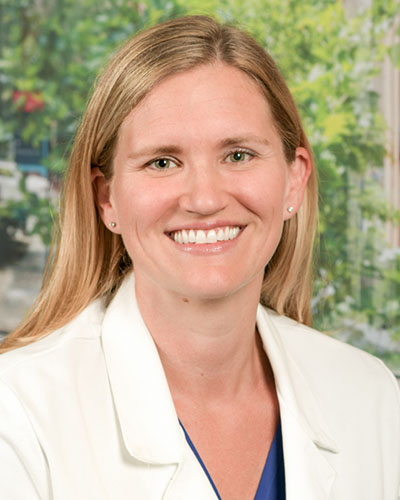
Patricia Trish Henwood, MD
Dr. Patricia C. Henwood, MD, FACEP
Who she is now

The job is to find the failure before the patient does.

Patricia Henwood spends her days inside a 19,000-person health system, looking for the seam where care quietly breaks. As Executive Vice President and Chief Clinical Officer of Jefferson Health, and the James D and Mary Jo Danella Chief Quality Officer, she runs OnPoint - the quality and safety program threaded across eighteen hospitals in and around Philadelphia. The work borrows from human-factors and systems engineering: study how people actually behave under pressure, then design the system so the right thing is the easy thing.

It is a long way from a treatment unit in Bong County, Liberia. But it is the same instinct. Henwood has spent her career deciding that the tools good medicine depends on should not stop at the edge of the well-resourced world - and that the gap between what we know and what we deliver is an engineering problem worth solving.

18
Hospitals under OnPoint
100+
Ebola patients treated in Liberia
2011
Year she founded PURE
"You just get up the next day and know there's a big job to be done."
- TRISH HENWOOD, ON HER WEEKS IN LIBERIA
October 2014

A probe in the hot zone.

In the autumn of 2014 the Ebola epidemic was tearing through West Africa, and Henwood flew to Liberia. She spent five weeks in Bong County, an epicenter, caring for roughly a hundred patients in an Ebola treatment unit. Then she went back in January 2015 for another five weeks as the outbreak slowed.

Conventional imaging was impossible in that setting. So she sought - and got - approval to bring point-of-care ultrasound to the bedside, scanning patients inside the unit to understand what the disease was doing to their bodies. That fieldwork became a paper in the New England Journal of Medicine, "Imaging an Outbreak - Ultrasound in an Ebola Treatment Unit."

She has been blunt about the cost. The death rate sat near 50 percent. There was stigma to overcome, brutal days, and a discipline of safety she had never needed in an American ER.

We knew we could only help if we could keep ourselves and our staff safe - it was a little different than when I work in the ER and I am only focused on our patients' safety.

It was environmentally tough, but overall I am grateful I could use my medical training and global experience to help.

The longer mission

PURE: putting the picture where it never was.

Liberia was not a one-off. In 2011 Henwood founded PURE - Point-of-care Ultrasound in Resource-limited Environments - a nonprofit built on a simple, stubborn idea: a clinician who can scan a patient at the bedside can make a better decision, even with no radiology department down the hall.

Over more than a decade she designed and led training programs across sub-Saharan Africa, teaching local physicians to use ultrasound and then studying whether the skills stuck. Her Rwanda research - published work on knowledge retention and the accuracy of resident-performed scans - asked the unglamorous follow-up question most aid projects skip: did the training actually hold?

She co-chairs the American College of Emergency Physicians' Global Health Ultrasound Subcommittee and advises the Ultrasound Committee of the African Federation of Emergency Medicine.

Where the training went

Rwanda Uganda Tanzania Zanzibar Liberia

The thread running through all of it: leave behind people, not just equipment. As she put it of the staff she trained - "Now they're trained to help make a difference in their own community."

The arc

Government major to clinical chief.

2011
Founds PURE to bring point-of-care ultrasound to austere settings.
2014
Five weeks in Bong County, Liberia, treating Ebola patients in a treatment unit.
2015
Returns to Liberia for a second mission as the epidemic recedes.
2019
Joins Jefferson Health after leadership roles at Brigham and Women's / Harvard and the Hospital of the University of Pennsylvania. Publishes her Ebola ultrasound work in the NEJM.
2026
Named to Modern Healthcare's Leading Women class.
Education

Four stops, one trajectory

Georgetown University - BA, Government
Sidney Kimmel Medical College at Jefferson - MD
Massachusetts General Hospital - Harvard-affiliated EM residency
Brigham and Women's Hospital - emergency ultrasound fellowship

The detail that says it

She trained where she now leads

Henwood earned her MD at the same Jefferson medical college whose health system she now helps run. The student became the chief clinical officer.

The same systems thinking that worked abroad, aimed at a Philadelphia ZIP code.
Closer to home

Equity is an operations problem.

When COVID-19 hit, Henwood pointed the field-honed instinct at her own city. She helped drive testing and vaccination into vulnerable Philadelphia communities and worked to close the equity gaps in who actually got a shot. The OnPoint program she leads has been recognized nationally for moving the metrics that matter - the kind of safety work that rarely makes headlines but quietly keeps people alive. In 2022 Jefferson took home a HIMSS Davies Award for the analytics behind it.

Her through-line, stated plainly across two decades: build more effective, more equitable systems, and shrink the distance between what medicine knows and what patients receive.

For the curious

Things that don't fit the resume.

Origin

Politics first

She studied government at Georgetown before she ever studied medicine.

Reach

Five countries

Her ultrasound training programs span Rwanda, Uganda, Tanzania, Zanzibar and Liberia.

Footprint

Bedside to journal

Work she did inside an Ebola unit ended up in the New England Journal of Medicine.

emergency medicine point-of-care ultrasound global health patient safety health equity systems engineering FACEP