Profile · Editorial
J. Thomas Briody
A Buffalo kid who inherited the family vocation, packed it across the country, and turned a San Francisco nonprofit into a 20,000-life operation.
Filed from Geary Blvd
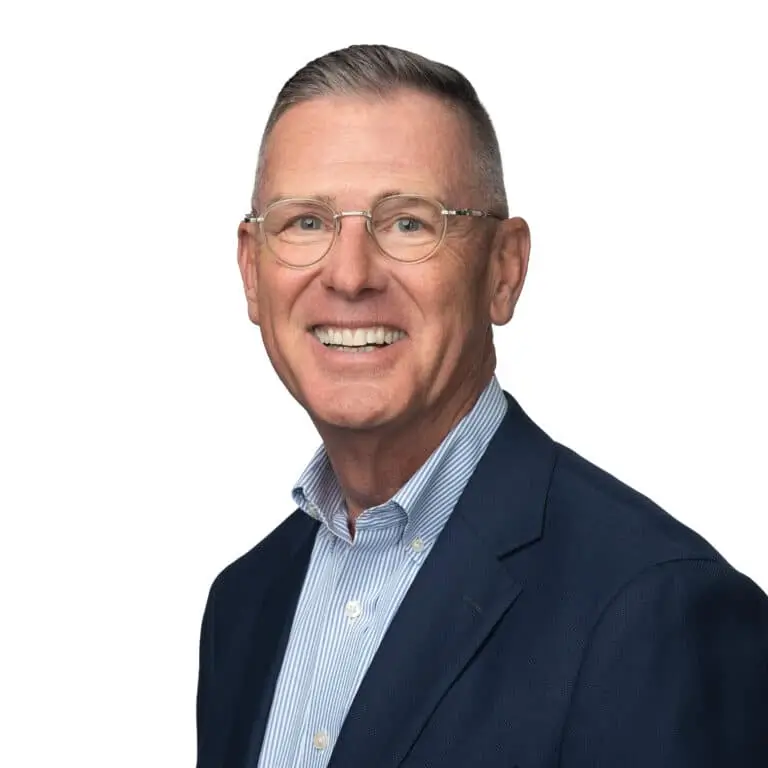
A Buffalo kid who inherited the family vocation, packed it across the country, and turned a San Francisco nonprofit into a 20,000-life operation.
Edna Briody opened a home for the aged in Buffalo in 1946. Eighty years later her grandson runs one of San Francisco's largest aging-services nonprofits. The family never really left the business.
Tom Briody took the corner office at Institute on Aging in 2012. He had spent the prior 25 years inside elder care: skilled nursing, home health, seniors housing, community care management. By the time he flew west, he had already integrated a continuum of services at the Catholic Health System of Buffalo and hung his own consulting shingle in Western New York. San Francisco was the next chapter, not the first one.
IOA was already a 30-year-old institution when he arrived. It had a $38 million budget, 450 employees, and roughly 8,000 older adults on its rolls. Today it has nearly twice the staff, more than twice the budget, and operations stretching into Southern California. The Geary Boulevard headquarters now serves more than 20,000 people a year.
The way he tells it, none of this was a pivot. Tom's grandmother started a home for the aged the year after World War II ended. His parents took over in 1960 and ran it for three decades. His sister assumed control in 1990. His son Patrick earned a graduate degree in health administration and works for a Chicago health system. Four generations, one preoccupation: what happens to people as they get older, and who shows up.
Most CEOs in the aging-services sector come to it sideways - from hospitals, payors, real estate, finance. Tom came to it the way a third-generation farmer comes to a farm.
The title is President and CEO. The job is integration. Tom's first big move at the Catholic Health System of Buffalo was taking independently operated skilled nursing facilities and welding them into one continuum. That continuum reached across skilled nursing, home health, seniors housing, and community care management. It is the same logic he brought west.
IOA in 2012 was a respected San Francisco nonprofit with a Bay Area footprint. IOA in the mid-2020s is a multi-region operator with a staff list nine hundred strong and a revenue base nearing nine figures. The Geary Boulevard address has not moved. Almost everything around it has.
The thesis is unfashionable. The aging-services sector is full of point solutions: a tech startup for medication reminders, a hospital service line for falls, a hotline for crisis calls. Tom's organization runs the hotline (the 24-hour Friendship Line for older adults), staffs the home care, coordinates the medical, runs the adult day programs, advocates for the population, and trains the family caregivers. All of it, in one place, under one roof, with one phone number.
The argument is that the older adult doesn't actually want a stack of best-of-breed vendors. The older adult wants someone to pick up. The institution he runs is built around that observation.
Tom did not get into the field for the city. He got into the field because his grandmother did. But San Francisco was a logical landing. Few American cities have a denser concentration of older adults living alone, a more aggressive housing crunch, and a more politically engaged senior population. The civic challenge matches the family vocation.
He joined Rotary the month he started the job. It mirrored his father, who had been a Rotarian back home. He has stayed active in the San Francisco club since.
Off-duty he rides. Thirty miles, forty miles, weekends mostly. He hits the gym several days a week. He and his wife Greta - who works for Sutter Health - have traveled to Austria, Amsterdam, and Tanzania. They are San Francisco restaurant people. The biography is not exotic. The longevity in one calling is.
His involvement in elder care is a result of following in the footsteps of his grandmother Edna Briody and his parents.
- Rotary Club of San Francisco profileDoubled an institution. Institute on Aging more than doubled in size during his first seven years. The headline figure is 20,000 individuals served annually. The quieter figure is the staff count: roughly 900, up from 450 when he started.
Expanded geographically. In 2018 IOA pushed services into Southern California, a meaningful step for a Bay Area-anchored nonprofit. The mission stopped being regional.
Integrated a continuum. Before SF, at the Catholic Health System of Buffalo, he stitched together skilled nursing, home health, seniors housing, and community care management into one operating unit. That model became the blueprint he carried west.
Built a personal practice. Through J.T. Briody Health Care Consulting he advised elder care organizations on strategy, innovation, and leadership development.
He grew up with three sisters. The family was big, the family business was older. By dinner-table osmosis he absorbed the operational reality of running a residence for older adults: the staffing, the regulation, the relationships, the grief.
The wife works in healthcare too. Greta Briody is at Sutter Health. The household reads as a two-career healthcare couple in a city with one of the most complicated healthcare markets in the country.
The son followed. Patrick earned a master's in health administration. He works for a health system in Chicago. The Briody fourth generation continues the line.
The daughter is Elizabeth. Less is public about her work; she gets less ink in the press profiles. The privacy is, in this family, almost charming.
Rotary runs in the family. Tom's father was a Rotarian. Tom joined in Buffalo in the mid-1980s and managed the Youth Exchange program. When he moved to San Francisco he transferred clubs the same month he took the IOA job.
He chose the city's most challenging beat. Aging services in San Francisco intersect housing affordability, immigration, isolation, dementia, end-of-life care, and the politics of who gets help when. The CEO who walked into IOA in 2012 walked into all of it at once.
Austria. Amsterdam. Tanzania. Tom and Greta keep a travel rhythm that pushes beyond the predictable European loops.
Thirty to forty miles is a normal ride. The gym sees him several days a week. The aging-services CEO takes his own health seriously - which, in context, is on-brand.
Rotary Club of San Francisco. Active member. Joined the same month he took the CEO role.