A smart contract can fail in a fraction of a second. Discovering why can take the afternoon. The transaction may cross several contracts, call an outside protocol, read a price, and return a terse error at the end. The chain remembers everything. It does not volunteer an explanation. That small indignity gave four engineers in Belgrade a business.
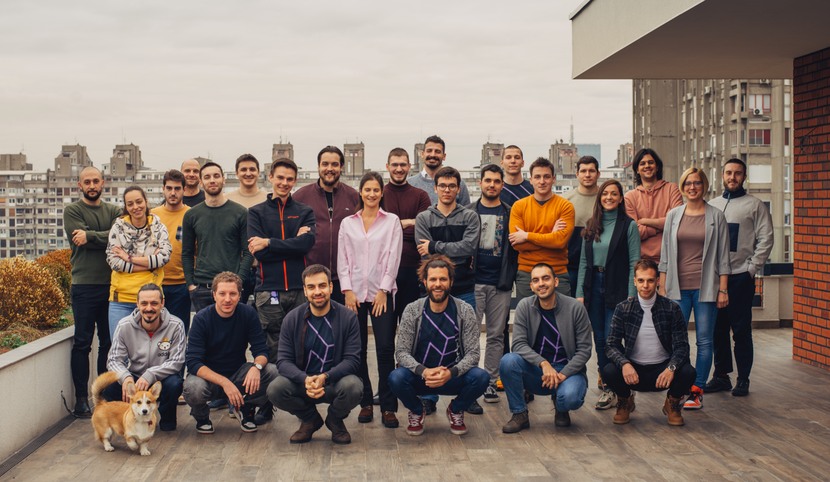
Andrej Bencic, Bogdan Habic, Miljan Tekic and Nebojsa Urosevic founded Tenderly in 2018. Its early public beta let developers look inside failed transactions and follow a stack trace. Familiar territory, perhaps, to anyone who has debugged ordinary software. On a blockchain, where a deployed contract cannot simply be patched in place and a transaction cannot be recalled, that visibility had rather more value.
- Tenderly lets teams simulate, debug and monitor activity on EVM blockchains.
- Its Virtual TestNets give teams shared copies of real chain state to test against.
- NFTX reports 80% less manual debugging time; Aave reports more than 500 end-to-end tests on one virtual environment.
- The 2026 pitch extends from developers to finance, treasury and risk teams deciding whether an onchain move should happen at all.
The first thing that failed was the explanation
Tenderly’s 2020 product announcement offers a neat measure of the starting point. A year earlier, its beta could show a contract’s failed transactions and the stack trace behind them. Then came filtering, gas profiling and events. The paid Pro plan added a more consequential trick: simulate a transaction without submitting it to the network. A postmortem became a preview.
The difference matters because blockchain applications are assembled from living parts. A lending app may depend on a changing oracle price, a liquidity pool it does not control, and a contract that another team upgraded yesterday. A conventional test environment can confirm that code works under its own tidy assumptions. It may be less persuasive about what happens against the mess of today’s production state.
Tenderly’s Virtual TestNets, introduced in 2024, turn that idea into a place where colleagues can work together. They are configurable network forks connected to mainnet data, with familiar RPC endpoints and a built-in explorer. The copy is private enough to stage a sensitive scenario and flexible enough to change the script. A developer can reproduce a bug; a security team can rehearse a response; a product team can demonstrate an integration without hunting for test tokens.
What a customer gets back
NFTX is a useful test of whether the promise survives contact with an actual product. Its engineers were chasing failures through a system of interacting contracts with console logs and trial and error. They could spend two or three hours on a single issue. With Tenderly’s debugger and forks, the team could inspect the execution path and replay a problem against mainnet data. In Tenderly’s case study, NFTX developer Kiwi estimated an 80% reduction in manual debugging time in some cases.
The same tools serve different kinds of uncertainty. Uniswap uses simulations to check transaction outcomes and governance changes before they reach the chain. Aave says it runs more than 500 end-to-end tests in a single Tenderly virtual environment, and can prepare custom partner demonstrations in under 30 minutes. Security Alliance uses forks of layer 1 and layer 2 networks for emergency drills, including the awkward business of sending a governance message across chains. In each case, the product is a more faithful rehearsal, rather than an assurance that the world will obey the rehearsal afterward.
A new customer enters the room
In June 2026, Tenderly called itself the “simulation company for onchain operations.” It was a change of emphasis with a commercial logic behind it. Once a protocol is handling real assets, the person asking “what happens if?” may sit in a treasury, risk, support or finance team. A lending position can tip into liquidation after an oracle change. A large withdrawal can distort a vault’s liquidity. An apparently routine multisignature transaction can produce a surprising call deeper in the chain.
The platform now packages that inquiry in several ways. Simulation bundles preview up to five connected transactions, carrying the state from one step into the next. The Explorer lets people read, write and simulate from the same interface. The MCP server, released in March 2026, exposes simulation, tracing and test tools to compatible AI clients. Tenderly has shown how a risk analyst might change prices or balances on a private fork and inspect the result without writing a one-off script.
These are previews, not prophecies. If markets move, another actor trades first, or an oracle updates between simulation and execution, the real outcome can differ. This is precisely why Tenderly’s choice of live state matters, and why the time between rehearsal and action matters too. Its best use is as a decision check, followed by monitoring after the decision is made.
The business behind the rehearsal
Tenderly occupies a busy corner of the market. Foundry and Hardhat let engineers run local tests and forks; public testnets provide shared staging; RPC companies connect apps to chains; monitoring tools watch production. Tenderly’s bet is that combining simulation, collaborative environments, debugging, RPC and monitoring in one workflow saves the handoffs between them. That integration is useful when an incident needs an answer now, or when a cross-team deployment needs everyone to inspect the same state.
It is a software business with a free entry point, paid self-service tiers measured in Tenderly Units, and custom plans for larger organizations. The company raised a $40 million Series B led by Spark Capital in 2022, after an earlier Series A led by Accel. Funding bought room to build a wider platform; it says little by itself about present revenue or the accuracy of any one simulation.
The practical lesson is pleasantly unromantic. When a system is too costly to experiment on in public, make a realistic copy, alter one condition at a time, and compare the predicted result with what eventually happened. Start with a failure that already occurred. Replay it. Change the proposed fix. Then move the same habit upstream, before the next transaction goes out. Tenderly’s largest idea is less about blockchain novelty than about an old engineering courtesy: give tomorrow’s mistake a chance to happen today, where it can still be corrected.