A company can record every conversation it has with its customers and still struggle to hear them. The calls accumulate. The files acquire sensible names. Somewhere in that well-organized heap are complaints, questions, clues. Owning the recordings is the easy part. Making them useful requires another kind of work.
Teguh Eko Budiarto recognized that problem while building Prosa.ai. Businesses had data and difficulty extracting meaning from it. His company worked on the text and speech of Indonesia, where a useful answer had to survive contact with the language people actually used. A recording was raw material. Understanding it was the product someone might pay for.
It was a fitting problem for an engineer whose working life had already crossed software, telecommunications, Japan and Indonesia. His story contains research and investment, certainly. It also contains the quieter business of explaining a tool to a customer, hiring the people who can deliver it, and deciding which promising idea deserves another month of work.
The long way back to Bandung
Budiarto studied Informatics Engineering and Information Systems Security at Institut Teknologi Bandung. His early career included IT work at Conoco-Philips in 2002-2003 and product management at Handal Consulting in 2003-2005. Then came Brastel: system planning in Japan from 2005 to 2011, followed by managing Brastel Indonesia from 2011 to 2018.
The sequence matters. He arrived at the AI business with experience of systems that had to function for customers. Planning a system and running an operation are different occupations, with different opportunities for the world to disagree with your carefully prepared intentions. His career gave him time in both.
- 2005System planning
Brastel, Japan - 2011Managing Director
Brastel Indonesia - 2018Co-founder & CEO
Prosa.ai - NowCTO
Rafiqspace.ai
Prosa.ai brought him together with Ayu Purwarianti and Dessi Puji Lestari, researchers associated with ITB and specialists in language and speech technology. Founded in 2018, the company concentrated on Indonesian text and voice. By June 2019, it had more than 20 AI data scientists and 16 data annotators. GDP Venture, already a seed investor, announced Series A funding that month.
Those annotators deserve a place in the picture. Language technology depends on work that is easy to overlook when admiring the finished interface. People organize examples and attach meaning to material that a machine will encounter later. An AI company’s staffing list can be a useful antidote to the impression that software simply teaches itself.
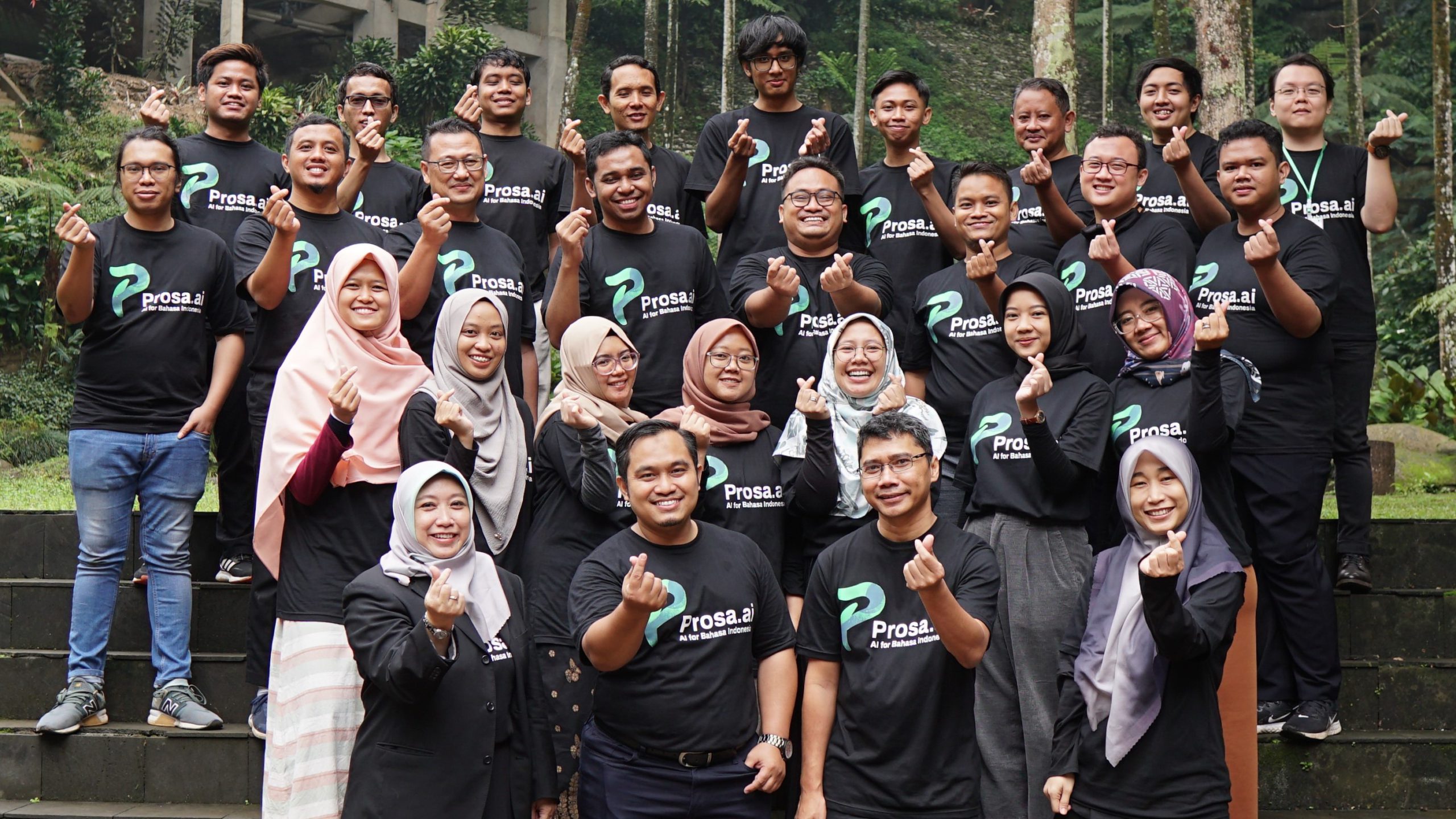
He initially combined the new venture with his Brastel responsibilities, moving to Prosa full time after six months. His account of running the company included kaizen, the Japanese idea of continuous improvement, adapted to the team around him. The ambition was accompanied by recruitment, schedules and repeated attention to how the organization worked.
A rumour meets a reference desk
One early application put the company in the middle of a public problem. In 2019, Prosa.ai worked with Indonesia’s communications ministry on an anti-hoax chatbot. People could submit text through a messaging service and receive relevant material from a database. For a company developing language-processing technology, the question was immediate: what should happen when someone asks whether a circulating claim is true?
Budiarto described a system with human work built into it. The AI could compare a query with available information; it could not independently settle every unfamiliar assertion. Material absent from the database required review. Journalists and fact-checking organizations formed part of the wider verification effort, while the ministry maintained responsibility for the database.
That arrangement made the product more interesting than its name alone suggested. A chatbot could offer a convenient front door. Behind it sat references, procedures and people who had to investigate. The service’s usefulness depended on the relationship between those parts. A pleasant chat window, by itself, has never been much of a fact-checker.
when material is missing
A simplified view of the early chatbot process. Database coverage and verification work shaped what it could answer.
There is a practical thread here that runs through his later work. The starting point is an existing activity: a reader checking a rumour, an organization storing calls, a worker trying to retrieve information. Technology earns a place by helping that activity proceed. Its limits are part of the design brief.
Dini has a job to do
Speech technology gave Prosa another route into daily work. By 2021, the company was expanding from enterprise services toward individual customers. Text-to-speech offered a direct proposition: take written material and turn it into audio. A person could use the service without first commissioning a corporate AI project.
In 2024, the product’s voices had names and assignments. Dimas offered formal and expressive styles; Ocha had a friendly delivery. Dini was designed for Indonesian audiobooks. These details reveal a more particular understanding of the customer than the phrase “synthetic voice” manages on its own. Reading a news bulletin and telling a long story ask different things of a voice.
Budiarto discussed further ambitions, including emotional expression and a marketplace where voice talent could participate and earn income. They were plans for development. What makes them revealing is the attention to the people on either side of the tool: those who need audio and those whose voices might help produce it.
There is a small, useful shift in perspective here. A language model is discussed in terms of its capabilities. A customer thinks about a finished task. The distance between the two is where product decisions live: pacing, tone, controls, the format of a file, the effort required to get a usable result.
“Businesses and institutions have a lot of data, but they do not know how to extract insights out of the data.”
Teguh Eko Budiarto, January 2022
He was equally specific about the enterprise problem. Call centers accumulated recordings and operational information without necessarily being able to process them. Text analytics, speech processing and voice authentication were among Prosa’s offerings. Each addressed a different job inside an organization, even when several depended on related language technology.
This is a useful way to read his career: follow the transaction between a technical capability and someone else’s working day. The transaction is rarely complete when a demonstration works. It requires a customer to recognize the problem, trust the result and find a place for it in the way the organization already operates.
The work around the algorithm
Budiarto’s activities also reached the less photographed parts of an AI industry. Indonesian competency-standard documents name him on drafting teams for data science and knowledge-based systems. The work places him among people trying to describe what practitioners should be able to do, alongside representatives from universities and other technology companies.
A standard is a different kind of product. Its audience may include someone planning a course, assessing a candidate or deciding which skills an organization needs. The language has to travel between institutions. Participating in that work connects a founder’s experience to the problem of preparing other people to practice the profession.
His name also appears with Ayu Purwarianti, Sidik Soleman and Arief Rahman on an InaNLP research poster describing Indonesian language tools delivered through an API. The tools covered several layers of text analysis. Here was another expression of the same commercial idea: make specialized language capabilities available for use inside other systems.
At Indonesia’s National Archives, he presented on implementing machine-learning models for information systems during a discussion about the SIKS archival application. The setting gives the topic a pleasingly concrete scale. Records need organizing and retrieving. People responsible for them need to understand what a model can contribute to that work.
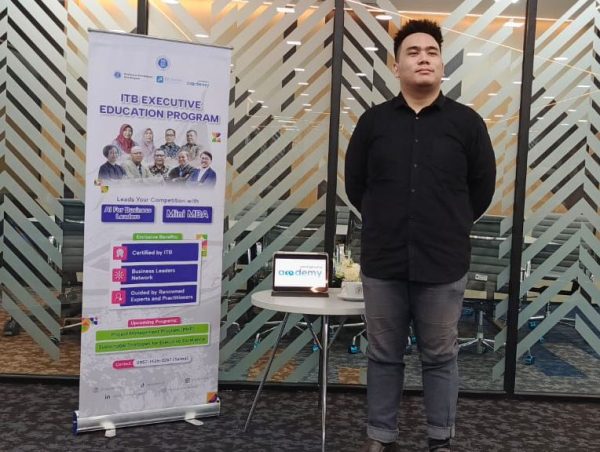
In 2024, he was named as a guest practitioner in ITB’s AI for Business Leaders program. In July 2025, Universitas Indonesia’s account of Datathon named him among industry workshop speakers. These appearances extended his work into rooms where technical possibilities met the questions of executives and students.
He also visited Pikiran Rakyat in Bandung in October 2024 with a GDP Venture delegation. There, his emphasis was on using AI to help trusted media produce useful material. It was a recognizable continuation of the earlier anti-hoax work: language technology placed alongside the people responsible for informing an audience.
A different title, a familiar problem
His next chapter carries a different title. Rafiqspace.ai lists Budiarto as CTO and identifies him as a former Prosa.ai CEO and former Brastel Indonesia managing director. Its leadership team includes CEO Jaka Arya Pradana. The company describes its focus in terms of Indonesian institutions, contextual AI and everyday workflows.
That makes the career more than a single founding story. An engineer became a manager, helped build a language company, worked around standards and education, and took on a technology leadership role elsewhere. Across those settings, the useful question remains concrete. What does the person using this system need to understand, retrieve, produce or decide?
There is plenty of excitement available in AI. Budiarto’s working history invites attention to the part that follows: the patient effort of making a capability useful in somebody’s own language. The call has been recorded. The text has been written. Now somebody needs to make sense of it.
Follow the conversation
- Prosa.ai
- Rafiqspace.ai leadership
- Devpost portfolio
- Medium profile
- GitHub
- Listen: The Spectrum Talks, episode 28
- Read the 2020 interview
- The language-data business
- The 2019 anti-hoax chatbot
- The 2024 voice products
- ITB executive education
- Universitas Indonesia Datathon 2025
- AI competency standards