The piano sat in an office on Sand Hill Road, an instrument of curved wood and felt hammers among the venture capitalists, forecasts and deal talk. Ted Gioia became known there as the guy who had put it in the room. The nickname sounds like a pleasant office eccentricity. It was closer to a declaration of method. Gioia could work inside the machinery of business without pretending the rest of his mind had vanished.
For years, though, he kept his worlds apart. One part played jazz, wrote criticism and studied the unruly movements of culture. Another advised companies at McKinsey and Boston Consulting Group, negotiated deals and managed businesses. Gioia has said those parts of his brain occupied separate rooms. Only later did he notice that the walls were unnecessary. Strategy could sharpen a piece about streaming platforms. Philosophy could interrogate technology. Improvisation could become a way of moving through a career that made little sense on a conventional ladder.
That merger now arrives several times a week in The Honest Broker, his newsletter on music, books, arts, media and culture. Its homepage counts more than 297,000 subscribers. The name promises independence, but the product is not chilly neutrality. Gioia is frank, restless and willing to irritate an industry before breakfast. What he brokers is attention: from obscure musicians to curious listeners, from forgotten traditions to a present that assumes it invented everything.
An education in permissionlessness
Gioia grew up in a Sicilian-Mexican household in Hawthorne, California, in a working-class neighborhood near South-Central Los Angeles. He was valedictorian and a National Merit Scholar, then entered Stanford on scholarship. He studied English, edited the university literary magazine, wrote for The Stanford Daily and played on the College Bowl team that beat Yale in the national finals. He was already working as a jazz pianist. Barely out of his teens, he designed and taught a Stanford class on jazz.
The curious detail is what he lacked: a music degree, jazz classes or a private teacher. He taught himself because the teachers he wanted were not around. This became more than an origin story. It hardened into a view of authority. “Expertise is the credential,” he has written. “The credential is not the expertise.” The distinction matters. Gioia is not an enemy of study. He accumulated an imposing amount of it. He earned his Stanford degree with honors and distinction, took first-class honors in Philosophy, Politics and Economics at Oxford, and returned for an MBA at Stanford.
“It’s great to learn the rules. But it’s even better to invent your own rules.”Ted Gioia, 2025
Formal education gave him tools. Self-education gave him range. At Oxford, he supplemented scholarship money by playing jazz. In California, he joined Stanford's music faculty and helped establish a formal jazz studies program, working alongside saxophonist Stan Getz. His first book, The Imperfect Art, appeared in 1988 and won an ASCAP Deems Taylor Award. A few months later came his first trio recording, The End of the Open Road, which received airplay on more than 500 American radio stations.
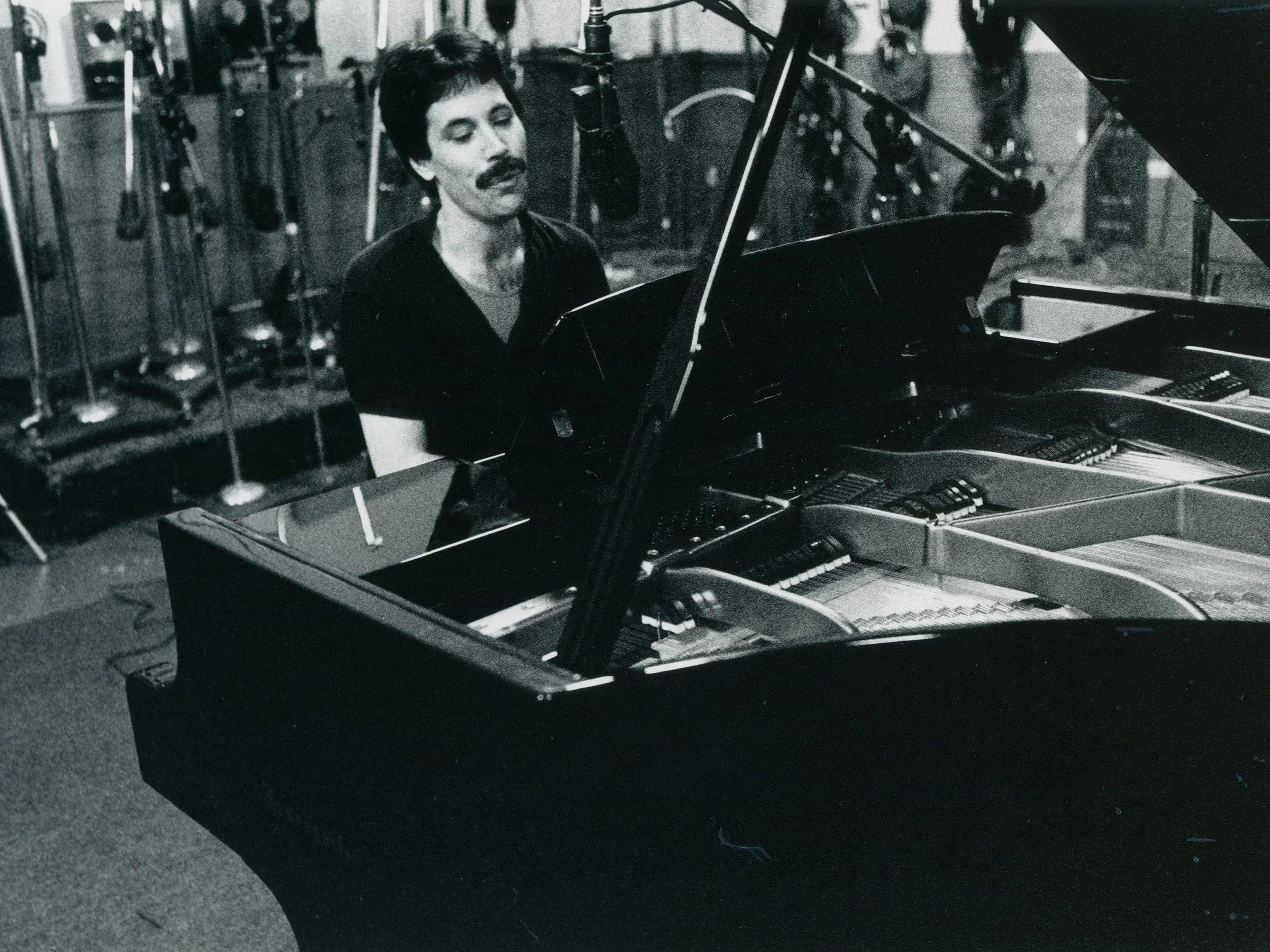
The double life becomes one life
Meanwhile, Gioia's analytical career kept expanding. He consulted for major companies, helped Sola International through a leveraged buyout and a New York Stock Exchange listing, managed businesses with revenues up to $200 million, and worked on projects in 25 countries across five continents. This is not the standard apprenticeship for a historian of jazz. It did, however, train him to find the shape inside a difficult problem.
His advice about writing history sounds suspiciously like strategy: “You must control the narrative or it will control you.” Before drafting a survey, he begins with large questions. What changed? What did the music do to lives, society and culture? The facts arrive after the architecture. Then the architecture is hidden so the reader experiences a story, not a filing cabinet.
The boardroom
Structure, incentives, forecasts, markets, technological shifts.
The bandstand
Listening, timing, memory, risk, improvisation, human feeling.
That method carried The History of Jazz through three editions over 24 years. It also powered books that refused to treat music as tasteful furniture. Work Songs, Healing Songs and Love Songs examined music as a force inside labor, ritual and intimate life. Each won an ASCAP Deems Taylor Award. Music: A Subversive History, published in 2019, argued for hearing innovation from the margins rather than automatically awarding it to the center.
Gioia made records too: Tango Cool in 1990 and The City is a Chinese Vase in 1998. He produced sessions involving Bobby Hutcherson, John Handy and Buddy Montgomery. Decades later, his composition “A Sunday Waltz” appeared in the final season of Better Call Saul. Culture has a dry sense of timing. A tune can wait patiently while its composer writes several histories of the form.
The reader becomes the institution
In 2007, Gioia founded Jazz.com and served as president and editor until 2010. The experiment anticipated the role he would embrace more fully in 2021, when he launched The Honest Broker on Substack. He had already published in major newspapers and magazines. A newsletter altered the relationship. The reader was no longer on the far side of an editor, publication schedule or institutional mood.
The title came from his idea of the critic as a trustworthy intermediary, working without the external obligations that distort judgment. He has described revising his prose against standards of fairness, removing posturing and worrying about the reader as the real beneficiary. It is a bracingly practical definition of independence. Freedom is not merely saying whatever one likes. It is knowing whom the work is for.
“You really do learn more listening, not talking.”Ted Gioia on a two-hour dinner in which he never mentioned his vocation
Listening is also his private engine. Gioia says he starts each morning with two hours of books and reads again at night. He does not frame the habit as professional development. He reads in search of wisdom, a purpose grand enough to survive changing fashions. The payoff is cumulative rather than tactical. A column on artificial intelligence might converse with ancient philosophy. A piece on popular music might notice an old ritual hiding under new production.
This appetite can make The Honest Broker feel like a record shop run by a philosopher who has just returned from a strategy meeting. The shelves wander from gospel albums to Silicon Valley, movie recommendations, forgotten musicians and the monetization of leisure. Yet the governing suspicion stays consistent: powerful systems flatten culture, credentialed gatekeepers often miss expertise, and algorithms are poor custodians of curiosity.
Changing the flow
Gioia resists giving strangers a neat job title. In a 2025 interview, he told a story about inviting a neighboring rancher to dinner and talking for two hours without mentioning his vocation. Asked how jazz shaped his work, he offered a better answer. Jazz, he said, teaches a person to go with the flow or, better, to change it. He called himself “just an old jazz guy.”
The modest phrase contains the career. Improvisation is not randomness. It demands memory, attention, structure and nerve. A musician hears what is happening, recognizes what could happen next, and commits before certainty arrives. Gioia used that sequence on the bandstand, in consulting rooms, across books and now in a publication that belongs directly to its readers.
In July 2026, he appeared with Judy Woodruff on PBS News Hour to discuss American music. He had asked his newsletter audience for the quintessential American song and received hundreds of answers. The leading choices ranged from Jimi Hendrix's “The Star-Spangled Banner” to Paul Simon's “American Tune” and Gil Scott-Heron's “The Revolution Will Not Be Televised.” The range was the point. American music could not be reduced without losing the argument inside it.
Gioia's current ambition is equally broad and plainly stated: to have a positive impact on culture. His recent work reaches beyond criticism into cultural education, including a year-long immersive humanities reading plan. The aspiration sounds unfashionable only because so much modern media asks for engagement instead of consequence.
The stealable part of his story is not the reading schedule, the prolific output or even the piano. It is the refusal to discard experience merely because it belongs to another category. The business adviser did not betray the musician. The historian did not silence the performer. The newsletter writer did not need to flatten twelve books into a brand. Each part learned to accompany the others.
There is a useful kind of honesty in that arrangement. A life can look improvised without being accidental. Its themes may become visible only after the song has ended, as Gioia puts it. His trick has been to keep playing long enough for the pattern to appear - and to leave the office door open so the piano can be heard.